Nature
 PUBLISHED



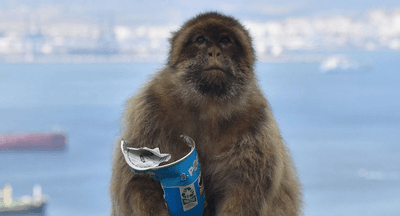


An unsavory food fad has emerged among macaques living on the Rock of Gibraltar in the Mediterranean. Scientists have noticed the troop has started to intentionally eat soil, perhaps to soothe their stomachs after eating overly sweet and salty junk food left by tourists.
Around 230 Barbary macaques (Macaca sylvanus) live in Gibraltar, a tiny British Overseas Territory perched on Spain’s southern coast. Known for their cheeky and often raucous behavior, the monkeys frequently approach holidaymakers and hustle them for food.
But their taste for tourists' snacks is taking a toll. Researchers at the University of Cambridge observed a population of macaques living across the Rock of Gibraltar between summer 2022 and spring 2024. Over 98 observation days, they recorded 44 different macaques eating soil (video below).
Significantly, monkeys living in areas with heavier tourist traffic, such as the top of the Rock, ate far more dirt than those in quieter spots. Likewise, dirt-eating rates peaked during the holiday period and decreased during the slow season.
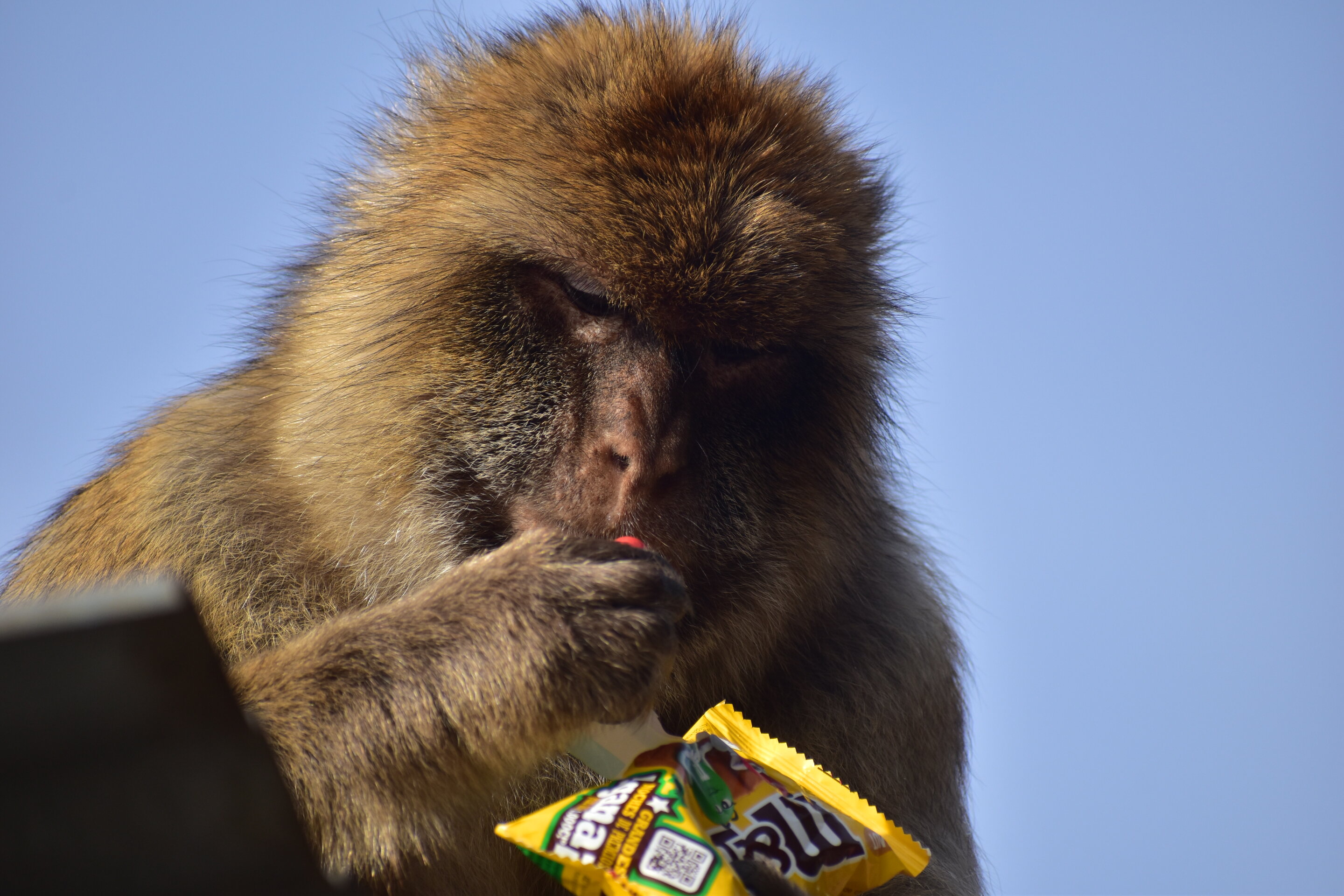
This led the team to wonder whether the soil-eating was related to changes in their diet. The monkeys are known to scavenge food from humans, especially high-calorie foods like ice cream, biscuits, chocolate, and potato chips. The soil, they argue, might quell the negative impacts of junk food.
“We postulate that junk food may be hard to digest and cause microbiome disruptions, which can be buffered with the soil, but this remains to be tested,” Sylvain Lemoine at the University of Cambridge told IFLScience.
“We have not conducted chemical and mineralogical analyses of soil, so we don't know yet what could be the properties and thus effects on the digestive tract. However, the main type of soil consumed – red soil, terra rossa – is known to be high in clay and iron. Clay is known to buffer stomach pH and to bind to toxins, so it may have a similar effect,” he added.
The monkeys didn't pick up this habit off their own back. The researchers believe it is an example of socially learned behavior passed on through cultural transmission, as different troops show preferences for certain types of soil. The trend has also emerged too quickly to be the product of biological or genetic change.
Similar behavior is probably playing out in primate populations all over the world that live in close contact with humans. Take bonnet macaques in India's cities, which have learned to pry open soda bottle caps, or the long-tailed macaques in Bali that have figured out how to steal tourists' belongings and barter them back in exchange for food.
All of this highlights just how adaptable primates – whether they're hungry macaques or humans – can be when their environment radically changes around them.
“As in humans, animal cultures transmitted via social learning can allow a quicker adaptation than biological and genetic changes,” explained Lemoine.
“This exemplifies the adaptation potential of these species, due to their behavioral flexibility facilitated by social learning, and indeed gives us insights into how fast these primates can adapt to changing environments,” he concluded.
The new study is published in the journal Scientific Reports.