Nature
 PUBLISHED




This article first appeared in Issue 12 of our free digital magazine CURIOUS.
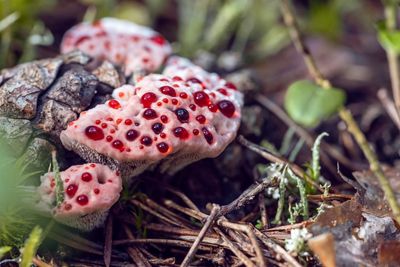
The devil’s tooth fungus (Hydnellum peckii) appears to “bleed” as it grows, releasing a type of sap. It gives the beige, pink, and sometimes blue mushroom its other nickname “bleeding tooth fungus,” but it isn’t blood.
It’s the result of a process known as guttation which causes plants and fungi to secrete droplets from their pores. In the case of the devil’s tooth fungus, it’s the result of water absorption increasing pressure within the mushroom, eventually squeezing out the pigment-tinted sap for a gooey, spooky aesthetic.

Subscribe to our newsletter and get every issue of CURIOUS delivered to your inbox free each month.
If, for some strange reason, you think the mushroom looks good enough to eat, you should know that it’s probably best not to give it a nibble – whilst it isn’t toxic, the taste is meant to be so bitter that it’s practically inedible.
It might not have any value to humans as food, but there are a couple of other ways the devil’s tooth fungus can help us out. The fungus can be dried out and used as a natural dye, and also contains atromentin, giving it antibiotic and anticoagulant potential in medicines.
CURIOUS magazine is a digital magazine from IFLScience featuring interviews, experts, deep dives, fun facts, news, book excerpts, and much more. Issue 15 is out now.