Space and Physics
 PUBLISHED




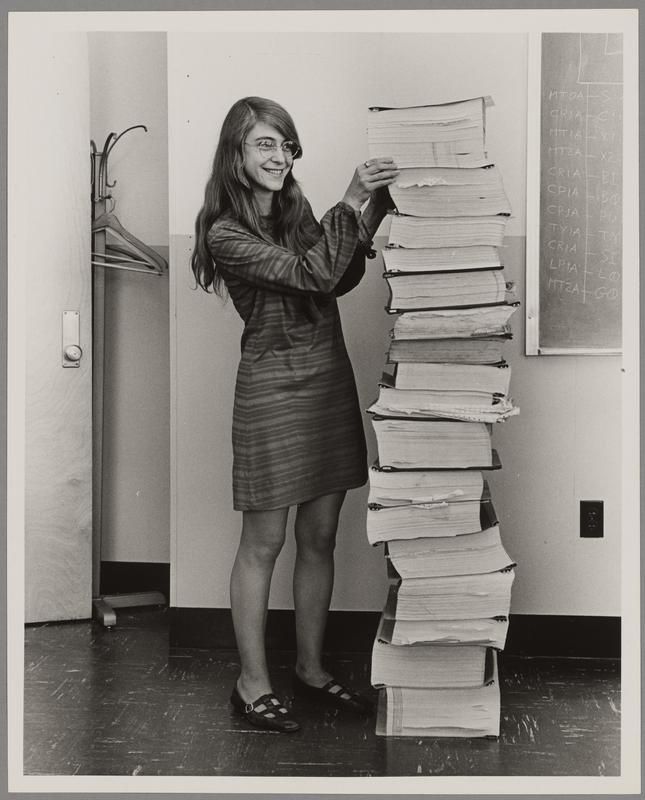
It is impossible to think of Margaret Hamilton without thinking of her iconic photo standing next to a stack of papers, as tall as her – the entire Apollo guidance software. She led the team that designed something never thought possible before: software to safely land humans on the Moon.
Hamilton passed away on September 30, at the age of 90. She was not only a computer pioneer and prolific academic with over 170 publications to her name; she also became an entrepreneur, founding and leading software companies.
She is also credited with naming the discipline of “software engineering,” something that took a while to be accepted by the hardware engineers. She also contributed to the software for the first portable computers.
With such a long and illustrious career, it would almost be impossible to pick a “most important” contribution, had she not been pivotal to the Moon landings.
Hamilton took up a post at the Massachusetts Institute of Technology (MIT) in 1959, working on meteorology.
She worked for Edward Norton Lorenz, the father of modern chaos theory to which Hamilton contributed, on weather prediction software. She then worked on anti-aircraft air defense software.
In 1965, the Instrumentation Lab at MIT won the contract to build the onboard flight software for the Apollo program. Hamilton applied for a role there. Clearly, she smashed it: she was the first programmer hired by MIT, and she was the first female programmer in the whole Apollo project.
She first worked on the uncrewed Apollo mission, and then Hamilton was put in charge of the Software Engineering Division. She worked long hours, aware of how pivotal her code was to the success of the mission.
“From my own perspective, the software experience itself (designing it, developing it, evolving it, watching it perform and learning from it for future systems) was at least as exciting as the events surrounding the mission,” Hamilton told MIT News in 2009.
“There was no second chance. We knew that. We took our work seriously, many of us beginning this journey while still in our 20s.
The work was taken incredibly seriously, but given the many Easter eggs in the software – like the “MASTER_IGNITION_ROUTINE” file being named "BURN_BABY_BURN" – you can perhaps tell the writers were in their 20s.
By 1968, Hamilton had become the assistant director in the Command and Service Module team. There were more than 400 people working on the Apollo software.
“Coming up with solutions and new ideas was an adventure. Dedication and commitment were a given. Mutual respect was across the board. Because software was a mystery, a black box, upper management gave us total freedom and trust. We had to find a way, and we did. Looking back, we were the luckiest people in the world; there was no choice but to be pioneers,” Hamilton stressed.
Hamilton’s software was not just used in the Apollo 11 landing but for the whole Apollo program. It was then adapted for Skylab, NASA’s first space station, and even used for the Space Shuttle.
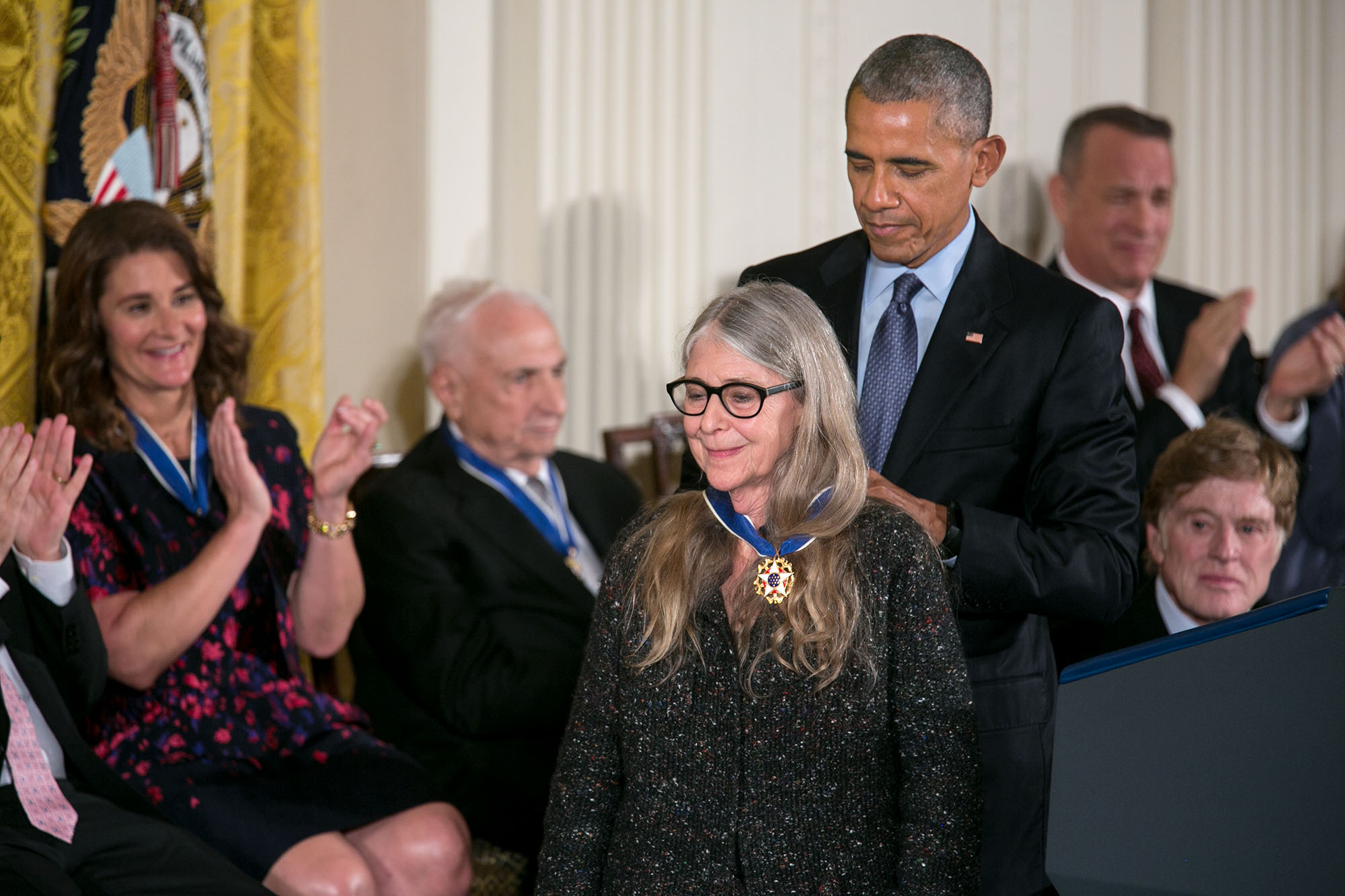
In 2016, Hamilton was honored by President Barack Obama with the Presidential Medal of Freedom. At that time, a decade ago, NASA also made efforts to recognize the work of the "hidden figures", including African-American women such as Katherine Johnson, Mary Jackson, and Dorothy Vaughan, among many others.
“Looking back, we were the luckiest people in the world,” Margaret Hamilton told the MIT Technology Review. “There was no choice but to be pioneers.”