Health and Medicine
 PUBLISHED





A randomized rollout of a malaria vaccine across Ghana, Kenya, and Malawi has produced a stunning drop in child deaths. The findings show that wider distribution of the vaccine could save millions of lives in a decade, but funding is in doubt, and the results have received little media attention.
Last year, approximately three million children under the age of five died in Sub-Saharan Africa, mostly of diseases that have been largely eradicated in most of the rest of the world. The child mortality rate has been declining for more than 30 years, and it is now less than half of what it was in the 1990s, but it is predicted to rise following DOGE cuts to USAID.
Malaria is one of the continent’s leading killers, particularly of children, so vaccines are considered essential and two are currently approved. The first – known as Mosquirix or RTS,S – received the green light in 2015 and was recommended for widespread use by the World Health Organization (WHO) in 2021.
Knowing how effective vaccines are in principle, however, doesn’t necessarily tell you how effective they will be in practice. Children may succumb to one infection only because they were weakened by another, or through the effects of malnutrition, so it isn’t always possible to predict how many lives will be saved by interventions against a specific disease. Moreover, Mosquirix is known not to be fully effective.
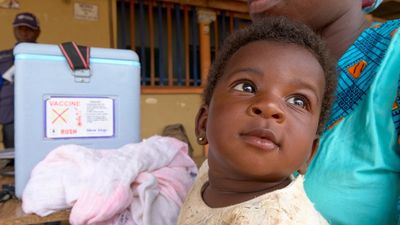
Nevertheless, 1.29 million children in Ghana, Kenya, and Malawi have been vaccinated with Mosquirix since 2019. To measure the vaccine’s effectiveness, it was distributed randomly to half the immunization clinics in parts of the three countries, with most children served by these clinics getting at least one dose.
These clinics were grouped into categories. Those that didn’t receive Mosquirix had similar levels of mosquito-net use and other vaccinations when compared with their counterparts, allowing them to act as controls. The rates of childhood deaths and disease were then compared between the controls and the clinics with access to Mosquirix.
Children in areas where they were eligible to receive at least three doses of the vaccine were 13 percent less likely to die from any cause (excluding injury) between 2019 and 2023. In other words, the intervention averted one in eight deaths. The result is all the more impressive when allowing for the fact that many children who were vaccinated didn’t get their third or fourth shots, particularly during the pandemic.
It is estimated that 440,000 African infants and children died from malaria in 2024. Since previous trials have shown that the vaccine is far from 100 percent effective, the size of the drop in mortality the team measured suggests malaria may have been a factor in many deaths officially attributed to other conditions.
This is very solid evidence of the potential for malaria vaccines to change the trajectory of child mortality in Africa
Kate O’Brien
The authors also note that because the vaccine requires four doses spread over 18 months, health officials administering them had an opportunity to assess children for other conditions and catch them up on other vaccines they may have missed.
The benefits of reducing malaria aren’t just the lives saved. The study also reported a major reduction in the number of children admitted to hospital for non-fatal malaria infections. Even when malaria doesn’t kill, it can have severe effects on a child’s mental and physical development, from which they may never fully recover.
"This is very solid evidence of the potential for malaria vaccines to change the trajectory of child mortality in Africa, and why it is urgent to overcome funding challenges to accelerate rollout,” said WHO Director of the Department of Immunization, Vaccines and Biologicals Kate O’Brien in a statement.
“Demand is high and supply is sufficient, but more financing is needed so that countries can purchase enough vaccine, along with other malaria prevention tools, to reach all the kids most at risk of serious disease or death."
Twenty-five African countries are currently offering the vaccine and collectively seeking to deliver it to 10 million children a year. Many of these countries have rates of malaria even higher than those in which the trial was held, so could experience greater benefits. However, inadequate resources mean not all of them are achieving their goals, and recent conflict in some parts of the continent are expected to make this worse.
On the other hand, we may soon have the potential to do even better. A major obstacle to the wider distribution of the Mosquirix vaccine is the lack of refrigeration facilities in much of rural Africa. The announcement last week of a new vaccine that doesn’t need to be kept cold could save many more lives.
The alternative vaccine has yet to be as comprehensively tested as Mosquirix, particularly in terms of how long its protection lasts, but early studies indicate it is considerably more effective at preventing infection.
Despite being published more than a week ago, and publicized by the WHO, media coverage of these findings has been sparse. The world appears to have been more occupied with the hantavirus outbreak on the MV Hondius, which is unlikely to spread far beyond the ship’s passengers, allowing this success over an existing widespread illness to go relatively unnoticed.
The study is open access in The Lancet.