Health and Medicine
 PUBLISHED





As another person is placed on a ventilator, the World Health Organization (WHO) is trying to strike the right balance in preventing complacency about the hantavirus outbreak on the cruise ship MV Hondius without adding fuel to fear-mongering about a COVID-19-like pandemic. That’s leading to careful wording encouraging governments to prepare for more cases, while trying to emphasize that lockdowns and mass deaths are extremely unlikely.
The MV Hondius, onboard which an outbreak of Andean hantavirus began on April 6, docked at Tenerife in the Canary Islands on Sunday 10 May, against the objections of the local government. Many passengers have since returned to their home countries, with most being placed in quarantine.
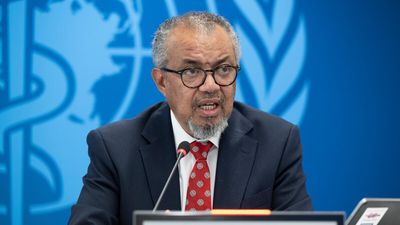
“The pain of 2020 is still real, and I do not dismiss it for a single moment,” WHO Director General Tedros Adhanom Ghebreyesus wrote in an open letter to the people of Tenerife. “But I need you to hear me clearly: this is not another COVID… The risk to you, living your daily life in Tenerife, is low. This is the WHO’s assessment, and we do not make it lightly.”
“At the moment, there is no sign that we are seeing the start of a larger outbreak, but of course the situation could change and, given the long incubation period of the virus, it’s possible we might see more cases in the coming weeks,” Ghebreyesus told a press conference in Madrid, held jointly with Spanish Prime Minister Pedro Sánchez.
As of May 13, there have been eight laboratory-confirmed cases, including three deaths, and three additional suspected cases. A French passenger has developed to the most severe form of the disease and is being treated accordingly: “She is on an artificial lung and a blood bypass to allow her, we hope, to get through this stage,” French health official Xavier Lescure told reporters, according to The Guardian.
With more than a month having passed since the first death from the virus, these figures make clear that the spread is slow, even in the confined environment of a cruise ship, which is a haven for viruses.
The WHO is recommending all passengers from the ship be placed in 42-day quarantine, reflecting the virus’s long incubation period. "For people returning home, our recommendations are active monitoring and follow up and daily checks for symptoms at home or in a specialized facility for the full incubation period of 42 days, after last potential exposure," the WHO told AFP on Monday. The home countries of many of the passengers have announced they will quarantine all their citizens who had been on the ship for 45 days.
Fortunately, current evidence suggests that, unlike for COVID-19, people with hantaviruses aren't infectious before they show symptoms themselves. Acting director of the US CDC Jay Bhattacharya has said many of the 17 US citizens among the evacuated passengers will be allowed to go home if they prefer and can do so safely.
The largest threat, however, probably comes from people who left the ship before the nature of the outbreak was recognized, such as one passenger who was evacuated at St Helena and flown to South Africa, who has since died. The WHO has urged contact tracing of all those who may have encountered such passengers.
The MV Hondius was sailing from Argentina when the outbreak was detected. This placed the WHO in a somewhat difficult position. Argentina withdrew from the WHO last year, following the US government’s decision to do the same. The state of communication between Argentinian health authorities and the WHO following the crisis is unknown, but suspected by public health experts to have been less than ideal. Like most nations, Argentina is ill-equipped to deal with an outbreak of a rare, transmissible disease without the WHO’s assistance.
Hopefully, with the majority of passengers coming from WHO member countries, most will be treated in line with their recommendations. However, given the long incubation period and the time passengers spent in contact, it is likely that more infections will come to light.
“We would expect more cases because, as you may remember, the index case – the first case in the ship – was on 6 April … [and] there was a lot of interaction, actually, with the passengers. And as you know, the incubation period is also six to eight weeks,” Tedros said.
Hantavirus is so rare that until recently more people had probably heard of it through a passing reference on Friends than any other media coverage, let alone knowing someone who had been infected. That hasn’t stopped claims circulating frantically on social media that it will soon be widespread and used as a justification for renewed lockdowns.
The reason human hantavirus cases are rare is that most forms of the disease don't spread from human to human, only from rat to human through droppings, saliva or urine. Since most people make a practice of avoiding rat droppings even without disease warnings, few catch it. Some hantaviruses don’t cause disease in humans at all.
The Andes strain of the virus, responsible for the MV Hondius outbreak, is the exception. It can spread from human to human, but historically that has only occurred when people spent long periods of time in close confinement – as on a cruise ship. For it to spread when people spend a few minutes in the same room, as influenza or COVID-19 do, would require at least one mutation.
The French health minister, Stéphanie Rist, told the French National Assembly there was no evidence that such a mutation has occurred, but that the strain circulating on the boat has yet to be completely sequenced.
While the low transmissibility is the reason the WHO thinks a crisis is unlikely, the disease is far deadlier than COVID-19, or indeed most respiratory infections, to those who do catch it. The estimated death rate ranges up to 50 percent, and is 20-40 percent for the Andes variety, rather than less than 1 percent for COVID-19.
Meanwhile, Ghebreyesus thanked Spain for allowing the MV Hondius to dock, likely saving the lives of many passengers after Cape Verde, its original destination, denied docking and decided to make the issue somebody else’s problem.
“I’d like to thank Spain and, especially, Prime Minister Pedro Sánchez, for the outstanding leadership and coordination,” Ghebreyesus said. “I know this is a model – and I hope other countries also learn from this – not just the obligation part but the compassion and solidarity that Spain has shown.”



 2
2