Health and Medicine
 PUBLISHED
 1
1




What you'll discover in this article
- From "manosphere" influencers discussing looksmaxxing to the US Secretary of Defense instating hormone checks for soldiers over 30, testosterone has been all over the news lately.
- Pushing men to fear low testosterone and needlessly supplement it risks serious side effects, said Consultant Urological Surgeon Maria Satchi to IFLScience.
- The idea that testosterone is simply a masculinizing hormone "we now know in effect is not the case," Satchi explained.
What makes a man? It’s a question with myriad answers, variable across time, place, and culture – but today, increasingly, it tends to come down to just a few factors. Sperm production is one; the other, intrinsically connected to the first, is testosterone.
There’s a good reason for that: “as [men] hit puberty, you [see] a big increase in their testosterone levels,” explains Maria Satchi, a Consultant Urological Surgeon, Andrologist, and Lead for Andrology and Male Fertility at King’s College Hospital in London. “That's what really causes testicular growth [and] production of sperm.”
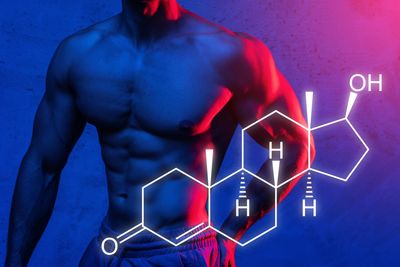
It’s this hormone – an anabolic steroid, technically, albeit one that is produced naturally inside the body – which is also to thank for men’s deeper voices, their beards and baldness, and their potential to grow muscle beyond that which most women could naturally achieve.
It’s important for libido, and, in a more complex way, erectile function. It is, in many ways, the “man” hormone.
But is it fair to hang the entire definition of manhood on such a singular chemical? Probably not.
“We thought that testosterone was [just] this masculinizing hormone, which we now know in effect is not the case,” Satchi tells IFLScience. “Yes, it will contribute to masculine physical development, but […] it is absolutely not a measure of how ‘manly’ someone is.”
The tea on T
No matter who you are, right now, there is testosterone in your system. Perhaps it’s not a lot – women usually produce between eight and 10 times less than men – but it’s there, and it’s no less important for being smaller in volume.
“Broadly speaking, testosterone is important in women – more important as we get into our perimenopausal age,” explains Satchi. “It can cause symptoms of sexual dysfunction or low libido.”
In men, however, its function is much more broad. Yes, it’s crucial for sexual and reproductive health – testosterone is responsible for the development of primary and secondary male sexual characteristics, as well as the production of sperm – but it also affects things like muscle growth, bone density, lean body mass, and so on.
There is, to put it bluntly, a reason it’s used by gym bros.
“We find that men with low testosterone, for example […] they'll go to the gym, they'll exercise lots, and they'll say, I'm really having trouble putting on muscle,” Satchi says. “And that is directly attributable to having low testosterone, which is really needed to build that lean muscle mass.”
In fact, testosterone deficiency can present in a whole host of ways. “The main symptoms – [these] have come out of a big study called the European Male Aging Study – [are] erectile dysfunction, loss of early morning erections and loss of sex drive,” Satchi explains. “[But] other symptoms that they list [are] like, low mood, loss of energy, [or] brain fog.”
“It's all linked to overall men's health, men's sexual health, and overall wellbeing.”
Testosterone, then, is an important hormone. But at the same time, it’s probably not one you should worry about unduly. In the US, testosterone deficiency is present in only one or two percent of men under the age of 50. Numbers are similar in the UK, even if far more may suspect they have a problem.
“I do see a few young men who will come in in their 20s and say, ‘my testosterone is point-one off the normal range. I want to be completely normal’,” Satchi tells IFLScience. “But I would say, [for] your average young man, the only [reason] that we check a man's testosterone is when they have infertility.”
It’s an attitude that may surprise those fed a diet of tabloid headlines. There, testosterone is something to be panicked over: a hormone in crisis, with population-wide levels lower now than ever before.
That’s not entirely untrue – “there is some data that's come out of America where they've looked across the decades,” Satchi says, “and you can see that comparatively, there was a decline in testosterone” – but it’s far from the clear-cut issue it’s often presented as.
For individuals, testosterone levels decrease naturally with age, but only slowly – not by enough to cause medical problems, at least until much, much later in life; they can also be affected by illness, stress, or a myriad other factors.
At a population level, meanwhile, Satchi believes our modern lifestyles may play a part in declining testosterone rates.
“We haven't got much,” she says. “We don't have any longitudinal data in the UK or in Europe that I'm aware of. But we know […] that there is a big change in the way that people are living their lives. Obesity, [...] poor metabolic health – [these are] all reasons why we might see these low testosterones across a lifespan.”
A political hormone
Typically, endocrinology is not a super high-profile medical field. There is little controversy over the prescribing of insulin or thyroxine, for example; no moral panics or outrages about how many people are unusually tall or short due to an over- or underactive pituitary gland.
It’s different with sex hormones. Increasingly, governments are legislating against puberty blockers and hormone therapy based solely on the gender identity of the person who needs it.
Women are told to panic over perfectly safe birth control pills, and fed wild misinformation by social media about their fertility and menopause; they’re expected to intuit hormonal “imbalances” and take mostly pointless supplements to remedy them.
But where women’s hormones are presented as a delicate balancing act, men are often being given the opposite advice: more, more, more.
Having testosterone will make your testicles teeny tiny.
Maria Satchi
“The manosphere has co-opted testosterone as a biological marker of masculinity,” explain Samuel Cornell, Benjamin Bonenti, and Timothy Piatkowski, all researchers in Public Health at the University of Queensland, in a recent article for The Conversation. “The message is that a low testosterone level – or ‘low T’ – is something to fear and fix. But a ‘high T’ is a marker of a ‘real man’[.]”
“This same cultural movement has helped fuel the T-maxxing phenomenon,” they write. “This encourages mainly boys and young men to chase testosterone without medical need under the influence of figures who equate manhood with dominance.”
Of course, the “manosphere” is no stranger to bad science. But last year, something happened that took these dangerous and misleading ideas into the most main of mainstream: the installation of the second Trump administration.
Now, the US has a Health Secretary who openly touts his own testosterone-supplementing regimen; who baselessly claims that “a teenager today, an American teenager, has less testosterone than a 68-year-old man” and who boasts about the President’s supposed testosterone levels.
Secretary of Defense Pete Hegseth, meanwhile, has gone even further. This July – a mere 18 months after banning transgender troops from the army, an order justified in part on their reliance on hormone therapy – he announced a new measure for military personnel:
- mandatory testosterone screening for all service members over the age of 30;
- voluntary testosterone screening for those under 30;
- and voluntary testosterone replacement for those found to have “low” levels.
“But choice in the military is not the same as choice as a civilian,” point out Cornell, Bonenti, and Piatkowski. “Personnel who are offered testosterone therapy after a low screening result may feel pressure to accept treatment, even if they have no symptoms.”
It’s a measure being decried as unscientific at every level: flawed both conceptually – a person’s testosterone level alone says nothing about how capable or effective a soldier they are, and there’s very little evidence for raising them artificially if no other symptoms are seen – and in practice, as a single test simply isn’t enough to diagnose low testosterone in any individual.
Levels of the hormone “will vary from month to month, so we would never act on a single [result],” says Satchi. “It has to be a measure of symptoms plus low testosterone.”
Like any biological marker, what’s “low” for one person may be “normal” for another – a fact which particularly rings true in unusual populations like the army.
Testosterone levels can be reduced by some types of exercise; so too can insufficient or disrupted sleep; in fact, any kind of psychological or physiological stress can produce a temporary reduction in the hormone.
All of these factors are, of course, standard for soldiers in training or on deployment, which makes any comparison to some population-wide “normal” result effectively meaningless – like denying somebody food for a day, then saying they had higher-than-average hunger levels and should be put on a lifetime regimen of chocolate cake as treatment.
And make no mistake: this may well be a life sentence. “Testosterone production can recover after you stop taking testosterone,” wrote Cornell and Piatkowski, along with Swansea University sports scientist Luke Cox, in an article from August last year. But “this can be slow and is not guaranteed, particularly after long-term or unsupervised use.”
The dangers of high-T
In November 2025, the 19-year-old “looksmaxxing” influencer known as Clavicular made an offhand announcement that likely surprised many of his devotees.
“So, right now, I am infertile. I'm not able to have a kid right now,” he told the right-wing streamer whose channel he was guesting on. After five years of supplementing his natural testosterone levels with hormone replacement therapy, he explained, he had triggered “a negative feedback loop” in his body, “when you're, you know, not needing to produce testosterone anymore, because your body realizes, okay, we're getting it from an outside source.”
“So, you're not producing any testosterone naturally?” his host clarified.
“No, none,” Clavicular replied. “No.”
It’s a result that will sound familiar for experts like Satchi.
You can walk in, and walk out with testosterone as if you've bought a can of soda.
Maria Satchi
“This is what we're seeing in clinic,” she says. “Men will come to see us with zero sperm counts, and will often deny that they've been taking testosterone – but usually from their blood tests and their physique, it's very evident that they’re on testosterone.”
“If you give yourself testosterone […] you're telling your body, ‘I've actually got enough testosterone’,” Satchi explains. “So that signal going to your testicles to produce testosterone and sperm is switched off.”
Like Clavicular, many of these patients will have sourced their testosterone from less-than-reputable suppliers: “they're getting it from their friends at the gym,” she explains, or online – and without the input of a legitimate endocrinologist or urologist, they’re not hearing about some of the very real consequences of overdosing on the hormone.
“Having testosterone will make your testicles teeny tiny,” points out Satchi. “Having testosterone will stop your sperm from developing […] and testosterone is aromatized into estradiol, so if men are taking copious amounts of testosterone, they’ll also have breast enlargement.”
“All of these things may happen to you,” she warns. “[People] manipulate their hormones without being completely aware of the risks.”
Not all side effects are quite so ironic. There are also major cardiovascular risks, Satchi explains: since testosterone stimulates the body to create red blood cells, overuse of the hormone can raise your risk of heart attacks, blood clots, or stroke. It can make you bald; give you acne. In particularly dire circumstances, it can kill you.
“On the black market, testosterone is sold in gyms, or online via encrypted messaging apps,” point out Cornell, Piatkowski, and Cox. “These products can be contaminated, counterfeit or incorrectly dosed.”
“People taking these drugs without medical supervision face potential infection, organ damage, or even death, since contaminated or counterfeit products have been linked to toxic metal poisoning, heart attacks, strokes and fatal organ failure.”
Storm in a T-cup
There’s no denying that testosterone is important – for everybody, in fact, even if it is much more abundant in men. But the current furore around this humble hormone threatens to turn a useful health marker into the epicenter of the next big health crisis.
“It’s very frightening,” says Satchi. “There are lots of ‘clinics’ that are popping up all over London, where you can walk in, and walk out with testosterone as if you've bought a can of soda.”
But taking supplementary testosterone is not a risk-free endeavour. Whether pressured by social media, their gym buddies, or a superior officer, men who take ultra-high doses of the hormone without medical testing or supervision are exposing themselves to a whole range of health problems.
“These guys come to us in the fertility clinics,” Satchi says. “That's where we're picking them up. They’ve been on testosterone for a long time, and nobody has told them that it's going to make them infertile.”
“That's the fear – because this is being taken out of [doctors’] hands,” she warned. “And there are lots of risks that men need to be aware of if they're going to push themselves [with] very high levels of testosterone.”