Nature
 PUBLISHED
 2
2



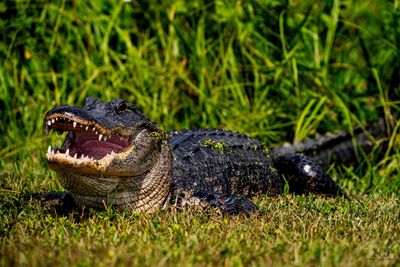


Hunters in Louisiana are gearing up for the first chance to hunt alligators for sport in the state in over half a century.
The Louisiana Department of Wildlife & Fisheries (LDWF) opened a lottery to allow up to 5,000 recreational hunters to bag up to two alligators each. The move comes as the population of alligators in the state is thought to have risen to at least 3 million animals.
A recovered population
People have been hunting alligators in the waterways of Louisiana since the 1800s. By the time the 1950s came around, the population of animals had been decimated and heavy restrictions were put in place.
From 1962 to 1972, all alligator hunting was banned so the population could stabilize. The LDWF then allowed tightly regulated commercial harvesting for the meat and skin trade. According to official figures, the annual harvest is around 24,000 alligators that contribute to a $250 million industry each year.
Since reaching a low of fewer than 100,000 alligators in the 50s, the LDWF now estimates there are up to 3 million of these massive reptiles in the state. Now, for the first time since 1962, recreational hunters will be allowed to hunt them.
Individuals can enter a lottery to be assigned one of 5,000 places available to hunt alligators during the month of October. There are, as expected, a bunch of rules that any potential hunter needs to follow if they wish to take part.
First and foremost, all hunters applying for the lottery must be residents of Louisiana. In addition to that, they must possess a valid basic hunting license and be a properly licensed recreational alligator hunter.
Each hunter will be granted up to two alligator tags, meaning a total of 10,000 alligators could be killed. These tags are only to be used by the hunter who wins them, and they cannot be transferred, sold, or gifted.
Other people can join the tag holders for the hunt, but the named individual must be present the entire time.
Fishing for gators
There are also strict restrictions on how alligators can be hunted, with the only permitted methods being hook and line or snatch hook.
For those who are perhaps a little less experienced at alligator hunting, this is exactly what it sounds like. A hook baited with meat, such as chicken, is suspended from a pole that’s then dangled over the water. The alligators jump to get the bait and are caught in the process. Basically, it's alligator fishing.
If an alligator is caught, it must then be killed immediately with a shot between the eyes.
The LDWF is clear that this is the only permitted method, prohibiting pole hunting or the shooting of free-swimming alligators. Hunters are also only allowed to take an animal during daylight hours.
As of today, the lottery has closed. But the LDWF will continue to monitor the alligator population, and if this scheme is a success, it may recur in the years to come.