Humans
 PUBLISHED


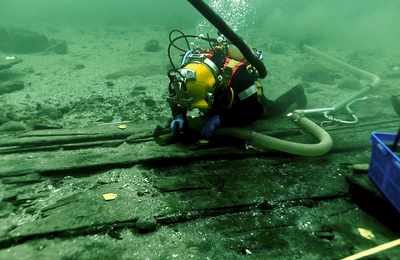


Many centuries ago, someone was furious that their delivery didn’t show up. The reason for this logistical mishap wasn’t a screw-up at Amazon HQ, but because a giant cargo ship had sunk to the seafloor. Fast forward 600 years, and marine archaeologists have uncovered the full story.
The shipwreck was identified by marine archaeologists from the Viking Ship Museum near the Danish capital of Copenhagen in the Sound, the skinny strait of water between Denmark and Sweden. This vital waterway, connecting the Baltic Sea to the Atlantic Ocean via the North Sea, has been a bustling maritime route for centuries and remains one of the busiest waterways in the world
After removing centuries of sand and silt, the team realized they had uncovered the world’s largest cog, a type of ship developed in the North Sea region during the Middle Ages. The ship, named Svælget 2, measures around 28 meters (92 feet) long, 9 meters (30 feet) wide, and 6 meters (20 feet) high, and was large enough to haul up to 300 tons of cargo.
“The find is a milestone for maritime archaeology. It is the largest cog we know of, and it gives us a unique opportunity to understand both the construction and life on board the biggest trading ships of the Middle Ages,” Otto Uldum, maritime archaeologist and excavation leader, said in a statement.
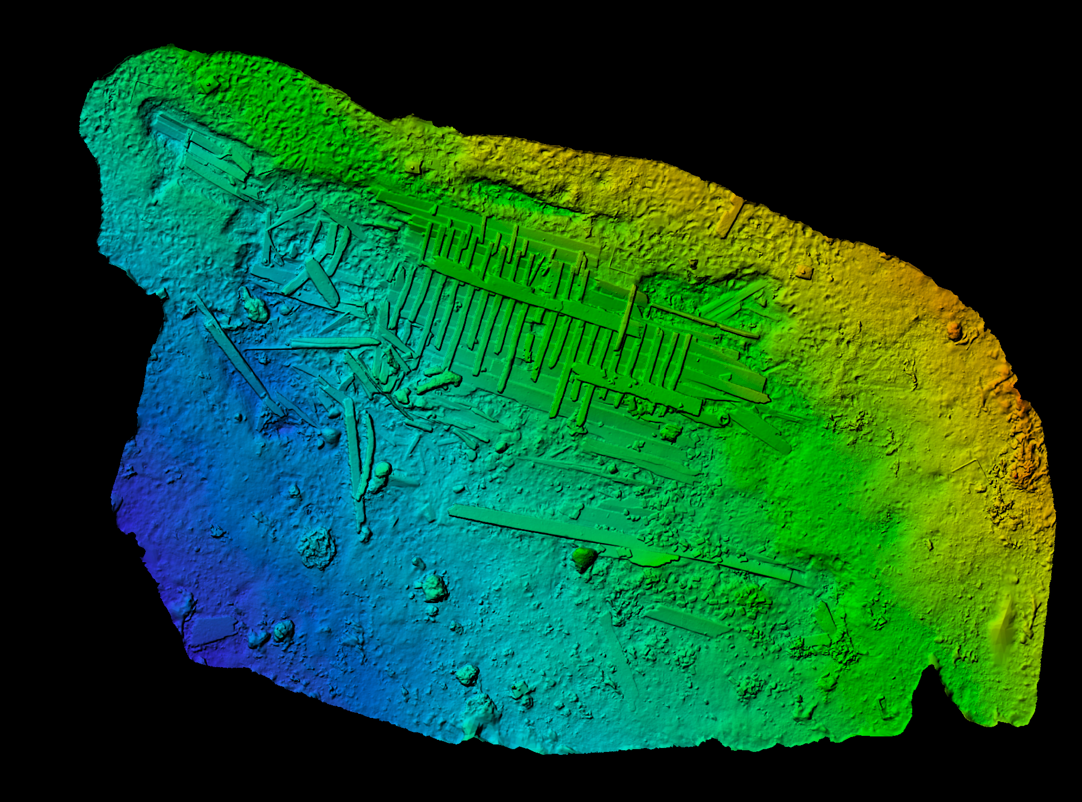
By studying the tree rings in the ship’s wood, the researchers worked out it was built around 1410 CE. The timber used came from two regions: the planks were made of oak from Pomerania in modern-day Poland, while the ship’s “ribs” were sourced from the Netherlands.
Cogs were a major technological breakthrough of the day, akin to modern freight ships or cargo aircraft, and played a central role in the economic boom of Northern Europe during the 15th century CE. “The cog revolutionised trade in Northern Europe," said Uldum. "It made it possible to transport goods on a scale never seen before."
The sand that caked the sunken wreck actually helped to protect the ship from the harsh watery conditions and preserve it like a form of mummification.
Thanks to this incredible preservation, the archaeologists were able to get a first glimpse of how cogs were built. Historians know that cogs had distinctive “high castles” from the many illustrations of these Medieval ships. However, physical remains of these structures have never been discovered – until now.
“We have plenty of drawings of castles, but they have never been found because usually only the bottom of the ship survives. This time, we have the archaeological proof,” explained Uldum.
Unfortunately, no trace of cargo has been found. The team suspects this is because the hold was not covered, so barrels of salt or bundles of cloth would have drifted during the ship’s sinking.
They did, however, discover some personal belongings from the crew, including shoes, combs, and rosary beads. In the brick-walled galley area, they found a kitchen scene, complete with bronze cooking pots, tableware, painted wooden bowls, and remains of fish and meat.
“It speaks of remarkable comfort and organisation on board. Now sailors could have hot meals similar to those on land, instead of the dried and cold food that previously dominated life at sea,” commented Uldum.
“We now know, undeniably, that cogs could be this large – that the ship type could be pushed to this extreme. Svælget 2 gives us a tangible piece of the puzzle and makes it possible to understand how technology and society evolved side by side in an era when shipping was the driving force behind international trade."