Space and Physics
 PUBLISHED





Crystals are regular arrangements of atoms that repeat in space. But what if you had an arrangement of particles that repeat in time? Spontaneously coming together with a certain period over and over again, even though the properties might change? Theoretically, this was defined by Nobel laureate Frank Wilczek in 2012, and over the last few years they have been discovered in a lot of setups, including in a children’s toy.
But their general duration is brief, lasting for a fraction of a second. Now physicists have been able to create a robust time crystal that was shown to survive for at least 40 minutes. That’s 10 million times longer than previous time crystals, which usually last just a few milliseconds. And researchers believe it could be even longer-lived than that.
The team at TU Dortmund University designed the special crystal in a material called indium gallium arsenide. This semiconductor material is manipulated in a way similar to nuclear magnetic resonance, which induces the spins of its atomic nuclei to become polarized. Thus, the material is slightly magnetized. The interaction between the spin of the nuclei and that of the electrons in the material generates the polarization, and those spontaneous interactions make the time crystal.
The periodicity at which the time crystal appears can be easily manipulated in this setup, which could have intriguing applications. And the whole time crystal can be "melted", creating a chaotic system with potentially fascinating properties.
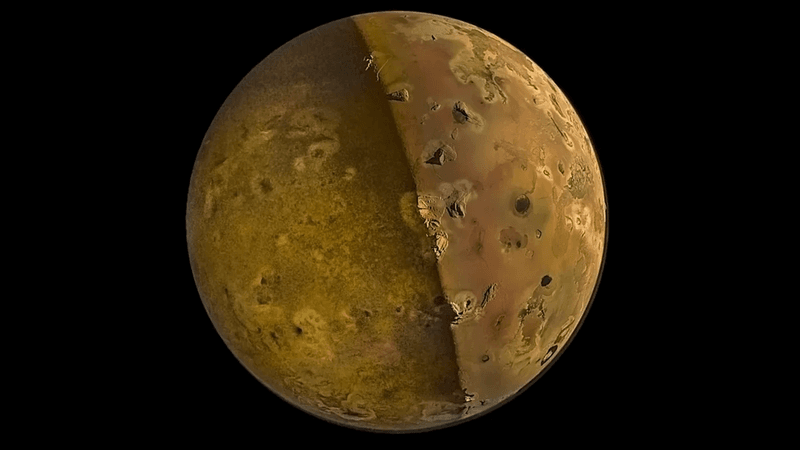
Time crystals are often visualized by imagining a complex timepiece where the numbers are made to appear by weird mechanical parts coming together once a minute. Another scenario is comparing a time crystal to the moons of Jupiter, since their orbital periods are in resonance. This means that for every four orbits of Io, Europa does two, and Ganymede does one. So every 7.15 days, the pattern repeats itself. These are good analogies but they miss a crucial thing: they require energy and they lose energy.
A true time crystal requires no energy, so the periodicity is not induced. It’s not like a pendulum being wound up. Time crystals just repeat themselves.
If this sounds like perpetual motion or another hypothetical violation of thermodynamics, worry not. Thermodynamics is safe. A time crystal is a limiting case where the entropy change is zero.
The study is published in the journal Nature Physics.