Humans
 PUBLISHED
 1
1


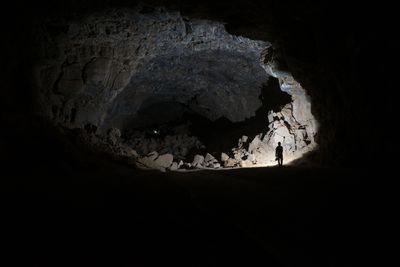


A lava tube in Saudi Arabia sheltered ancient humans for at least 7,000 years, new research has hinted. A treasure trove of archaeological finds – including artifacts, rock art, and skeletal remains – suggests for the first time that the extensive cave system was used by human pastoralists and their livestock for several millennia.
The Umm Jirsan lava tube is situated in the Harrat Khaybar volcanic field in northwestern Saudi Arabia and stretches for 1,481 meters (4,859 feet) beneath the landscape, making it the longest lava tube in the country.
Such caves and lava tubes are prevalent in Arabia but have barely been explored, meaning they could well be hiding a wealth of secrets about the evolution and cultural development of prehistoric human populations in the region. And the latest discovery at Umm Jirsan has not disappointed.
Ancient rock art and faunal records reveal numerous phases of human occupation at the site, spanning from the Neolithic through to the Chalcolithic/Bronze Age (approximately 10,000-3,500 years ago).
"Our findings at Umm Jirsan provide a rare glimpse into the lives of ancient peoples in Arabia, revealing repeated phases of human occupation and shedding light on the pastoralist activities that once thrived in this landscape," lead researcher Dr Mathew Stewart said in a statement.
"This site likely served as a crucial waypoint along pastoral routes, linking key oases and facilitating cultural exchange and trade."
The cave, the team conclude, was likely not used as a permanent residence, but instead became a much-needed stopping point for weary travelers to shelter and rest as they traversed the desert.
.jpg "The entrance to Umm Jirsan cave")
Previously, archaeologists had discovered hundreds of thousands of bones, including human remains, at Umm Jirsan, which had amassed over a period of 7,000 years.
Looking more closely at these remains in the new study, the team deduced that the humans occupying the cave maintained a protein-rich diet, with a notable increase in the consumption of certain types of plants, such as cereal and fruit, over time. This, they say, supports the emergence of oasis agriculture in the Bronze Age.
Analysis of animal remains, meanwhile, indicated that the livestock these humans shared the cave with grazed primarily on wild grasses and shrubs.

Rock art depicting cattle, sheep, goats, and dogs alongside humans further supports the idea that the tubes were used by livestock herders.
“Exploring Arabia’s hidden past, our study uncovers millennia of human occupation within and around the Umm Jirsan lava tube, shedding light on ancient lifestyles and adaptations to environmental change in this harsh desert environment,” the study authors said in a second statement.
The study is published in the journal PLOS ONE.