Space and Physics
 PUBLISHED



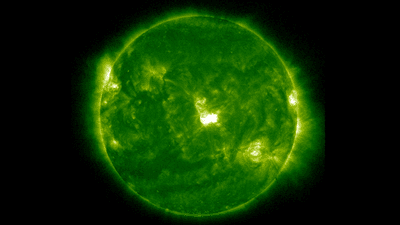


The Sun is just past its peak of activity for this solar cycle, but that does not mean it is done with its fireworks. A relatively weak flare yesterday has caused a minor radio blackout, and it might lead to some aurorae on Friday as a large wave of plasma has left the Sun, speeding towards our planet.
Currently, the bulk of the coronal mass ejection will miss the planet, but there will be an increase in plasma density across Thursday and Friday, according to the current estimates. There are no updated forecasts for aurorae visibilities, but if you hope to catch some pretty lights in the night sky, keep an eye on the Space Weather Prediction Center.
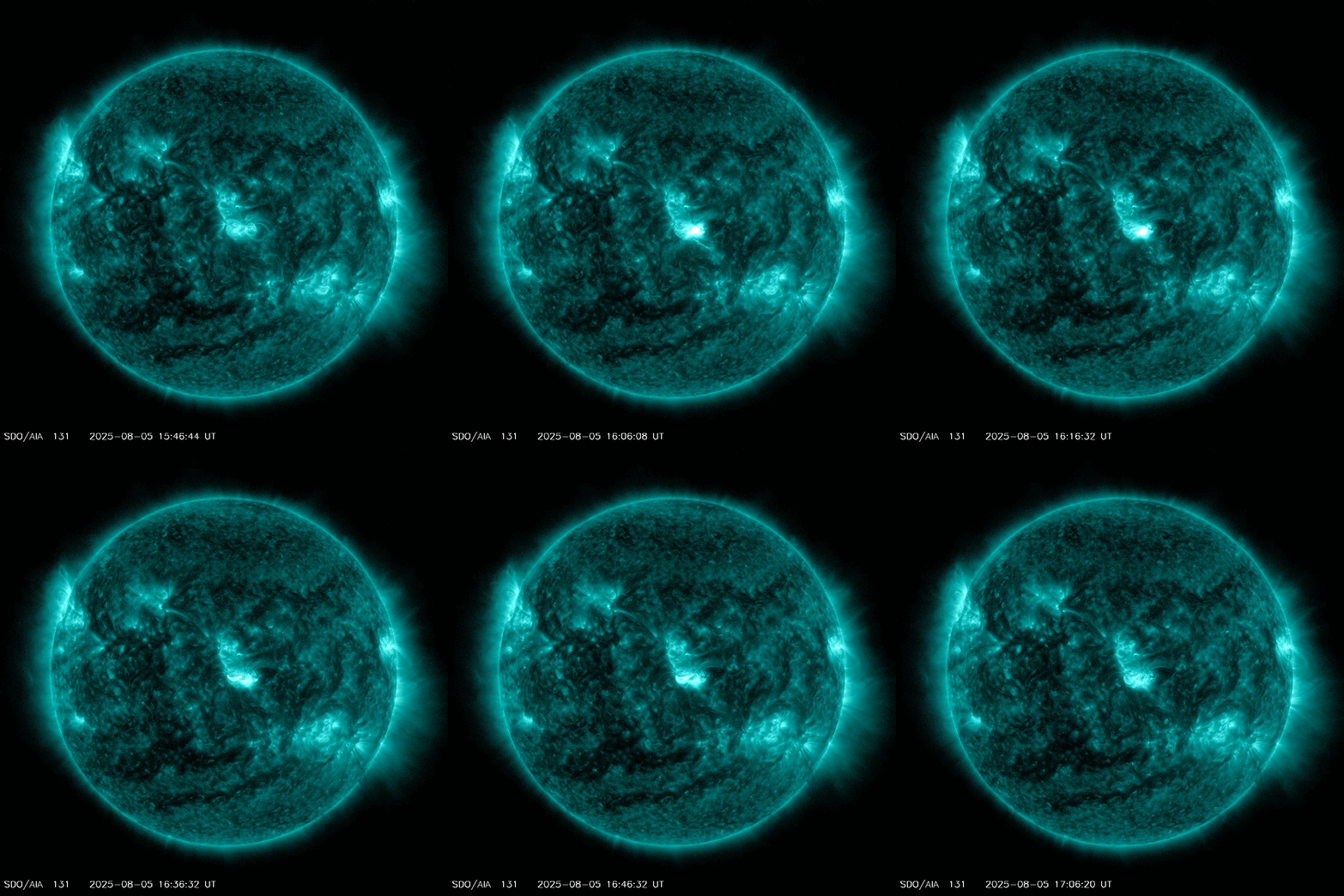
The flare was quite weak as flares go. It was a M4.4 – this is the medium-size class, which at most causes brief radio blackouts, mostly localized, and with minor radiation storms on occasion. There have been many bigger flares in the last few months than this. Still, the flare suggests that the sunspot 4168 is one to keep an eye on. It is fairly big and can be easily seen with small solar binoculars.
The activity of the sunspot was linked to a coronal mass ejection (CME), a rapid release of plasma that is coming to Earth in the next few days. Northern and southern lights are produced when these interplanetary charged particles get trapped in the Earth’s magnetic field and slam into the atmosphere.
.gif "Two bird eye view of the sun show waves coming from the Sun, the CME is shown as an anomalous waves delivering a glancing blow to Earth")
Depending on the energy and altitude, they might slam into different gases, producing different colors. This is due to atoms in our atmosphere becoming ionized (losing or shifting electrons) due to interaction with solar particles. The return to the status quo (regaining the electron, or the electron going back to the ground state) means that the atom loses energy, which is released as light.
This energy is always the same for the specific transition. So, most of the aurorae are green because that’s the color released by oxygen, which is easy enough to excite. If the Sun is particularly active, you can have a red one, either because of nitrogen (occasionally with hints of purple, blue, and pink) or, for the really energetic ones, a different oxygen excitation.
We will know more in the coming days if we have widespread aurorae. Regardless, August is spoiling us; the Perseids meteor shower is peaking next week, around two planetary conjunctions, a planetary alignment, and even the last Black Moon for two years. Enjoy the night!