Nature
 PUBLISHED



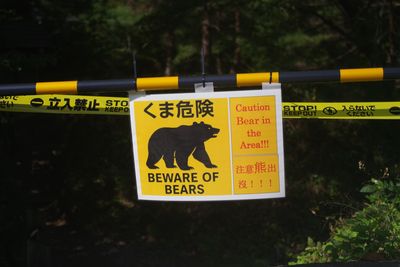


Over the past few decades, the bear population in Japan has skyrocketed. As a result, there has been a surge in bear attacks, leading to a government cull that has been criticized as heavy-handed.
According to official data, a total of 14,000 bears were killed from April 2025 through January 2026, a rate of roughly 40 a day. This included around 12,000 Asiatic black bears and 2,000 brown bears. Last year, bears are thought to have attacked at least 230 people, leading to 13 deaths (up from five in the year to April 2024).
It might come as a surprise to some people, but Japan has a rather large population of bears.
The northern island of Hokkaido is home to a subspecies of brown bear. This subspecies, the Ussuri brown bear, is also found across much of the Russian Far East and northeastern China, and it has darker fur than other Eurasian brown bears.
The largest island, Honshu, and the slightly smaller Shikoku, are instead home to the smaller Asian black bear. Unlike its American counterpart, this species has a flash of white around the collar and can be found roaming from Iran and Pakistan all the way along the Himalayas and down into Southeast Asia and Japan.
Attacks on the rise
The population of black bears in Japan is the result of a huge conservation success story. Since the 1970s, the species has recolonized much of its former range, and its numbers have increased from an estimated 15,000 in 2012 to more than 40,000 today.
This is partly down to people having abandoned farming and agriculture as they moved to the cities. As a result, habitat that was once fragmented is now more connected, increasing the overall forest available to the bears and allowing them to travel further and enter regions they were previously cut off from.
Some bear populations in Japan are doing so well that their numbers are thought to be increasing by at least 11 percent annually.
Japanese black bears are believed to make up the majority of the global population of perhaps 60,000 Asian black bears. But these figures are hard to confirm. It is incredibly difficult to track the number of bears accurately, and some suggest that there could be even more bears in Japan than the latest stats say.
Assuming the numbers are in the right ballpark, however, it would mean that Japan potentially culled 20 percent of the global population of Asian black bears last year alone.
More bears and a changing climate
It seems likely that the increase in bear attacks also has something to do with Japan's rapidly changing climate.
The forests on which the bears usually rely are producing fewer nuts and acorns, while a decline in pollinating insects has resulted in less fruit. This may be contributing to the bears more frequently coming into villages and towns, putting them in direct conflict with those who live there.
Regardless of the cause, the response from the government has been quite dramatic.
With such a sharp rise in attacks and deaths, there is national support for the culling. But conservationists are concerned that with a lack of definitive population data on the bears, the cull could be tipping things too far in the opposite direction.
“If this level of trapping continues, we believe regional extinctions are a real possibility. We feel a profound sense of crisis,” Yuko Muroya, chair of the Japan Bear and Forest Society (Kumamori), told the Guardian last week.
Instead, they advocate for non-lethal methods of control. This includes trapping and relocating problem bears, using “bear dogs” to scare the predators away from villages, and installing bear-proof infrastructure to prevent any hungry animals from raiding homes.

 1
1