Humans
 PUBLISHED



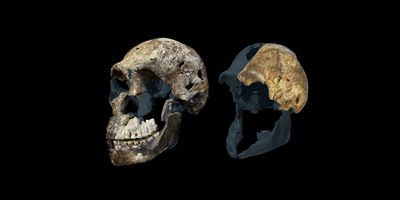


The Homo naledi story just took another massive twist after researchers revealed that none of the specimens found at the now infamous Rising Star cave system were biologically male.
Previously, it'd been suggested that the site was used as a burial ground by this prehistoric hominin, and while many researchers are reluctant to accept this idea, the new findings add another layer of mystery to this ongoing saga.
H. naledi was a species of human ancestor that lived between 335,000 and 241,000 years ago in southern Africa. First discovered in the Dinaledi chamber of the Rising Star caves in 2015, the creature had a brain just larger than that of a chimp and an upper body similar to primitive hominins like Lucy, while also possessing hands and facial features reminiscent of the Homo lineage.
Yet despite H. naledi’s small brain, the researchers who discovered the species say it deliberately buried its dead and produced rock art more than 100,000 years before Neanderthals or Homo sapiens began doing the same. These claims have received a significant amount of pushback from others within the field, and the topic has become one of the most hotly debated anthropological issues in recent years.
The chance of this occurring is right on one in a million, for chance selection of flipping a coin 20 times and getting heads each time.
Lee Berger
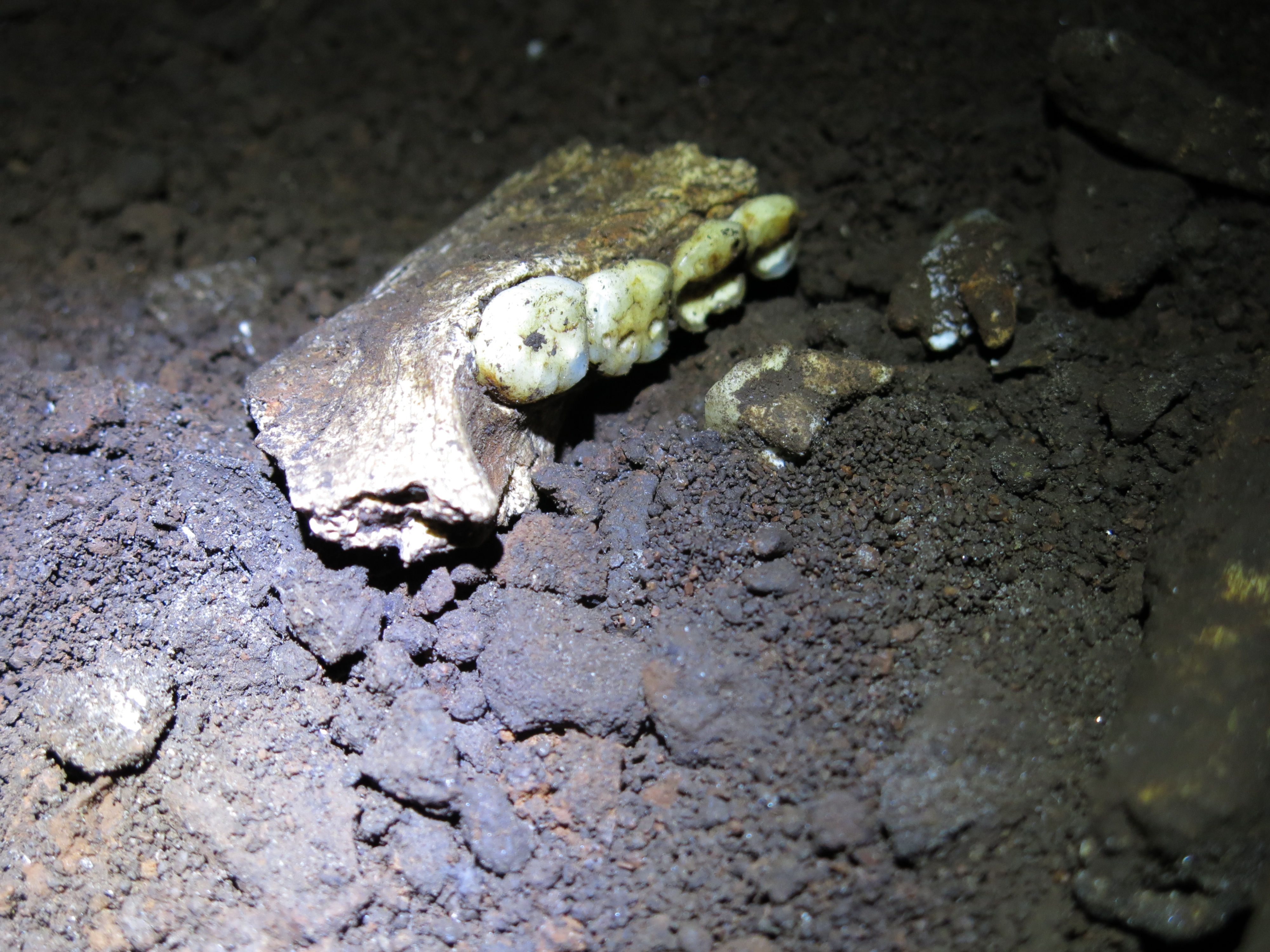
To understand more about this enigmatic hominin, researchers have now analyzed proteins extracted from the dental enamel of 23 teeth belonging to at least 20 H. naledi individuals. The study authors sought to determine the sex ratio among the sample by looking for a protein called Amelogenin-Y, which is coded onto the Y chromosome and is therefore only possessed by males.
Staggeringly, not one tooth contained the protein, suggesting that none of the specimens sampled were male. Of the 20 individuals, 19 were confidently identified as female while the remaining specimen was “consistent with a female attribution”, the researchers report.
“It’s mind-blowing,” said study author Lee Berger to IFLScience. “The chance of this occurring is right on one in a million, for chance selection of flipping a coin 20 times and getting heads each time,” he says. In fact, in a population with an even split of males and females, the probability of randomly selecting a female 20 times in a row is 0.0000954.
Berger – who led the initial discovery of Homo naledi – says that in a way, this finding makes sense. He and his team had already noted a remarkable lack of physical differences between any of the H. naledi specimens found thus far, hinting at an inexplicably low level of sexual dimorphism in this species of hominin.
“In 2015, we said it was the least sexually dimorphic hominin species ever discovered,” he explains. “There seemed to be no differences between males and females – and remember, we were dealing with thousands of bones.”
As it turns out, the reason for this could be that every individual was female. Even a slightly chunkier specimen – nicknamed Neo – that had been considered the most likely candidate for male, has now been identified as female.
It's not uncommon in contemporary humans, but it's almost always associated with the “R” word.
Lee Berger
One potential explanation could be that Homo naledi had a patriarchal social structure, in which a single alpha male lived with a community of adult females and infants. Perhaps, then, researchers are simply yet to find this prehistoric strongman.
However, Berger points out that “there are no baby boys, and more than half of our sample are subadults.”
“In every society, whether it's patriarchal or matriarchal, there would be baby boys,” he says. Social organization based on biology therefore seems an unlikely explanation, which Berger says probably points towards sex-based mortuary practices.
“It's almost certainly some sort of complex cultural signal,” he says. Similar cases of separate male and female burial grounds have until now only been attributed to our own species Homo sapiens, with the earliest known examples occurring in Neolithic Iberia.
“It's not uncommon in contemporary humans, but it's almost always associated with the “R” word,” explains Berger. Careful not to drop an R-bomb without sufficient evidence, he says it’s not possible to say whether H. naledi had religion, or whether the new findings might represent an aspect of a system of beliefs.
It’s also important to stress that these findings still don’t prove that Homo naledi performed deliberate burials, and researchers are actively trying to work out if the hominin had the cognitive capacity for such activities.
Anthropologist Zach Cofran, who wasn’t involved in the study but has recently published research on the structure and function of the H. naledi brain, told IFLScience that “there are lots of different ways that this could be interpreted.”
“If you look across living primates today, it would be pretty rare to find a group of only females,” he says. “So maybe this is some kind of cultural behavior. I don’t know, but it’s fascinating.”
This is a debate that is certain to rumble on, with the new revelations opening up a whole new set of questions about this puzzling hominin. For instance, as Berger points out, it’s now clear that “we don't know what a naledi male looks like.”
“We don't know if they are part of these rituals or if they are treated differently in death,” he says. “Were they treated the same way somewhere else? I assure you, we are looking.”
The study has been published in the journal Cell.