Humans
 PUBLISHED



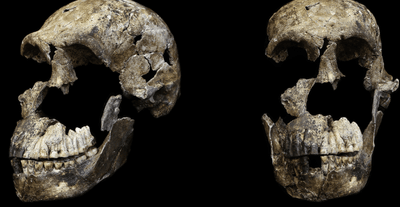


An extinct hominin called Homo naledi has been at the center of a major anthropological argument for the past few years, after researchers controversially claimed that this small-brained creature developed funerary practices more than 100,000 years before our own species did. Naturally, the debate has focused largely on the neurological hardware possessed by this prehistoric human ancestor, and new research has provided fresh insights into the type of brain H. naledi might have had.
Based on endocasts - which are casts of the internal surface of the skull - researchers had previously determined that H. naledi’s brain was about the size of a gorilla’s. Given that apes aren’t capable of mortuary practices, creating rock art or any of the other feats that this prehistoric hominin has been credited with, many scholars remain highly skeptical that H. naledi really did any of these things.
To add a bit more nuance to the debate, the authors of a new study virtually reconstructed the full endocast of the most complete Homo naledi cranium found within the Rising Star cave system in South Africa. This enabled them to obtain a greater understanding of the structural organization of the hominin’s brain.
“What was interesting is that this naledi endocast ends up being most similar to fossils that we attribute to Homo erectus from Indonesia,” study author Zach Cofran at Vassar College, New York, told IFLScience. “We think that is kind of like a precursor stage, if you want to think of it that way, to Neanderthals and modern humans.”
However, while Homo erectus first appeared around two million years ago, H. naledi is thought to have existed between about 335,000 and 240,000 years ago.
In their paper, the authors go on to explain that the H. naledi endocast “is not simply a “scaled-down” H. erectus brain at a smaller size." Instead, it features a unique combination of traits, some of which appear more ancestral while others are more in line with what we might see in the most recent members of the Homo lineage (like us, for example).
In particular, the endocast suggests that H. naledi sported an enlarged inferior frontal gyrus (IFG), which is strongly implicated in advanced cognitive functions like language and tool use. In fact, an expanded IFG is one of the major morphological distinctions between the brains of humans and apes.
“This area is a little bit relatively bigger in naledi, or at least in this one specimen, but figuring out what exactly that means is pretty tricky,” says Cofran. “It’s tempting, but you’ve got to be careful about speculating that maybe the whole prefrontal cortex is more like humans or that the functions that are executed in this area are more important.”
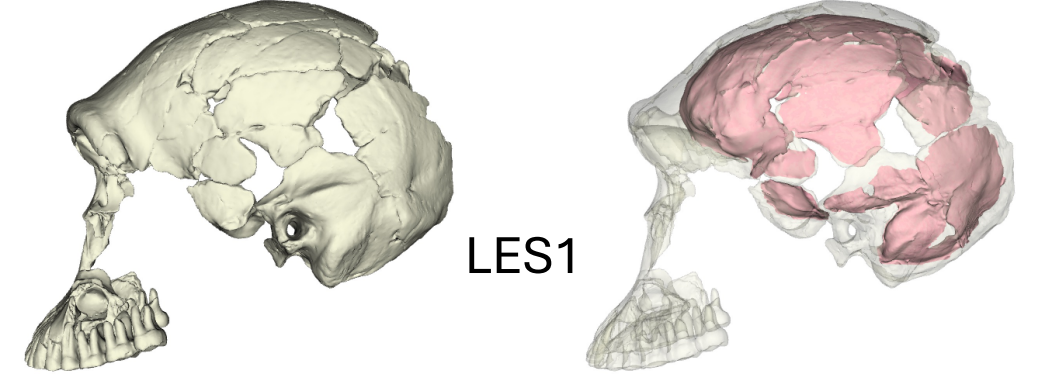
At this stage, all that the study authors are prepared to state is that “the relatively enlarged orbitofrontal region and derived IFG anatomy of H. naledi could represent the neural substrates through which individuals engaged in ‘advanced’ behaviors requiring imagining, planning, and executing large action sequences.” Whether or not these activities included burying the dead or creating rock art, however, remains unclear.
“Whether they were burying the dead is largely an archaeological question, and what their endocasts tell us about their brains is more anatomical and physiological,” says Cofran. “Of course they're related, but linking all the different pieces of the two components there is really fraught.”
The study has been published in the journal Brain Structure and Function.


 5
5