Humans
 PUBLISHED
 1
1





After gathering a bunch of mouse cells in the lab, scientists genetically tweaked them to produce a Neanderthal variant of a signaling protein. They discovered that it responded more strongly to growth hormone and produced up to 40 percent more cells.
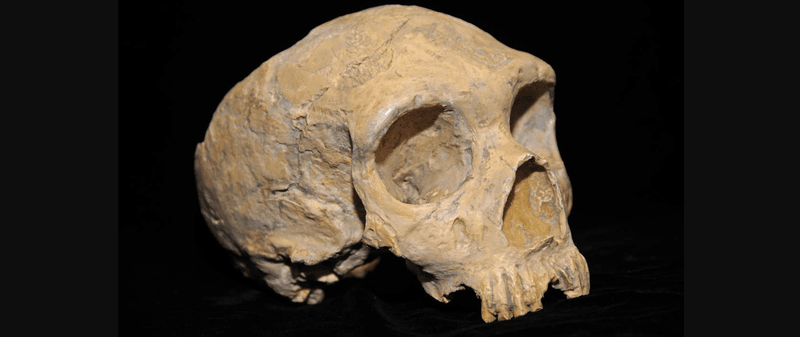
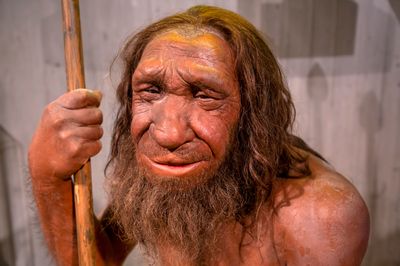
The findings back up the idea that Neanderthals were bulkier and more muscular than modern humans, something we already knew from looking at the sturdy structure of their skeletons.
But what's most intriguing is that some modern humans also possess this Neanderthal variant. People carrying it have, on average, around 270 grams more muscle mass than those who don't. They're also slightly taller and a bit heavier.
"What struck me most was that two very different types of evidence told the same story," Philipp Kanis, first author of the study and a postdoctoral researcher at the Max Planck Institute for Evolutionary Anthropology in Leipzig, Germany, said in a statement.
"Cells grown in the laboratory responded more strongly, while data from more than a million people showed signs of the same effect in the body. It is rare to see laboratory and population evidence fit together so clearly," he added.
Prehistoric muscle
Neanderthal genetics arrived in modern human populations thanks to prolific interbreeding between us and them around 47,000 years ago. This occurred in parts of Eurasia after Homo sapiens spread beyond Africa, meaning Neanderthal genetic variants generally aren't found in modern African populations.
The particular gene variant of interest in this study, which codes for a kind of protein that acts as a signal receptor, is especially common in South and East Asia, where up to 24 percent of some populations carry it. It's also found in people of European ancestry, but only around 0.5 percent of the population.
Since Neanderthals are generally associated with Europe, you might expect modern Europeans to be the most Neanderthal-y people there are. This isn't actually the case, however, and South-East Asians are known to have the highest proportion of Neanderthal genes, possibly because later waves of migration out of Africa diluted Neanderthal ancestry in Europe around 10,000 years ago.
Regardless, this particular gene seems unusually common. "We can only speculate here," Kanis told IFLScience, "but it could be due to something we call a founder effect, in which ancient populations went through a bottleneck and certain variants became more frequent just by chance."
"It is fascinating that one genetic change inherited from Neanderthals can still have an effect on the human body today," said senior author Hugo Zeberg at the Karolinska Institute in Sweden.
"But this is only one of many genetic influences on growth and body shape. It cannot explain the Neanderthal body type on its own, and it certainly does not determine a person's overall appearance," he explained.
Brains and brawn
The stockiness of Neanderthals can be seen in many other attributes of their biology. For instance, their skeletons suggest they had a "bell-shaped" ribcage that allowed them to wield explosive strength, ideal for hunting cave lions, cave bears, and other beasts of the Pleistocene.
Most evidence suggests Neanderthals were significantly stronger and more robust than modern humans. They may also have been just as cognitively capable as we are – and they certainly weren't the lumbering cavemen they were once portrayed as.
Nevertheless, for one reason or another, it's modern Homo sapiens that rose to become the dominant hominin, at least for now.
The new study is published in the journal Current Biology.