Space and Physics
 PUBLISHED


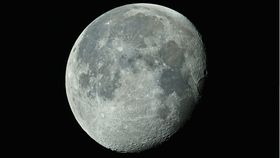


The Moon is having a fun time this summer passing in front of other objects in the Solar System. Not even a month since the total solar eclipse, our natural satellite is currently busy covering three planets in the Solar System.
These multiple lunar occultations started earlier today when the Moon eclipsed the planet Venus and the bright star Regulus. It is now on route to cover Mars at 19:42 GMT and then Mercury a few hours later at 23:21 GMT. The best places to see the occultations are across the Pacific. They will mostly occur during the daytime, so if you want to watch them, make sure you have a good telescope.
Lunar occultations can be used for interesting scientific measurements, such as measuring structures on the surface of the Moon, and for some extragalactic discoveries like quasar 3C273 in 1963. Today’s occultation is particularly exciting as the Moon will not once again cover these three planets until 2036, according to EarthSky.
[H/T: EarthSky]