Humans
 PUBLISHED
 2
2


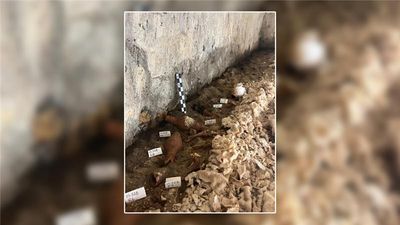


Archaeologists investigating the "Tomb of Cerberus" in Giugliano, Naples, have unsealed a 2,000-year-old sarcophagus. But while this may sound like the introduction to a Hammer horror story, the researchers actually found a remarkably well-preserved body wrapped in a shroud.
The archaeologists had been examining the tomb with microcameras before they found a passage that led into the sarcophagus, which had remained sealed for thousands of years. The team, led by Dr Simona Formola, found the “supine inhumed” body of someone who, according to a translated statement, was in an “excellent state of conservation”.
It is possible that this person’s preservation was assisted by the climatic conditions of the burial chamber, which seems to have mineralized the shroud.
In the tomb, the team also found various goods, including ointment jars (known as unguentaria) and body-cleaning tools (strigils) that were used to scrape dirt, sweat, and oils from the body. Given the rich nature and chronology of these finds, along with the care given to the deceased, it is likely the body belongs to the founder of the family to whom the mausoleum was built.

The Tomb of Cerberus was discovered last year at the necropolis site near Naples, Italy. It received its name because of the ornate and vivid frescoes of the titular three-headed guardian of the Underworld, Cerberus, that were painted on its walls. Since its discovery, researchers have continued to analyze the tomb’s contents, which is how they came across this particular sarcophagus.
“The Tomb of Cerberus continues to provide valuable information on the Phlegraean territory near Liternum, expanding knowledge of the past, and offering opportunities for research of a multidisciplinary nature,” Superintendent Mariano Nuzzo explained in the translated statement.
“In recent months, in fact, laboratory analyses conducted on samples taken from the inhumations and the depositional beds have returned a considerable amount of data on the treatment of the deceased’s body and the funerary ritual carried out, significantly enriching the panorama of our knowledge.”
The excavation work represents a massive interdisciplinary effort, bringing forward the expertise of archaeologists, technicians, anthropologists, chemists, and palaeobotanists, each contributing insights and data that are revealing the secrets of this fascinating site.
In particular, the fabric used to shroud the body is being analyzed to determine its structure and the type of yarn is made from, as well as its quality. The hope is that this will reveal more cultural and social information about the person it covers.
Pollen analysis of the bottles found in the tomb suggests that the body may have been treated with creams based on Chenopodium (goosefoot) and absinthe, which would have helped preserve it. The team is currently awaiting the results of DNA analysis for more information.
The wider necropolis in which the tomb is found is already known to be home to important ancient burials, many of which date back to the Roman Republic and the Roman Imperial Age. As such, as more information emerges from this tomb, the more we will know of both the lives and deaths of its mysterious occupants.