Nature
 PUBLISHED
 2
2


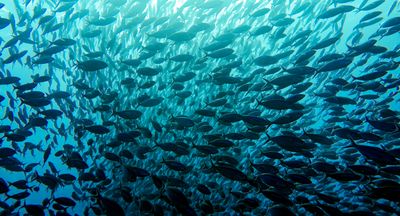


Described as “the biggest conservation victory ever" and “a turning point for humanity,” the High Seas Treaty kicks into action on Saturday, January 17, 2026. Here’s what it’s all about, and why it is such a big deal.
The UN High Seas Treaty is the first legally binding international agreement geared towards protecting marine life and ecosystems in the high seas, the vast portions of ocean areas that are beyond any single country's jurisdiction. It's also known as the UN Biodiversity Beyond National Jurisdiction agreement.
Covering roughly 50 percent of the Earth’s surface, the high seas are like a “wild west” that has proved notoriously difficult to safeguard and manage. The area is immense, remote, and until now, largely ungoverned by any comprehensive legal framework. This treaty aims to change that, equipping the international community with the legal tools and structures needed to protect these waters at a global scale.
What does the High Seas Treaty actually do?
One of the most significant parts of the High Seas Treaty is its ability to designate marine protected areas in international waters – something that was not possible before.
“The high seas are part of the world that belongs to everyone and no one at the same time. Until now, there has been no way whatsoever to create marine protected areas on the high seas. Now, we have this tool available for the very first time – and that's a really important thing,” Sarah Bedolfe, a marine scientist at Oceana, told IFLScience.
The agreement hopes to tackle the “DNA gold rush” of the deep. It creates a new blueprint for sharing the rewards of marine genetic resources, the exotic compounds found in the high seas that can be harnessed to create new medicines and biomedical breakthroughs. The goal is to ensure the benefits and profits are shared fairly, especially among developing nations, and not just snatched up by a handful of wealthy players.
“The real focus of this is medical technology, which could come out of genetic discoveries from the high seas. It would be very unfair if countries with the means went into these areas that belong to ‘everyone and no one’ and were able to financially or otherwise benefit from this,” explained Bedolfe.
“The treaty assures that everyone will get to benefit from those types of discoveries,” she added.
The treaty also introduces a “look before you leap” rule for exploitation of the open ocean. Member states will be required to run environmental health checks before launching any major projects in international waters. By scouting for risks ahead of time, the world can better predict, reduce, and prevent the impact of human activity on fragile deep-sea ecosystems.
What’s at stake?
International waters account for 95 percent of the habitat occupied by life on Earth. Much more than just a vast blue expanse, these waters serve as the largest reservoirs of marine diversity. They also provide essential migratory "superhighways" and feeding grounds for global citizens like blue whales, humpback whales, leatherback turtles, seabirds, and many more.
To protect the high seas is to protect the very circulatory system of our biosphere – and they desperately needed protecting. According to the International Union for Conservation of Nature (IUCN), nearly 10 percent of marine species are at risk of extinction, primarily due to unsustainable fishing, pollution, disease, and climate change.
How will the High Seas Treaty actually work?
The institutional framework of the High Seas Treaty includes a Conference of the Parties (COP), which acts like a new governing board of the high seas. They will meet for the first time this year to iron out things like the rules of procedure and financial arrangements.
Following this debut, the COP will meet periodically to hold member states accountable for their impact on marine biodiversity. Supporting them is a Scientific and Technical Body, a team made up of researchers who provide the scientific and technical advice needed to guide these high-stakes decisions.
At least 82 countries have ratified the treaty so far, while 145 countries have signed, marking their commitment to ratifying it. However, some heavy hitters are not getting involved; major powers like Russia, Saudi Arabia, and Iran have yet to sign up, leaving significant gaps in the safety net.
Cautious optimism
Even for those on board, there are uncertainties around how the rules will be enforced. The persistence of illegal, unreported, and unregulated fishing shows just how difficult it is to police the vast, lawless expanse of the high seas. While satellite technology is allowing better monitoring, the high seas are simply too massive to catch every offender.
We’re cautiously optimistic. I think it is really important that we do celebrate this milestone.
Sarah Bedolfe
Then comes the issue of knowing how to deal with outlaws. Because the treaty has to work alongside existing fishing bodies, rather than replacing them, there are lingering questions about whether this new framework has the “teeth” to stop bad actors or if it will simply add another pile of paperwork.
Despite these hurdles, the treaty’s activation on January 17 marks a big day for the world’s oceans.
“We’re cautiously optimistic. I think it is really important that we do celebrate this milestone,” remarked Bedolfe, speaking to IFLScience.
“[The framework] is very novel. It's innovative and it's amazing – like really great. But I think we're also very aware that there's still a lot of work to be done,” she cautioned.