


 Health and Medicine
 PUBLISHED


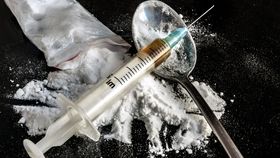


Though not as renowned for progressive drug policies as the likes of California, Colorado, or Washington, the state of Iowa could potentially become the first in the US to take the unprecedented step of legalizing all drugs, after the Iowa Democratic Party included this in its new platform. Should this become a reality, it would, in theory, make Iowa the first place in the world to go all out and remove all legal obstacles to the production and sale of certain substances – something many public health experts and drug reform advocates have been calling for for some time.
In reality, however, the party says its intentions are somewhat less radical than plank 293 of its new platform suggests. Though the words “legalize all drugs” clearly appear in the document, Shelly Van Winkle of the party’s central committee told the Des Moines Register that “the brevity of the document doesn’t encompass [its] true meaning.”
Indeed, rather than allowing all drugs to become fully legal, the party’s actual plans are more akin to decriminalizing all drugs. This means that while it would still be illegal to produce and sell drugs like heroin and cocaine, the use of these substances would be permitted under medical conditions. As such, heroin addicts would be allowed to obtain safe, uncontaminated drugs and clean needles, which they would be able to consume in supervised injection facilities. Similarly, medical marijuana would become permitted, as it already is in more than 20 other US states.
“No one is advocating a libertarian drug free-for-all and putting cocaine back in Coca-Cola,” explained state delegate Ryan Rogers, reports Des Moines Register. Rather, decriminalization would serve to shift the drug use issue from the criminal to the medical domain, thereby allowing for a greater focus on harm reduction rather than punishment.
Similar approaches have already been applied elsewhere in the world, most notably Portugal, where all drugs were decriminalized – but not legalized – in 2001. Not only did this lead to a massive drop off in the number of drug overdose deaths, but it also helped to alleviate several other drug-related harms, such as the spread of infectious diseases. New HIV infections among injectors, for example, fell from 1,016 in 2001 to just 56 in 2012.



 2
2