Space and Physics
 PUBLISHED



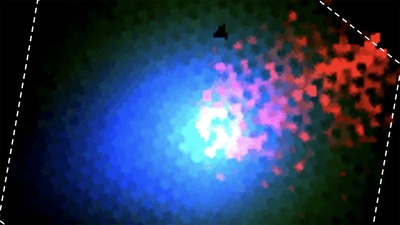


Last year, our little solar system, sitting on the inner edge of a minor spiral arm of the Milky Way, had an interstellar visitor. A comet that formed around another star made its way to our neck of the woods, and as it heated up it revealed clues about the object itself and the environment where it formed.
Clocking in at an impressive 209,000 kilometers per hour (130,000 miles per hour), 3I/ATLAS is now around 1,770,000,000 Kilometers (1,099,000,000 miles) away from Earth and moving away from us, which means it's getting harder and harder to observe.
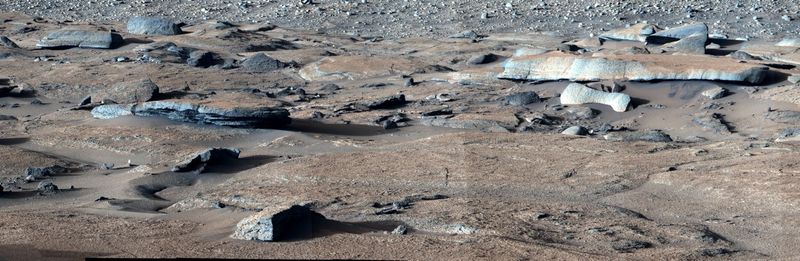
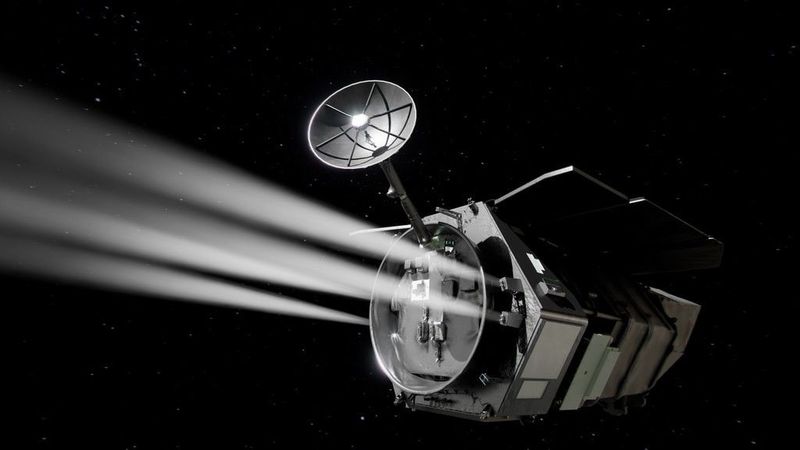
Fortunately, we already have plenty of data to pore over, with observations from Earth-based telescopes, space-based telescopes, spacecraft on their way to Jupiter, spacecraft in orbit around other planets in the solar system, and even rovers on Mars.
If the comet really had been an alien spacecraft (as some, rather controversially and with no real cause, have suggested) it would have seen a species that has really got its shit together, speaking entirely in terms of the number of astronomical observations we were able to make, of course.
Recent weeks have seen a few new studies published on the object, and over the past few months a broad consensus has formed about its origins, with multiple independent teams coming to similar conclusions about the environment in which it was birthed.
So, what's the latest?
Two new studies, one published in a journal and the other as an unreviewed preprint, have come out about the comet since the start of September, and they agree on a few key aspects of the comet's formation.
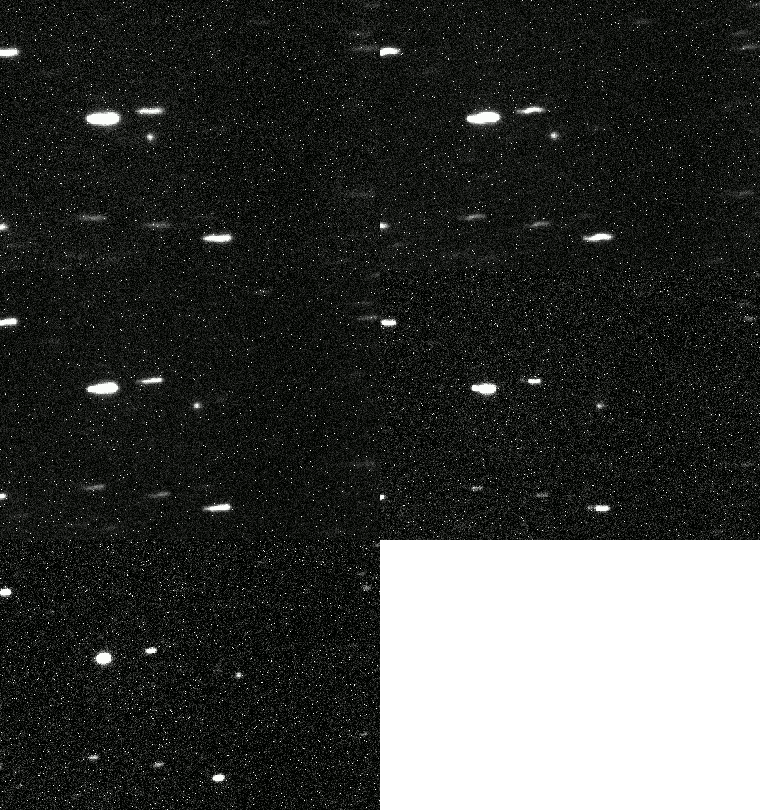
The first study looked at observations from the William Herschel Telescope (WHT) in Spain, taken on November 30 and December 2, 2025, after the object's closest approach to the Sun (perihelion).
Looking at its spectra – that's how light passes through the gaseous tail or "coma" of the comet – the team found it was impressively nitrogen (N)-rich. This is useful information, especially in conjunction with other observations of the comet's levels of carbon monoxide (CO).
"The N2/CO ratio stored in cometary ices is important as it can be used to estimate the formation temperature of a comet. Experiments indicate that the trapping efficiency of N and CO in amorphous ice is dependent on temperature and different for the two species," the team behind the new work explains in their paper.
"The ratio of N2/CO in comets, and how much it departs from the protosolar value, can thus be used to estimate the formation temperature of comets."
So where do they think it formed? Somewhere very, very cold. Like -240°C (-400°F) cold, which is just 33°K above absolute zero.
"This object gives us a rare chance to study material that formed somewhere completely different to our own Solar System. Finding that it's so rich in nitrogen tells us it likely formed in extremely cold conditions, far from its home star," Dr Lea Ferellec, a research fellow at Northumbria University, UK, said in a statement.
"Every one of these objects we study helps us understand a little more about how planets form around other stars."
The second study, which has been submitted to The Astrophysical Journal Letters and is currently available as a preprint, investigated the "exceptionally high" water deuterium (2H) to protium (1H) ratios seen on the comet, which IFLScience reported on back in June.
Protium and deuterium are both isotopes of hydrogen – essentially different variants of the element with different numbers of neutrons – and their ratio can also give an indication of an object's formation temperature. A high ratio also points towards a cold origin for this interstellar visitor.
That same paper we reported on in June also found an unusually high ratio of the isotope carbon-12 to carbon-13, which indicates formation around a "low-metallicity" star. This means a star made up almost entirely of hydrogen and helium, with very few heavier elements.
Converging evidence
The new preprint features many of the same researchers, and this time they wanted to see whether those two measurements were consistent with one another: in other words, could the unusual hydrogen isotope ratio have formed around the kind of low-metallicity star implied by the carbon isotope ratio.
In short, after a lot of modeling, the team found these abundances are indeed likely to have been produced by an object around a low-metallicity star, with it most readily being produced by a star with around half the metallicity of our Sun, and in a relatively dense cloud, consistent with earlier work.
"These results suggest that water deuteration may provide a complementary probe of the metallicity and physical condition of the parent molecular cloud and dense core of interstellar objects," the team added in their paper.
So, all in all, the data is starting to converge around the idea that 3I/ATLAS formed in a cold environment, and likely around a metal-poor star.
We will have to wait as more data is processed and papers produced for more info about 3I/ATLAS, or, fingers crossed, for us to find more interstellar objects to study. Around 50 of them should do nicely.
The first study is published in the Monthly Notices of the Royal Astronomical Society. The second is submitted to The Astrophysical Journal Letters and is currently available on arXiv.