Technology
 PUBLISHED
 1
1


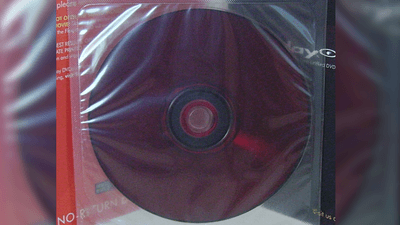


Look, I don't want to sound like an old man, but back in my day (I'm talking the 2000s here, I'm not that old) when you bought a movie, you owned that movie goddamnit.
Whether it was a DVD or a VHS tape, once you had it you were free to play it over and over again until the scratches on the disk made it unplayable or the tape decided to tangle itself into an unplayable mess in the recorder (a choice it made constantly).
There was also the option of renting a movie. Whether by post or by Blockbuster, you could borrow a movie and return it (ONCE YOU'VE REWOUND) when you were done watching.
What there was absolutely no need for (unless you happened to be particularly bad at returning disks, or just lived for drama) was a type of DVD that self-destructed once you were done watching it.
The idea behind Flexplay was essentially that. Their "EZ-Ds" worked essentially the same as DVDs, with a laser hitting bumps within two layers of the DVD and the reflected light being received by light-reading sensors.
But Flexplay had an extra layer to it, which when you opened it up and exposed it to oxygen would trigger it to "self-destruct", giving you just 48 hours to watch your movie before it became unwatchable.
Rather than explode in your DVD player, of course, the resulting reaction would merely change the layer to an opaque black or dark red, making the disk unreadable.
The company had hoped that Flexplay would have its place in the industry, with one advantage being that the disks could be "rented" from any store without having to set up things like memberships, whilst movie-watchers themselves would not have to return the DVD to any store.
Though the company stressed that they were recyclable, environmentalists were nonetheless concerned about the amount of trash that would be created had the idea taken off.
This did not turn out to be much of an issue, however, as the idea did not catch on.
Industry big-hitters Disney tried releasing movies including Freaky Friday and The Waterboy on Flexplay, but consumers were largely uninterested in the idea. One department store that trialed the EZ-Ds, which launched in August 2003, dropped them by January 2004.
"It just wasn't a good fit for us," Susan Ghertner, environmental affairs manager for the grocery chain H-E-B stores, told Wired at the time. "It didn't turn out to be an item that our customers were looking for."
On top of this, video rental stores were not keen on stocking the format, whilst the movie industry in general also hated it.
One movie (2004's largely forgotten Noel) dared to release on Flexplay EZ-D at the same time as the cinematic release, with the result that the major distributors refused to show it at their larger venues, selecting a few smaller theaters. Noel was free to self-destruct in peace, which is probably about as much as it deserved.
Soon, of course, streaming movies took off in a big way and virtually destroyed the DVD/Blu-ray market, allowing you to subscribe to a wide range of movies and own none of them. Which is much nicer, we're sure you all agree.