Nature
 PUBLISHED


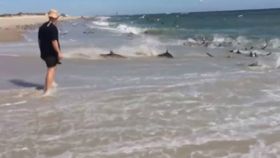


More than a hundred sharks have been filmed in a feeding frenzy close to the beach at Cape Lookout National Seashore, North Carolina.
The sharks were feeding on a school of blue fish trapped in the shallow water. Seagulls and pelicans took advantage of the situation as well before humans joined the fray. Members of the One Harbor Church who were on retreat nearby had come to the beach to fish and are seen in the video. They realized that in the confusion, the blue fish might not be too picky, and were able to catch them with unbaited hooks.
Chasing prey so close to land carries risks, as can be seen by the desperate thrashing of the sharks caught in too little water. Massachusetts Fisheries biologist Dr. Gregory Skomal told National Geographic, “I haven't seen sharks feeding right on the shoreline before, with sharks being thrown up into the intertidal zone. I think it's pretty rare.” However, one person commented when the video was posted on Youtube that he saw a similar event nearby in the same week.
No one seems certain of the species of shark, but sandbar sharks (Carcharhinus plumbeus) seems to be the top candidate. As the name suggests, these like shallow sandy water in bays and estuaries. Skomal also considers blacktip sharks (Carcharhinus limbatus) a possibility. Neither species normally attack humans, but can mistake feet and hands for fish, particularly in a feeding frenzy such as this one.
Sea mammals such as dolphins and orcas are known to team up to drive prey close to land so they can feed with ease. However, there is debate whether sharks work collaboratively, or are independently attracted to the presence of the same prey.