Humans
 PUBLISHED




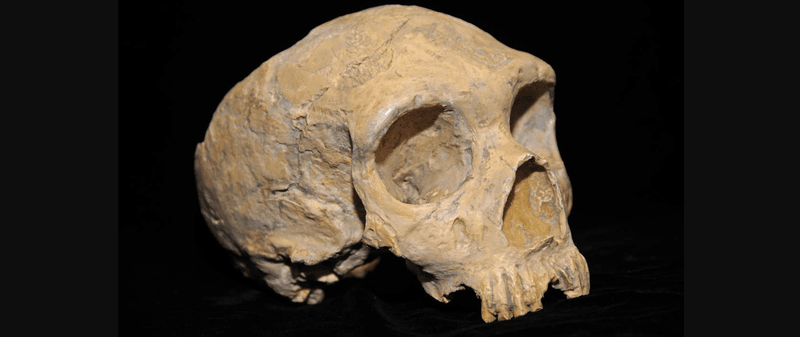
In recent years, there have been numerous studies that compare anatomically modern humans – our direct ancestors – to other archaic humans, such as Neanderthals. This work has shown that, rather than being distant relatives, our two species had a lot in common, from the structure of our bodies and our brain sizes to our reliance on tools or even the creation of art. Now, archaeologists have turned their attention to how our two species organized their homes.
This may sound like a trivial point, but it actually has serious implications for understanding behavioural evolution in the Late Pleistocene (around 129,000 to 11,700 years ago) – a time when humans and Neanderthals coexisted.
Archaeologists have long believed that the analysis of spatial patterns in living spaces can offer insights about the site’s functionality, its settlement dynamics, and overall social organization. Put differently, how a group organizes its campsite offers a window into its social brain. In this context, by distinguishing between different spatial behaviors, they argue, it becomes possible to evaluate the emergence of what we might understand as “modern” social organization.
That’s why this latest study focused on this period in our species’ history. Before this, in the Middle Paleolithic (around 300,000 to 50,000 years ago), Neanderthals were the primary human population in Europe and parts of western Eurasia. However, as anatomically modern humans (Homo sapiens) expanded into these regions, the two species overlapped, interacted, and interbred until Neanderthals eventually disappeared in the early Upper Paleolithic (around 50,000 to 10,000 years ago).
Earlier work on site structure suggested Neanderthals were more simplistic in their living spaces, arranging them more like primate nests. This behavior was described as a “centrifugal living structure” for the Middle Paleolithic, whereby the central point – where the hearth was – became the site where individuals did activities. In contrast, human sites were believed to be more complex, featuring multiple activity zones for distinct activities and spatial segregation.
However, more recent work has challenged this view, demonstrating that some Neanderthal sites showed the same complex arrangement patterns as those of anatomically modern humans. These sites included potential evidence of built structures (windbreakers and huts) and distinct specific zones for sleeping, butchering animals, and disposing of waste.
But much of this analysis has focused on observations of spaces and their physical descriptions. Increasingly, archaeologists are moving away from this form of qualitative assessment in favor of quantitative techniques to prove how a site was used.
In this latest study, Amanda Merino-Pelaz, a PhD Student at the Catalan Institute of Human Paleoecology and Social Evolution (IPHES), and Dr Lucía Cobo Sánchez, an archaeologist at the University of Algarve, used spatial statistical analysis – which applies specialized quantitative techniques to geographically referenced data to identify patterns and relationships – to assess living arrangements at 21 archaeological sites.
They measured four specific spatial makers, including the site’s cluster strength (how intense the grouping of objects is); sibling probability (how likely it is that two nearby objects were used for the same activity; parent intensity (an estimation of how many “centers” were present at a site – such as hearths or tool making spots); and finally cluster scale (the physical size and distribution of these cluster).
Overall, the results showed that modern human sites were mostly more compact than Neanderthal ones. In these spaces, our ancestors kept waste and tools gathered in separate, dense zones of activity. In contrast, Neanderthal camps from the Middle Paleolithic had blurrier boundaries. Although they did cluster activities, there was often more overlap between them. In this sense, the special distributions are not dissimilar to older theories that saw Neanderthals as having centrifugal living structures centered around the hearth. The central point functioned as the kitchen, the workshop, and the bedroom.
One explanation for this difference could be that Homo sapiens had more people in their camp sites, but the researchers found that the size of the groups (between three and 30 people) was similar for both species. Even when groups were the same size, modern humans still chose to pack their activities into tighter spaces.
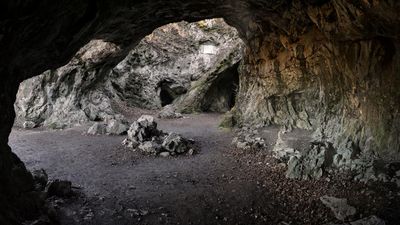
Despite this, some Neanderthal sites from the Middle Paleolithic (such as Abric Romani, a large rock shelter near Barcelona, Spain) actually looked just as modern and compact as human sites from the Upper Paleolithic. This, the researchers argue, suggests that there was a process of change that took place across time, rather than there being a hard difference between the two species.
“In sum, the spatial organization of Late Pleistocene occupations points to a gradual, uneven shift from hearth-centered spaces to more household-centered layouts,” they explain in their paper.
“The degree of clustering compactness observed cannot be explained simply by mobility or occupation time but reflects changing ways of arranging and using domestic space. These transformations, already visible in some late [Middle Paleolithic] contexts, seem to follow a mosaic process rather than a linear trend and show a growing role of spatial order and social coordination.”
The paper is published in the Journal of Human Evolution.



 5
5