Humans
 PUBLISHED





At some point, somebody has probably told you that the number of people alive on Earth right now outnumbers the number of dead who have ever lived.
It might seem a plausible idea. The human population – fueled by industrialization and farming improvements – grew significantly in the last two centuries, from 1.6 billion in 1900 to just over 8.3 billion today. It would be reasonable to assume that maybe the population rose so quickly at some point during the century that the living briefly outnumbered the dead.
However, you'd be wrong, according to the data and estimates we have on it.
Around 1800, population data became much better.
"Once you have written records, once you have censuses, when countries start to collect taxes, you start developing written record," Wendy Baldwin of the Population Reference Bureau (PRB) explained to BBC News in 2012. Given that the first modern humans left Africa 60,000 years ago, that's quite a lot of time where we have to rely on estimates.
"Average life expectancy in Iron Age France (from 800 B.C.E. to about 100 C.E.) has been estimated at only 10 or 12 years," Toshiko Kaneda and Carl Haub explained for the PRB in 2022. "Under these conditions, the birth rate would have to be about 80 live births per 1,000 people just for the species to survive. To put that in perspective, a high birth rate today is about 35 to 45 live births per 1,000 population, and it is observed in only some sub-Saharan African countries."
Kaneda and Haub used population estimates from various points in history and prehistory, and applied an assumed birth rate (which got lower over time, to reflect the declining birth rate). The method gave a rough estimate of the number of births (and therefore deaths, unless there are some 700-year-olds knocking about and keeping quiet), though it would of course have been better if ancient people had taken time away from being illiterate and hunting to do some better record-keeping.
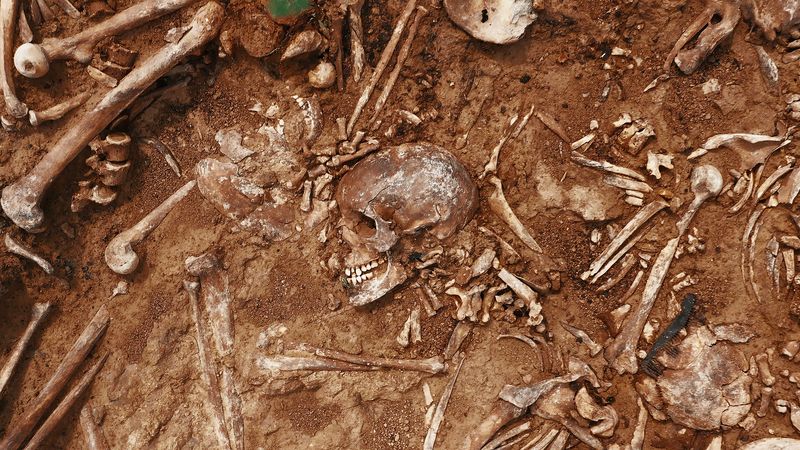
According to their estimate, about 117 billion births have taken place since 190,000 BCE, far outnumbering the 8 billion people who are alive today.
"If we were to challenge our conclusion at all, it might be that our method underestimates the number of births to some degree," Kaneda and Haub added. "The assumption of constant rather than highly fluctuating population growth in the earlier period may underestimate the average population size at the time."
An earlier version of this article was published in September 2023.