Space and Physics
 PUBLISHED
 4
4


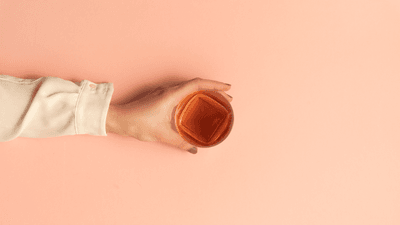


Are you a whisky fan? Yeah, us too, but it recently occurred to us that we didn’t have a scooby when it came to how the amber nectar is made. So, we set out on a quest to uncover the science of whisky, a quest that led us to Scotland.
First, we spoke to Glasgow Science Centre science operations manager Steve Owens and Roddy Graham of the Good Spirits Co., a double-act of whisky enthusiasts who host the centre’s own Science Of Whisky talk. Like all deep dives, our discussion began with the basics, and led us all the way back to the Big Bang.
On the way, we learn some fascinating things about whisky’s rich history and what's going on with “the jaggies”. From how it's made, to what's in it, and why it burns like that, we cover all aspects of whisky science, and there are a couple of fun tricks in the video if you want to look like you know what you're talking about at parties.
Next, we headed over to Heriot Watt University in Edinburgh to speak with Dr Dave Ellis and Dr Ruaraidh McIntosh to find out how the whisky making process could change in the future if we want to maintain its delicious smokiness without further degrading precious peat deposits.
A crucial step in whisky production is what’s known as killing, which some brands achieve through burning peat. An unintended consequence of that is that the smoke carries with it a lot of chemical compounds. It's those chemical compounds that give whisky its characteristic flavor profile, but it has its downsides.
“Healthy peat is very good at storing carbon,” explained Ellis to IFLScience. “As soon as peat starts to degrade, it actually starts to extrude carbon. So, healthy peat is a very good thing, and unhealthy peat is very negative. It’s not a limitless resource, it will eventually run out.”
“It's important for biodiversity as well. This is another part of our ecosystem that we're removing. And peat grows [at a rate of] around about a millimetre a year. So, it really needs to be thought of as a non-renewable resource. In the same way when we're digging up and coal or oil, [where it] forms over millions of years, peat is kind of the same.”
Together, Ellis and McIntosh have been exploring renewable alternatives to see the kinds of flavor profiles that could be carried were they to replace peat in the whisky making process. We won’t spoil the surprise, but a promising candidate can be found in your kitchen.
So, want to become an expert on whisky? Check out IFLScience's latest documentary, The Science Of Whisky, and subscribe to our YouTube channel for more great science videos.