Nature
 PUBLISHED


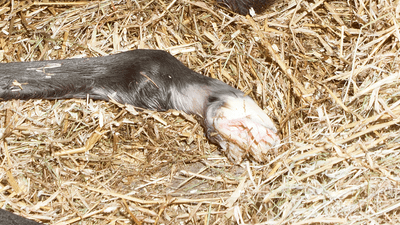


“Foal slippers” is the cutesy name given to a rather grim feature of newborn horses, who are born with eponychium, a kind of hoof capsule that’s thought to protect the mother while the foal is in utero. Eponychium is actually present on the tiny feets of many hooved animals, including cows, deer, and even rhinos.
These animals all belong to the ungulates, but while all ungulates have some form of hoof, not all ungulates are born with feathery eponychium slippers. According to visiting professor at Pomona College Dr Win, of the many ungulates that eponychium crops up in, the equids (horses) often have the most pronounced foals slippers.
What is eponychium?
The creepy “fairy fingers” of eponychium are made of a gelatinous perioplic membrane that is soft when the foal is in utero and shortly after it’s born. The presence of eponychium is an indicator that the foal hasn’t walked yet, as it quickly wears away and retracts once the newborn gets up and moving.
To begin with, the eponychium coats the hooves entirely and is gelatinous, but it dries and retracts the longer it’s exposed to air. Eventually, it dies back to form a ridge of skin-like tissue around the base of the foal’s hardened hoof, a little bit like the eponychium of human fingers, which is the band of skin that stretches across the base of our nailbed.
Why do some ungulates need eponychium?
The eponychium is thought to reduce the risk of trauma to the mare’s reproductive organs and birth canal during gestation and birth. Hooves are risky cargo when it comes to growing a wriggling fetus, and so foals' slippers keep their hard edges soft and coated to avoid injury.
Many ungulate babies need to grow hooves in the womb because the pressure is on once they’re born. Afterbirth attracts predators, so newborns need to be able to begin walking as soon as possible if they’re going to survive their first day.
How long does the eponychium last?
As an indicator that a baby ungulate hasn’t walked yet, the eponychium in its true, feathery grossness may only last for a few hours. Foals can stand and start walking as quickly as two hours after being born. Horses are big animals, but like any other species their young are vulnerable, and at a time when they were facing cougars, wolves and bears for predators it figures that they’d evolve a birthing system in which the babies could be up and trotting ASAP.
On the topic of freaky horse features, have you heard about the crusty remnant of evolution that’s stuck to their legs?