Nature
 PUBLISHED
 1
1




Never short of their quirks, from their flappy primordial pouches that put a swing in their step to the fishing wildcats that quack like ducks, it’s safe to say cats are pretty strange creatures. So, to unravel another kitty mystery, what are those weird folds on their ears and what are they for?
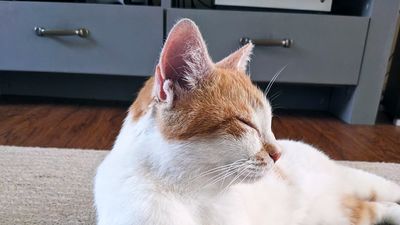
The triangular shape of a cat’s outer ears is called the pinna, and the small fold (or pocket) on the outside of the pinna is called Henry’s Pocket. The technical term for this fold is a cutaneous marginal pouch, and cats are just one of many species – including dogs and bats – to have these odd folds.
So, who was Henry and what’s he got to do with ears? The earliest known reference to the term appeared in a 1971 archive, but that is about the extent of information we have about where this term came from.
Dr Bozena Zaleska, a lecturer in animal health at Hartpury University, told Kinship, “It’s been suggested that it comes from Joseph Henry who studied electromagnetism and sound waves, so it might be a nice way to honour him.” But all theories around the origin of the name are purely speculative.
The reason for this link to Joseph Henry is because of the supposed use of the cutaneous marginal pouch, which, again, is still entirely speculative. No one really knows why these pouches are there, but some of the leading theories suggest they may be used to improve animals’ hearing, although there has yet to be any evidence to prove this.
One theory suggests that this extra skin allows for better movement of the ear. With 32 muscles in their ears, cats can rotate both ears independently to help locate the source of sounds and use ear movements to communicate with other cats (and humans), so having the extra dexterity is beneficial. It’s also thought they work to amplify sounds and aid in the detection of both higher and lower-pitch sounds.
Cats have one of the broadest hearing ranges among mammals with the ability to hear sound waves in the range of 48Hz up to 85kHz. It’s believed that the cutaneous marginal pouch aids in the detection of higher-pitched sounds by bouncing lower-pitched sounds around the walls of the pocket, delaying the time it takes for them to enter the ear.
It’s also possible that the cutaneous marginal pouch is vestigial and no longer serves a purpose in modern species, however, as they occur on many species that boast impressive hearing abilities, many believe this is unlikely.
What we do know about these crevices, however, is that fleas and ear mites love to hide away in there. Be sure to give Henry’s pockets a good rummage when getting rid of your pet’s pests.
So, while there are still a lot of mysteries around the purpose of Henry’s Pocket – and who the hell Henry is – here’s an adorable kitten with four ears and four Henry’s Pockets.