


 Health and Medicine
 PUBLISHED
 2
2



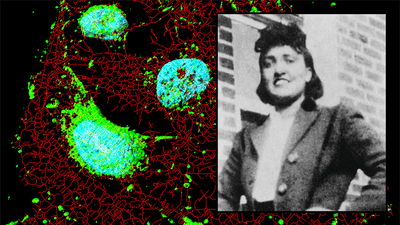


Swiss pharmaceutical company Novartis has settled a lawsuit by the estate of Henrietta Lacks, which alleged that the company unfairly profited from her "immortal" cell line, taken without her knowledge or consent in 1951 and still widely used in laboratories worldwide today.
Born Loretta Pleasant on 1 August 1920, and later taking on the nickname "Henrietta", as well as her husband's surname "Lacks", Henrietta first came to the attention of scientists when she sought treatment for illness in February 1951. At that point, she showed up at Johns Hopkins hospital – the only hospital in the area that would treat black patients at the time – complaining of a painful "knot" inside her, as well as vaginal bleeding. A biopsy showed she had cervical cancer.
"The appearance of the tumor was unlike anything the examining gynecologist, Dr. Howard Jones, had seen," a paper on Lacks and her immortal cell line explains. "Prior to the treatment for the carcinoma, cells from the tumor were removed for research purposes without her knowledge or permission, which was standard procedure at that time."
It was during a follow-up appointment eight days later where Dr. George Otto Gey would take further samples of her tumor, which became the immortal cell line known as HeLa. Scientists found that, while cells from virtually all other samples would die off outside of a host, these would continue to replicate at a very high rate. While Lacks sought readmission to Johns Hopkins in August and died there on October 4 aged just 31, her cells went on to revolutionize medicine and biological research.
Most cells cultured for laboratory work die within a few days, making it difficult to perform multiple tests on the same sample. With the HeLa line, that wasn't a problem at all. In fact it was quite the opposite. Scientists realized the cells could travel through the air on dust particles or the hands of laboratory workers and contaminate other cultures.
One team of scientists decided to try to deal with this problem. The idea was to track down relatives of Lacks and use their DNA to map her genes. After this, they would know which cell cultures were HeLa, and which weren't, allowing them to start sorting out the contamination issues.
Henrietta's family was completely unaware that her cells were being used in scientific research, let alone how important they had become to it, so the first conversation with her husband, David "Day" Lacks, didn't go well.
"The way he understood the phone call was: 'We’ve got your wife. She’s alive in a laboratory. We’ve been doing research on her for the last 25 years. And now we have to test your kids to see if they have cancer.' Which wasn’t what the researcher said at all," journalist Rebecca Skloot told Smithsonian Magazine in a 2010 interview about her book The Immortal Life of Henrietta Lacks.
Lacks' daughter, who was too young when her mother died to remember her, had questions ranging from whether her mother was still alive and whether the tests conducted on her cells hurt her, to whether scientists had in effect cloned her.
Then there was the question of the money. It's difficult to oversell how important the immortal HeLa cell line is. The cells have been crucial in understanding how HIV, ebola, and tuberculosis work, and they were even taken on board some of the first flights to space.
In 1954, Jonas Salk used HeLa cells in research developing the polio vaccine, mass-producing the cells in order to test his team's product. After this, they were in even higher demand. In 2011 it was estimated that over 50,000,000 metric tons of HeLa cells had been produced across more than 60,000 scientific studies. All of this was without Lacks's consent, and for many years without her family's knowledge.
Since then, the Lacks family has been attempting to gain compensation for "the full amount of its net profits obtained by commercializing the HeLa cell line". The estate settled with Thermo Fisher Scientific three years ago after a case that began in 2021. Now, another company, Novartis, has also settled, following proceedings started in 2024, per AP News.
Though she didn't know it, Henrietta Lacks saved countless lives and contributed to many breakthroughs around the world. In addition, the Henrietta Lacks Foundation has been set up to give grants to people and their families who have been part of medical research studies without their knowledge.
“We felt it was right to acknowledge Henrietta for the use of HeLa cells and to acknowledge that the cells were gained inappropriately,” Erin O’Shea, president of the Howard Hughes Medical Institute, told Nature when the organization donated six figures to the foundation in 2020. “And to acknowledge that we have a long way to go before science and medicine are really equitable.”


