Nature
 PUBLISHED
 1
1


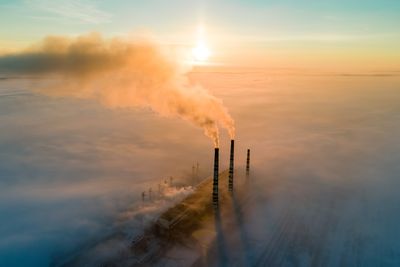


Greenhouse gas emissions have reached “an all-time high,” causing human-caused climate change to increase at an “unprecedented rate.” This is, of course, in spite of promises from policymakers and the world’s biggest companies to wean the planet off fossil fuels.
A new analysis by 50 leading scientists has warned that human-induced warming reached an average of 1.14°C (2.05°F) for the most recent decade (2013 to 2022) above pre-industrial levels, up from 1.07°C (1.92°F) between 2010 and 2019.
The study explains that this directly results from greenhouse gas emissions reaching record levels. The equivalent of 54 gigatonnes of carbon dioxide has been released into the atmosphere on average each year over the last decade.
If this trend isn’t urgently curtailed, then the world will blast past the vital threshold of 1.5°C (2.7°F) above pre-industrial temperatures.
“Even though we are not yet at 1.5°C warming, the carbon budget will likely be exhausted in only a few years as we have a triple whammy of heating from very high CO2 emissions, heating from increases in other GHG [greenhouse gas] emissions and heating from reductions in pollution,” Professor Piers Forster, Director of the Priestley Centre for Climate Futures at the University of Leeds, said in a statement.
“If we don’t want to see the 1.5°C goal disappearing in our rearview mirror, the world must work much harder and urgently at bringing emissions down,” added Forster.
A key part of the research looked at the so-called “carbon budget,” an estimate of how much carbon can be emitted to give a 50/50 chance of keeping global temperatures within the 1.5°C threshold. As per their findings, the world is blazing through this remaining carbon budget, with little sign of an exit strategy.
“This robust update shows intensifying heating of our climate driven by human activities. It is a timely wake up call for the 2023 global stocktake of the Paris Agreement - the pace and scale of climate action is not sufficient to limit the escalation of climate-related risks,” explained Dr Valérie Masson-Delmotte, a climate scientist from the Université Paris-Saclay who co-chaired Working Group 1 of the IPCC’s Sixth Assessment report and was involved in the climate indicators project.
The new analysis comes as world leaders and climate experts are meeting in the German city of Bonn to prepare for the COP28 climate talks in the United Arab Emirates in December. It’s being heralded as one of the world’s last chances to act – but things are already not looking overly optimistic. Earlier this week, it was reported that the preliminary talks in Germany started without an agreed final agenda for technical discussions.
The new study is published in the journal Earth System Science Data.