Nature
 PUBLISHED
 1
1




Warning: This post contains a graphic image of injured bird hatchlings
The hunter has become the hunted in the age-old battle between slug and bird.
Biologists from Poland have documented their accidental discovery of cigar-sized slugs climbing into bird nests then mutilating and eating the chicks. Their study can be found in the Journal of Avian Biology.
The researchers note that carnivorous behavior is rare among earthbound slugs and snails. There has been the odd report of slugs attacking nestlings over the past century, but there’s been very little study into the behavior, or how often it occurs.
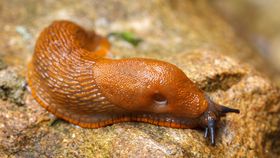
Now they’ve pinpointed the main suspects as the Red slug Arion rufus, the Black slug Arion ater, and the invasive Spanish slug Arion vulgaris.
“The actual moment of slugs predating on nestlings isn’t easy to observe,” Katarzyna Turza?ska of the University of Wroclaw in Poland told New Scientist. “You are more likely to come across the traces of the ‘tragedy’: dead or alive nestlings with heavy injuries, covered in slime – and often slugs’ droppings found nearby.”
The attack itself is pretty gruesome and leaves markings that are categorically different to other predators. The study explains the body is typically covered in a thick slime, while suffering from holes in the stomach, vast injuries on the wings, back, neck or head, partially eaten muscles or bills, and even the loss of eyes.
How the slugs find the nests remains a mystery. Although slugs detect the scent of a potential meal, they researchers have no evidence to suggest this is the case. In fact, they think it’s much more likely the slugs simply stumble upon the nests by chance.
However, as you can imagine, slugs are not the most athletic of predators. So how do they get away with it? According to the study, it could be the birds don’t recognize slugs as a danger to their young.

Bird hatchlings suffering from some pretty heavy injuries from an arion slug, seen left. Traynor Biasiolli
[H/T: New Scientist]