Nature
 PUBLISHED
 3
3


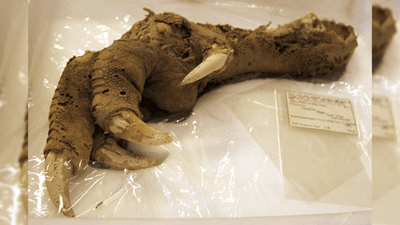


The mighty moa was an avian giant that stalked the Earth as the tallest bird in history. Despite its enormous size, it’s believed to have gone extinct before Europeans first reached its native home of New Zealand, and yet alleged sightings of the bird endured long after their arrival.
Cryptozoology is a fantastic field of pseudoscience that allows us to debate the existence of bizarre beasts that are quite literally too good to be true. Sometimes they’re made up (like Nessie), sometimes they’re relics from the past. Many have argued, for example, that megalodon could still be lurking in unreachable depths of the oceans (they’re not), meanwhile, others have claimed to have seen moa as late as 1993.
A new preprint – not yet certified by a journal but with peer reviews available – set out to explore the likelihood of an alternative theory to the moa’s extinction. Largely, it’s thought that “overkill” from human hunting led to their demise around 1450 CE, but an alternative “staggered survival hypothesis” suggests their extinction may have taken longer, meaning that some giant moa were still stomping across New Zealand after the Europeans arrived in 1642.
The probabilities of the moa’s persistence were mapped out using a database of 97 alleged sighting records from 1675 CE to 1993 CE, taking inspiration from a similar study that looked at thylacine. The sightings were then given qualitative scores based on key factors including, but not limited to:
- How likely they were to be a hoax or case of misidentification (confirmed hoaxes were excluded)
- Sightings made by a known person, rather than made by a vague friend or relative
- Whether or not they were made by a zoologist or ornithologist
The approach then adopted the most pessimistic survival model based on the thylacine study and threw in a few extra parameters relating to whether sightings were made by the same person, among other things. The result? It doesn’t look good for any Europeans claiming they saw one alive.
“Conservatively assuming a low but non-zero probability of Moa persistence associated with each alleged Moa sighting post-1450 CE, it is more likely than not that the Moa were extinct before 1770 CE, when Europeans began arriving on New Zealand,” writes author Floe Foxon. “This finding favors the overkill hypothesis.”
“Moa sightings in the period post-1450 CE are likely not numerous or reliable enough to support Moa survival into more recent times. Only if one assumes the most optimistic model (generously assigning a probability of 0.01 to all of the sightings) does the extinction of the Moa in New Zealand become likely as late as circa 1850 CE. Indeed, there were very few Māori proverbs relating to Moa extinction before 1800 CE (Wehi et al., 2018), which could suggest persistence of some Moa species up to that time.”
If it’s ridiculous ground-dwelling birds you’re after in New Zealand, you’ll have to make do with the spherical kiwi.
The paper is published in the Belgian Journal of Zoology.