Health and Medicine
 PUBLISHED
 11
11


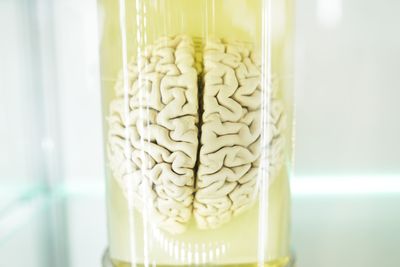


A pig brain has been kept alive outside of its body for five hours using a new machine developed by scientists at UT Southwestern Medical Center.
The newly developed system allows the brain to be isolated from the rest of the body using a super-smart artificial pump that takes care of its blood supply.
To mimic real circulation, the device can subtly tweak the composition of the blood and adjust its flow for a range of variables, including blood pressure, volume, temperature, oxygenation, and nutrients. This is enabled through a computerized algorithm that keeps tabs on the blood pressure, flow, pulsatility, and other factors.
In the study, the system was tested on the brains of domestic farm pigs (Sus scrofa domesticus). Once hooked up to the device, brain activity was monitored using continuous electrocorticography and brain depth electrode recordings.
According to the researchers, there was little-to-no change in brain activity and other measurements for up to five hours of the brain being isolated from the rest of the animal’s body.
“This novel method enables research that focuses on the brain independent of the body, allowing us to answer physiological questions in a way that has never been done,” Dr Juan Pascual, study author and Professor of Neurology, Pediatrics, and Physiology at UT Southwestern, said in a statement.
You might be asking, why? Well, the scientists behind the device argue that it could allow researchers to understand how certain aspects of the brain operate, independently of the body’s influence.
They have already used their system to learn about the effects of low blood sugar on the brain. This can often be tricky to study in typical animal models because the body can partially compensate for low blood sugar by altering metabolism, which alters the brain. Without the body, no such problem can arise.
The researchers are also interested in using this device as a cardiopulmonary bypass system, the “heart-lung machine” that keeps blood flowing during cardiac surgery and transplantation. Dr Pascual said this device has been patented to test its effectiveness for this job.
This team of researchers is not the first to play around with the idea of isolating brains from bodies. Other scientists have previously isolated the head of a dog and a monkey.
Who knows where this field of study will lead, but perhaps the old sci-fi trope of a "brain in a vat" isn’t as fantastical as once thought.
The study is published in the journal Scientific Reports.