Nature
 PUBLISHED


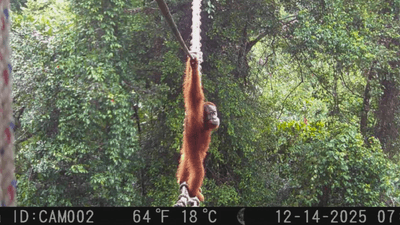


A Sumatran orangutan (Pongo abelii) has been filmed using an artificial bridge to cross a public road for the first time, showing that simple fixes can help prevent the population of this critically endangered ape from fragmenting.
The footage was captured by UK charity the Sumatran Orangutan Society (SOS) and its Indonesian partner Tangguh Hutan Khatulistiwa (TaHuKah), and it shows a young male orangutan carefully climbing onto the rope bridge and crossing high above the road below.
While other primates like gibbons and langurs have previously been seen using bridges like this, it's a world-first sighting for Sumatran orangutans and confirms the species will use rope bridges to navigate fragmented forests.
“For two years, we have watched and waited for this moment," said Helen Buckland at SOS in a statement sent to IFLScience. "Seeing this young male orangutan confidently cross the road using the canopy bridges is a huge milestone for conservation – proving that it is possible to stitch this fragmented landscape back together.”
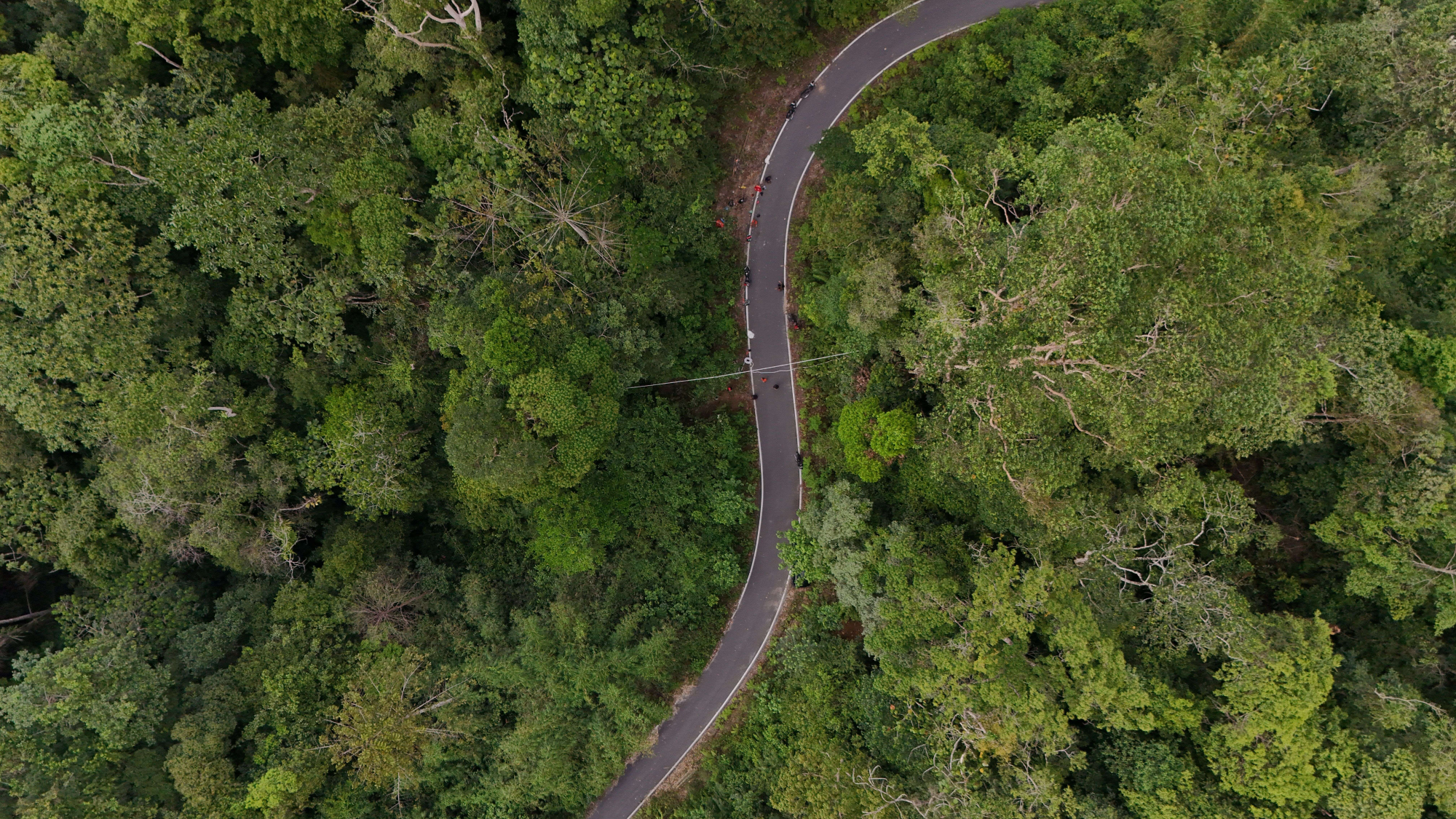
The bridge is over the Lagan-Pagindar road in Pakpak Bharat regency in northern Sumatra. This road connects remote communities to schools, hospitals, and other essential services, and it was upgraded in 2023.
While a boon for people living in the area, the road creates a physical barrier that splits an estimated 350 Sumatran orangutans into two populations. The smaller sizes of these two groups is expected to lead to inbreeding that could weaken their chances of survival.
In 2024, TaHuKah – an NGO that specializes in habitat protection – constructed five canopy bridges of different types (suited for different species) along the Lagan-Pagindar road. Each bridge required just 200 meters (650 feet) of rope and was installed in four to five days, along with camera traps to monitor the wildlife that used it.
The camera traps initially recorded plantain squirrels (Callosciurus notatus) and black giant squirrels (Ratufa bicolor palliata) using the bridges. Then, multiple primate species began using them; long-tailed macaques (Macaca fascicularis), black Sumatran langurs (Presbytis sumatrana), and agile gibbons (Hylobates agilis). Now, finally, an orangutan.
Sumatran orangutans are a keystone species and there are estimated to be less than 14,000 left in the wild, which is why it is particularly encouraging to see one using the bridge. The animals spend more than 90 percent of their time in the canopy and are called "guardians of the forest" because they help maintain the ecosystem through dispersing seeds and pruning leaves in the high reaches of the jungle.
"Witnessing a Sumatran orangutan confidently crossing that bridge is living proof that we need not sever the forest's lifeline in order to build our communities' own," said Franc Bernhard Tumanggor, head of Pakpak Bharat regency.
"This is the message Pakpak Bharat wishes to share with the world: that modernisation does not have to mean destruction. Lias ate, njuah-njuah banta karina — with warmth, may we all flourish together.”