Space and Physics
 PUBLISHED




The concept of awe, of beauty, of spectacle is central to science communication. You want people to get excited about what’s out there in the universe, what’s in our bodies, and how animals, plants, fungi, and microorganisms are born, change, and survive.
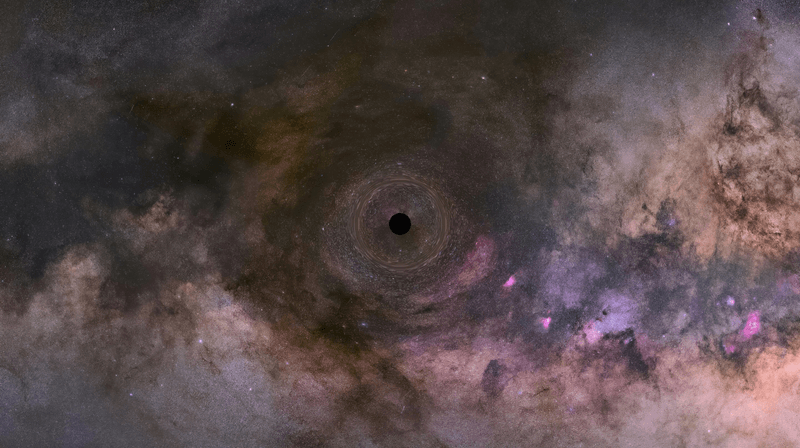
In that vein, IFLScience recently attended the launch of Smithsonian Starstruck, an immersive experience developed in collaboration with the Smithsonian Astrophysical Observatory. The virtual reality tour – and it really is a tour, since you walk around – starts with witnessing a pristine night sky on Earth and takes you all the way to the edge of a supermassive black hole.
On the way, the experience features some of the most pivotal observatories currently operating on the ground and in space, such as the Hubble Space Telescope, the Chandra X-ray Observatory, and JWST. It even includes a shout-out and awesome visualization of the upcoming Giant Magellan Telescope.
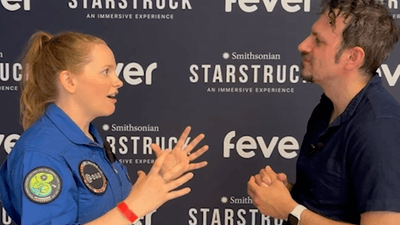
At the presentation, IFLScience had the chance to speak with Meganne Christian, a reserve astronaut with the European Space Agency and senior exploration manager at the UK Space Agency. Among her recent work was the AquaLunar Challenge, an international project to find prototypes that can extract water from the lunar soil.
The route to become a reserve astronaut wasn't a straightforward one for Christian: “I was one of those kids that changed their mind every single day about what they wanted to do with their life,” she told IFLScience.
“I didn't actually think of space as a possible career for me. Then somewhere along the way, I ended up going and spending a year in Antarctica doing climate change research.”
Antarctica, like space, isn't for everyone, requiring that you tough it out in a remote environment for months without sunlight. Though hearing Christian describe seeing her shadow cast solely by the light of the Milky Way gave us proper dark sky FOMO.
“Antarctica is this incredible environment. I was so inspired by the polar night sky; I had 100 days when the sun didn't rise,” she continued.
“So that was incredible, looking up at the sky from there, but also learning a lot about myself, learning that I could build skills that I didn't necessarily have before then, and that was the thing. I was most worried about before I went.”
“I learned that I could, and I thought, 'Okay, well, why not try to go to the next level and try and do this in space?'”
In a world where the skills needed by the next generation might not be the ones we have or even ones we are considering right now, inspiring young people's curiosity, wherever it might lead, remains so crucial, she said.
“I think it's really important to be excited about something to spark that curiosity. Because first comes awe and then comes curiosity and a willingness to learn more. And the best scientists and engineers are those who want to learn more about the world around them.”