Nature
 PUBLISHED
 2
2


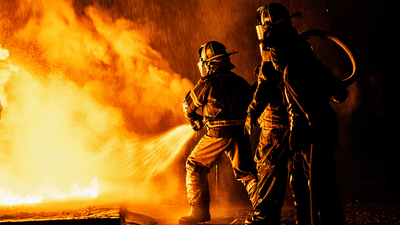


If you've ever had the misfortune to witness a fire or just watch Fireman Sam, you may have wondered whether the water fire brigades use to extinguish the flames is in any way different, or special, when compared to ordinary water.
Well, it is. Since the first fire brigade in 6 CE, fire brigades have had millennia to perfect their techniques. This is good, because the original Roman "fire brigade" – known as vigiles – would pass buckets of water down a line, as well using sponges, siphons, and brooms to tackle the fire. Though of course a great first step in the world of organized firefighting, imagine showing up to a modern fire with several buckets and a sponge like it's bath time.
Since the early 1900s, firefighters have used foams to tackle fires, which have improved in the century since. Foam concentrate is added to the water, creating a foam that can flow over liquid surfaces – say a fuel – cooling the area and starving the fire of oxygen. Some foams will also form a vapor-sealing film on top of a fuel surface.
In the mid-1960s, fire brigades began to use wetting agents in order to make the water "wetter". The chemical agents are “liquid concentrates which, when added to plain water in proper quantities, materially reduce the surface tension of plain water and increases its penetration and spreading ability,” according to the Underwriters Laboratories Inc. (UL) Directory. The result is sometimes called "wet water", given its ability to seep into the target better than regular water.
Firefighters use a mix of foams and wetting agents in tackling fires, as well as emulsifiers, which mix with fuel sources and break it into small droplets, surrounded and extinguished by the water.