Nature
 PUBLISHED


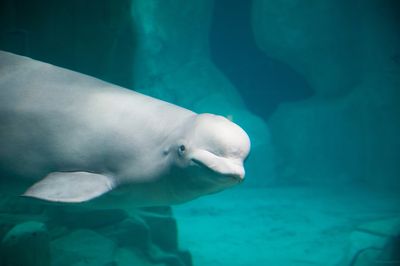


Marineland, a zoo and amusement park in Niagara Falls, Canada, has found itself back in the spotlight after the death of five of its beluga whales in the last year.
The park is the last place in Canada where whales are still kept captive, and has seen 17 of its resident belugas die since 2019.
This latest death has brought questions back up over the welfare of the marine mammals living in the park’s aquarium; it’s not the first time that Marineland has been caught up in controversy over animal welfare.
Back in 2020, the park became the subject of an investigation by Ontario’s Animal Welfare Services (AWS), which later concluded that the resident marine mammals were in distress as a result of poor water quality.
The investigation is still ongoing, but speaking to the Canadian Press, Melanie Milczynski, Ontario’s chief animal welfare inspector, said that water quality standards are now being met at the park and are not believed to have been involved in the deaths of the belugas.
Milczynski added that Marineland is aware of the cause of the belugas’ deaths, but that officials were not at liberty to disclose that information. When the Canadian Press requested such details from Marineland, the park did not answer, and said it would “no longer communicate” with the outlet.
Some politicians have responded to the news of the latest death by calling for greater clarity over the details of the investigation, while others have called for the park to shut down in its current form.
“This constant cycle of abuse and untimely death needs to stop. 5 beluga deaths in this year [alone] is 5 too many,” Mike Schreiner, leader of the Green Party of Ontario, said in a post on social media platform X. “Marineland’s animals must be relocated to appropriate wildlife and marine sanctuaries, and the park must pivot to a model that does not include animal captivity. Enough is enough.”
Marineland maintains that the quality of care towards its animals is to standard and told the Guardian that its staff “care for the animals when they are sick and every effort to save them is made”. The beluga deaths, it said, were natural.
The history of keeping belugas in captivity spans as far back as the 1860s, when a live whale was captured and put on display at the Boston Aquarial Gardens. To this day, it’s estimated that over 300 belugas still remain in captivity.