Culture and Society
 PUBLISHED


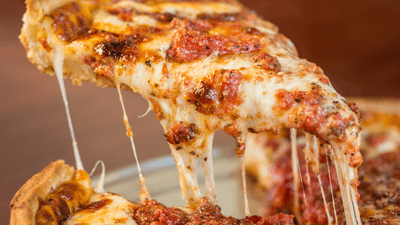


There are 294,000 tags for #cheesepull on Instagram. Suffice to say, we as a species are hooked. Since we first started curdling cheese from animal milk, our methodology has come a long way from hard lumps of chalky cheddar to the oozy, gooey goodness that populates our explore feeds. So, why does melted cheese taste so much better than the solid stuff?
It all comes down to our love of fat. Diet culture might have led our heads to see it as undesirable number one, but the mouthfeel wants what it wants, and that – my friends – is fat.
“Researchers at Yale have studied how our central nervous system responds to fatty foods,” said Dr Inna Husain to well+good. “We think due to either evolution or learned behavior, oily calorie-dense foods are what our taste receptors like to hone in to.”
When we melt cheese, the fat trapped within its rigid structure of milk proteins gets released, creating that covetable creamy texture. Heat some cheeses too much, however, and you’ll end up with lumps surrounded by pools of fat, so you’ve got to get the heat-to-cheese ratio just right.
Not all cheeses will melt the same and that comes down to their constituent parts, chiefly the ratio of lactose to fat and protein. Cheeses with a higher fat content will be smoother and creamier, while different bacteria can alter the flavor.
The pH is also a crucial element when deciding the best way to prepare a cheese for melting, and helpfully the American Chemistry Society put together an explainer for how to make the best grilled cheese according to science.
Heating cheese doesn’t just free the fats, it also releases amino acids like glutamate that have a delicious umami taste, which you’ll recognize if you’re an MSG (monosodium glutamate) fan – as we all should be. Add to that, the fact that a creamier consistency likely covers the tastebuds more evenly and you’re experiencing a heightened hot cheese experience compared to the cold alternative.
The shift in texture all comes down to a protein called casein, which is crucial for the creation of cheese. It’s thought that just about any animal milk with casein in it can become a cheese, raising the feasibility of whale milk cheese which – unashamedly – we asked a real scientist about.