Health and Medicine
 PUBLISHED
 1
1


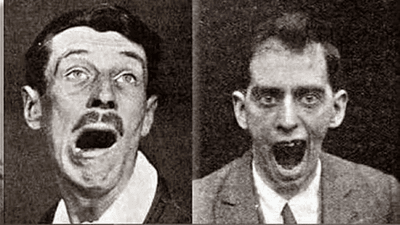


Around a century ago, and around the same time the 1918 influenza pandemic killed between 50 and 100 million people worldwide, humanity was met with a new and unusual disease.
The disease, known as encephalitis lethargica (EL), first began to spread across Europe in the winter of 1916. Constantin von Economo, a doctor at the Psychiatric-Neurological Clinic of the University of Vienna, was the first to describe the disease after several patients showed up with strange neurological symptoms. They were admitted with diagnoses ranging from meningitis and multiple sclerosis to delirium. But none of these symptoms fit neatly into any known disease, and one new symptom – lethargy, or sleepiness – distinguished it as a new phenomenon. It was categorized as either acute or chronic, though the two phases often blended together.
"Acute encephalitis lethargica often presented as a gradual onset of non-descript flu-like symptoms, including malaise, low-grade fever, pharyngitis, shivering, headache, vertigo, and vomiting," a 2017 review of the topic explains. "Neurological symptoms followed and could present very quickly, as in the case of a girl who experienced a sudden hemiplegia while walking home from a concert. Within half an hour she was asleep, and died 12 days later."
The disease was further broken down into other categories, some of which were deadlier than others. Particularly distinct was the somnolent-ophthalmoplegic form of encephalitis lethargica, which was characterized by extreme sleepiness.
"Most notably, patients experienced an overwhelming desire to sleep and would sleep for abnormally long periods of time, but were easily awakened and often aware of everything that had transpired around them while in this state of pseudosomnolence," the review explains. "The mortality rate for the somnolent-ophthalmoplegic form was higher than that of other forms of encephalitis lethargica, exceeding 50%; however, a greater number of survivors experienced few or no long-term sequelae than in the other forms."
EL, thought to have caused over half a million deaths, grew more distressing as the disease went on.
"[The patients] would be conscious and aware – yet not fully awake; they would sit motionless and speechless all day in their chairs, totally lacking energy, impetus, initiative, motive, appetite, affect or desire; they registered what went on about them without active attention, and with profound indifference," Dr Oliver Sacks, who treated patients for the disease, wrote of his time spent at the Beth Abraham Hospital in New York in the 1960s in his book Awakenings. "They neither conveyed nor felt the feeling of life; they were as insubstantial as ghosts and as passive as zombies."
The disease spread. Like with COVID-19, new variants appeared over the next few years of the pandemic. Around Italy and Sweden in 1919-1920, a new strain emerged characterized by hyperkinetic and insomniac phases, and a neuralgic pain that was not helped by administering morphine.
"Hyperkinetic manifestations were variously characterized as 'rapid spasms,' including myoclonus, and stimulus-dependent myoclonus, or as other involuntary movements described as chorea, athetosis, dystonia, myokymia, or tremor," a paper on the topic explains. "Rapid spasms, or myoclonus, more commonly affected the diaphragm or abdomen before affecting the face or limbs, and often manifested asymmetrically, affecting only one quadrant of the abdomen, one limb, or even a single extraocular muscle."
Patients could expect rigidity in their limbs, and to be immobile for long periods of time.
Those who did survive the initial disease were not out of the woods, as complications often set in years after the initial infection.
"The chronic phase was characterized by parkinsonism, but sleep disturbances, oculomotor abnormalities, involuntary movements, speech and respiratory abnormalities, and psychiatric disorders were also common features," the 2017 review explains. "In the decades following the epidemic, it was estimated that as many as 50% of parkinsonism cases were postencephalitic."
The cause of the disease remains largely unknown. One theory, popular as EL spread, is that the disease was caused by the virus responsible for the 1918 flu pandemic. The two diseases arrived and ended with similar timings, and so it makes sense that people would think that they are linked. However, looking at cities in the US between 1918 and 1923, no link was found between the two diseases, which appeared to arrive separately.
Some epidemiologists still suspect that there may be a link, though there is little direct evidence to support the idea. One idea is that EL was neural damage resulting from the influenza epidemic, though with a delayed onset, as it was only noticed once enough damage had been done in the brain.
More recently, a study looking at the few available brain tissue samples from patients concluded that an enterovirus – a group of viruses that includes polio, spread through coming into contact with secretions from an infected patient – was the likely cause of the disease.
However, there is no overall consensus in what caused this bizarre and distressing disease. In 1927, having killed around 500,000, EL largely stopped circulating, and all but disappeared. While the disease disappearing is what's known as a "good thing", without knowing its cause we do not know how likely it is that similar diseases will emerge in the future.
"Unless another cause of classical EL is positively identified, its return in the context of another influenza pandemic remains formally possible," one study concludes, though they add that this would bring a bright side. "Such a recurrence would provide an opportunity to establish the etiology of EL using modern methods."