Humans
 PUBLISHED
 2
2


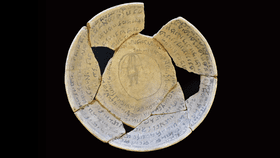


Bowls marked with magical inscriptions were buried beneath the floors of ancient Mesopotamian houses to ward off evil forces. In the unlikely event this worked, it appears the benefits wore off over the centuries, because a large collection of these bowls have now been uncovered, and the possessor faces charges carrying long jail sentences. Ancient coins, glassware, and weapons were also found at the site.
The recovery of archaeological artifacts is a fraught business. Rare and beautiful items can attract a high price, and many buyers don't care too much about whether they are getting them from the rightful owners. Indeed, the question of who those owners are is often in dispute, as demonstrated by the long quest by many nations to get former colonial powers to return the contents of their museums.
Israel's Antiquities Authority (IAA) has an entire Robbery Prevention Unit to deal with items taken by people whose concept of ownership does not extend past “finders keepers”. The unit recently conducted a joint operation with Lev HaBira police, and returned with a remarkable haul.
Among the items the IAA found in an individual's home are numerous “Swearing Bowls” that date from the 4th-8th centuries CE in what is now Iraq.
In an era when literacy was rare, some people made a living by writing personalized messages to repel curses, demons, or other perceived threats. One of the bowls collected in the raid has a painting of a “night” demon – the terror the household sought protection against.

“In 2003, following the war in Iraq, thousands of stolen 'incantation bowls' began to enter international trade markets,” the Authority's Amir Ganor said in a statement sent to IFLScience.
The home's resident has yet to be tried, and may have a plausible explanation for how so many of these magical bowls came to be in his possession. However, the Authority not only alleges he acquired them illegally, but had performed repairs on them in order to sell them.
Potential charges include possession of property suspected of being stolen and failure to report the discovery of antiques. Other items found there include ancient coins, geometric ornaments in a style associated with northern Israel in Biblical times, and Phoenician style bone and ivory items.

The Authority also hopes that documents seized at the home will allow them to identify who the items were bought from, potentially implicating a much wider network.
"Antiquities belong to all of us. They are our heritage,” said the Authority's director Eli Eskosido "Unauthorized antiquities dealers encourage looters to go out and destroy ancient sites in search of finds for sale on the antiquities market. In the name of greed, they plunder antiquity sites, removing the finds from their historical context, thus obscuring parts of human history.”

However, the Authority faces plenty of criticism of its own. Recently the United States organized for the return to their countries of origin of illegally acquired items that had been part of the billionaire Michael Steinhardt's collection. However, some of the 40 items returned to Israel are claimed to have come originally from the West Bank, attracting resentment from Palestinian officials, who have not received any returns.
Israel's refusal to ratify the UNESCO convention against the illicit trade in antiquities has been alleged to contribute to its status as a center for black market trading.
Indeed, the house where the items were found is in Ramat Shlomo, an area captured in the six-day war and considered by Israel to be part of Jerusalem, but widely criticized as an illegal settlement on occupied land.