Nature
 PUBLISHED
 2
2




New evidence has pushed back the time when dinosaurs began living in herds by more than 40 million years. The conclusion is based on the grouping of fossils at a 193 million-year-old nesting ground in Argentina.
Paleontologists have long suspected some dinosaurs moved in herds – it's one thing that wasn't controversial in Jurassic Park (say it with us now: "They DO move in herds!") – but when this first began is another matter. The oldest agreed-upon evidence comes from the late Jurassic 80-90 million years after the clade is thought to have evolved.
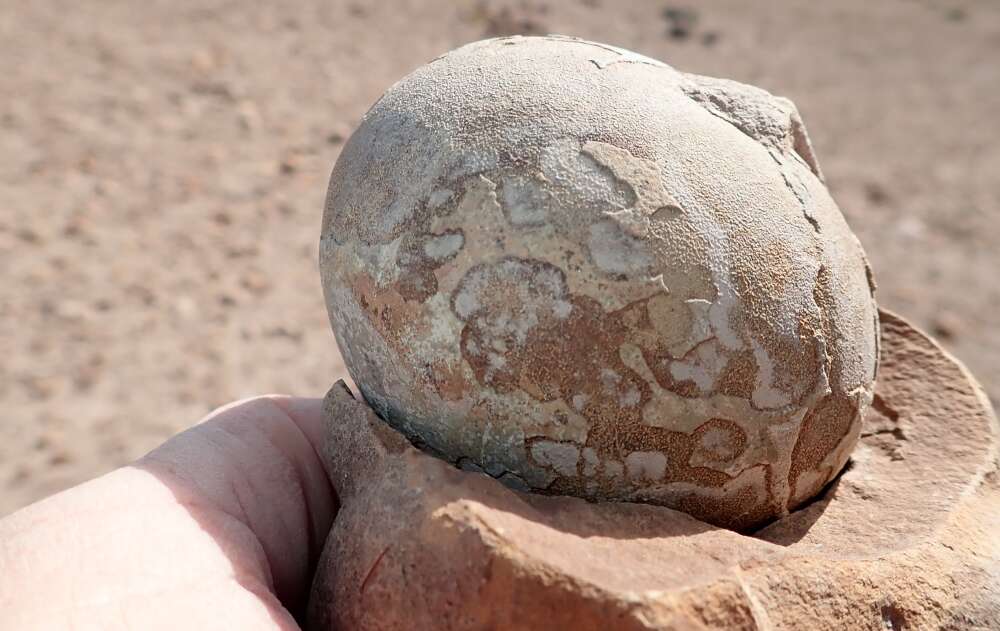
The discovery of a large concentration of skeletons and eggs in the Laguna Colorada Formation, Patagonia, has changed that. The finding of more than 100 eggs and partial skeletons from 80 individual Mussaurus patagonicus, a sauropodomorph from the early Jurassic, has been announced in Scientific Reports.
The fact so many specimens are found together tells us a little about Mussaurus' behavior, but many animals that are not particularly social nest at the same location, drawn by suitable conditions. However, the paper describes something more revealing. Many of the fossils are found in clumps segregated by age.
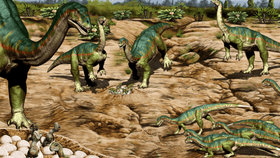
Clutches of 8-30 eggs and nearby hatchlings match what we might find in a sea bird nesting colony today, but the team also found a collection of juvenile skeletons 50 meters away. It was as if the dinosaurs had a creche to which they packed the toddlers to prevent them treading on their siblings' eggs.
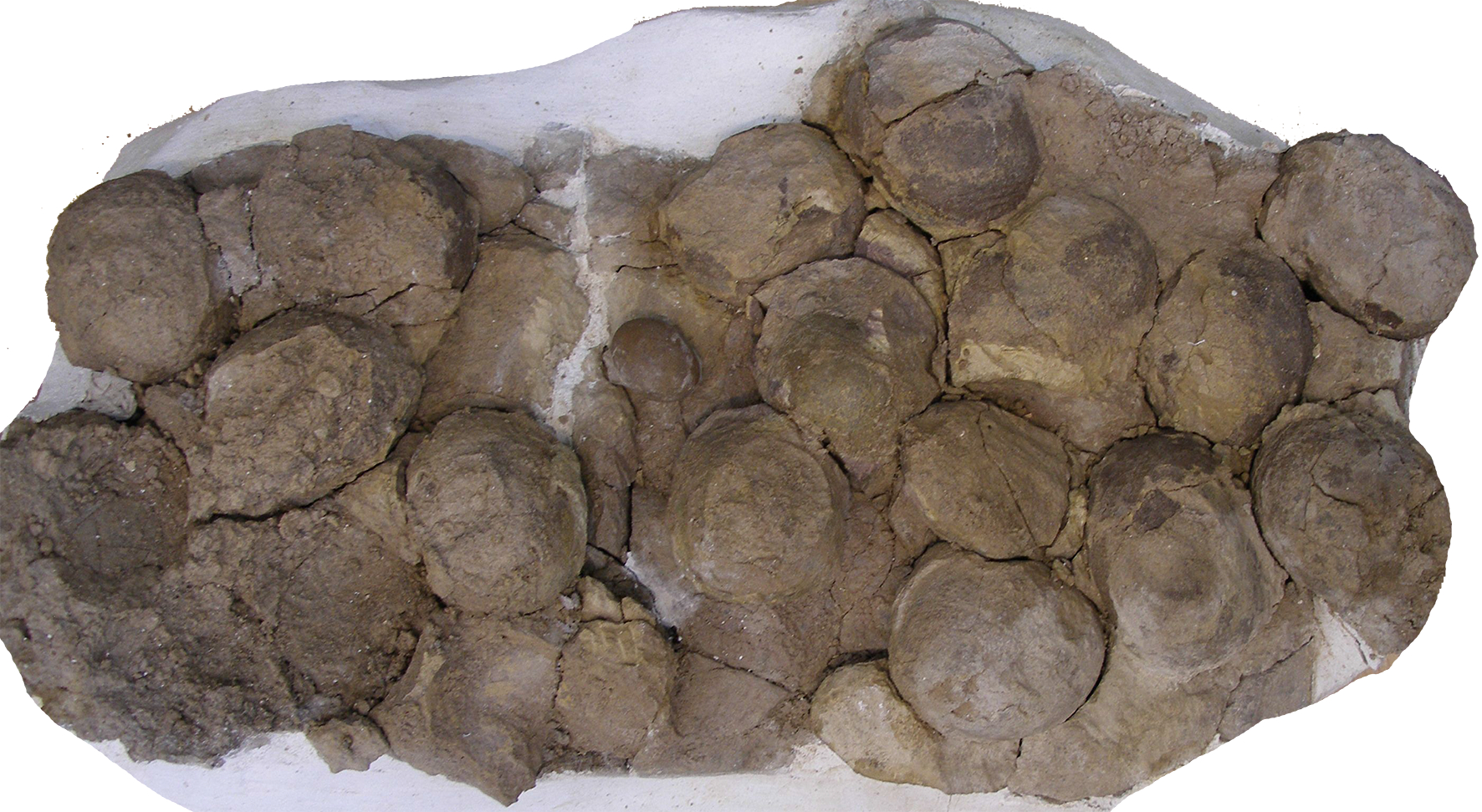
Eleven juveniles are so entwined the authors think they died in a single flood or dust storm, possibly huddled together against danger. Adult skeletons were found singly or in pairs around the site.
“This may mean that the young were not following their parents in a small family structure,” said MIT's Dr Jahandar Ramezani in a statement. “There’s a larger community structure, where adults shared and took part in raising the whole community.”
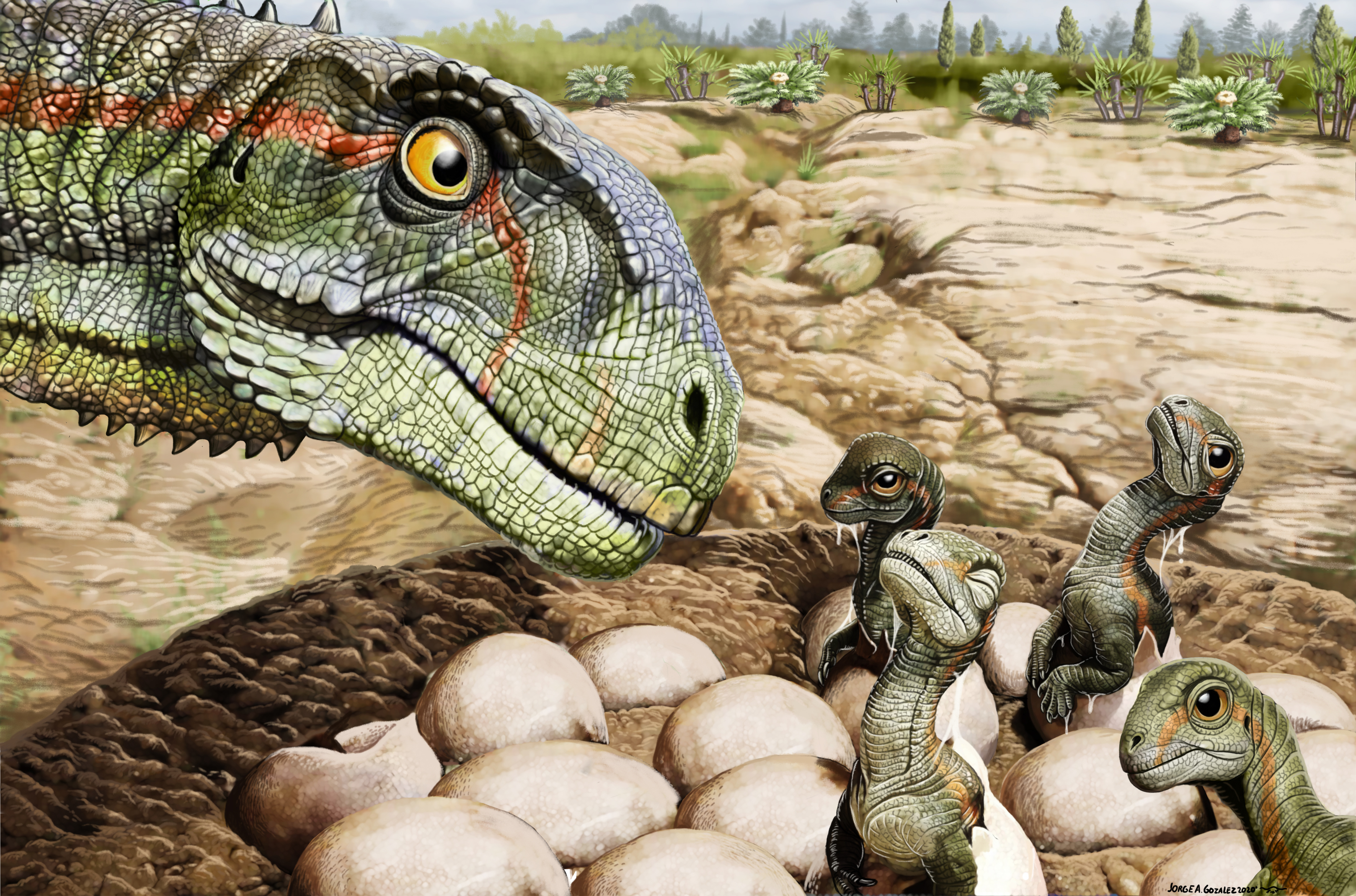
Although the site dates to 193 million years ago, Mussaurus' close relatives were present in the late Triassic. Ramezani and co-authors think sauropodomorph social behavior developed somewhere between 227 and 208 million years ago when the family began displaying traits such as accelerated growth. Sauropodomorphs took advantage of being rare survivors of an extinction event to become the only large herbivores on land in the early Jurassic. Although it is possible the herding behavior only arose after they had become dominant, the authors think it is more likely they'd been at it a long time.
“This raises the question now of whether living in a herd may have had a major role in dinosaurs’ early evolutionary success.” Ramezani said. It's even possible their mutual support structures were the reason sauropodomorphs survived the hard times at the Triassic's end.
Excavation of a site as rich as this is a slow process and has been going on since 2013. Mussaurus are larger than their name (mouse lizard) would suggest, weighing up to 1.5 tonnes, but their eggs were the same size as those of modern chickens.
Two dinosaur species from other continents have been suspected of living in herds at the same time, but the earliest conclusive evidence is 40 million years later. Moreover, juvenile clustering is new for dinosaurs of any era.