Culture and Society
 PUBLISHED
 47
47



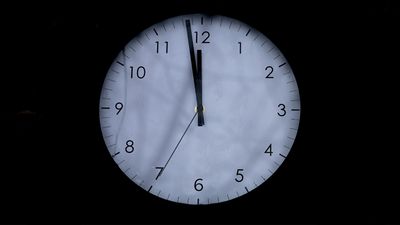


The Bulletin of the Atomic Scientists has announced that the Doomsday Clock has been moved forward to 85 seconds to midnight, the closest it has ever been in the history of this symbolic portrayal of the state of the world. Since 1947, the Doomsday Clock has metaphorically represented the risk that we will succumb to human-made threats, with midnight representing Armageddon. Now, we are closer to that than at any time in the last 80 years.
"Hard-won global understandings are collapsing, accelerating a winner-takes-all great power competition and undermining the international cooperation critical to reducing the risks of nuclear war, climate change, the misuse of biotechnology, the potential threat of artificial intelligence, and other apocalyptic dangers," the Bulletin wrote in a statement.
"Far too many leaders have grown complacent and indifferent, in many cases adopting rhetoric and policies that accelerate rather than mitigate these existential risks. Because of this failure of leadership, the Bulletin of the Atomic Scientists Science and Security Board today sets the Doomsday Clock at 85 seconds to midnight, the closest it has ever been to catastrophe."
The 2020s have seen an increase in international and intranational conflicts, such as the Russian invasion of Ukraine, conflicts in Sudan and Congo, Israel’s genocide in Gaza, and attacks in Lebanon and Iran. In Iran, the government’s repression of the protests that happened this month has resulted in thousands of people being killed by security forces, while the country cut internet access to conceal their actions.
The US, under President Donald Trump's second term, has been flexing its military muscles recently, much to global concern. In January, it launched a military strike in Venezuela, capturing President Nicolás Maduro and his wife under the claim of drug-related offenses, though much of the focus has been on Venezuela's oil reserves. The Trump administration has also threatened the annexation of Greenland multiple times, which would likely destroy NATO.
The risk of war, and in particular nuclear war (agreements to reduce nuclear weapons are stalling, with a major US-Russia treaty set to run out this year), is looming, but other threats are being exacerbated by the current geopolitical situation. The necessary actions to tackle the climate crisis have stalled, despite renewable energy now being the biggest source worldwide. The Trump Administration has taken the US out of the Paris Agreement (again), as well as removing itself from multiple organizations trying to save the planet.
The US has also left the World Health Organization, and other nations, like Argentina, are following suit. The threat of a new pandemic has not gone away and the lessons from COVID are still being learnt.
The lack of regulation surrounding cybertechnology and, in particular, generative AI is also mentioned; for example, Elon Musk's Grok produced 23,000 sexualized images of children over an 11-day period between December 29, 2025, and January 8, 2026, according to a report by the Center for Countering Digital Hate (CCDH).
The Bulletin also reports the continuous erosion of human rights across many countries globally, as well as the increase in misinformation and disinformation online and by politicians, personalities, and the media.
Why does the Doomsday Clock move?
Back in the late 1940s, having witnessed the effects of World War II, scientists grew concern at the ability of self-annihilation that we have developed. The clock was initially set at 7 minutes to midnight. The furthest it has been from midnight was in 1991, following the easing of tensions between the former Soviet Union and the United States, the reunification of Germany, and the signing of the first Strategic Arms Reduction Treaty. That year, it was 17 minutes to midnight.
The clock is moved based on the opinions and expertise of the members of the Bulletin of the Atomic Scientists. The Bulletin members ask themselves two questions: is humanity safer than last year, and is humanity safer than it has been over the last 78 years from human-made threats? Based on their answers, the clock moves.
There is a lot more to it than just nuclear war, but even a small nuclear conflict could mean the death of tens of millions in a matter of hours. A nuclear war would kill an estimated 5 billion people from direct impact or its subsequent famine.
The clock has been at less than two minutes to midnight for the last several years, reaching the 90-second mark for the first time in 2023. With the clock moving forward, the threats are now more serious than ever. Ultimately, this is a reminder that it doesn’t have to be like this. All of these threats are due to actions or inaction, self-inflicted, and at any moment we can decide to change.