Humans
 PUBLISHED



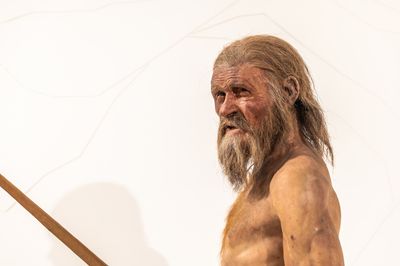


Ötzi the Iceman had a lot on his plate. Before he was naturally preserved in an Alpine glacier like a prehistoric popsicle, the 5,300-year-old mummy was already suffering from a dodgy heart and a gut riddled with parasites. Now, a new paper argues that the prehistoric man was saddled with another problem: human papillomavirus (HPV) and the threat of cancer.
The research – which is yet to be peer-reviewed – saw scientists from the Federal University of São Paulo in Brazil analyze genome sequencing data from Ötzi to look for HPV.
Certain viruses, including HPV, can integrate part of their genetic material into the DNA of the people they infect, allowing scientists to detect evidence of past infections even thousands of years later.
Ötzi and HPV
Their probing revealed that Ötzi was infected with HPV16, a high-risk strain strongly linked to several cancers, including cervical, penile, anal, and oropharyngeal (a type of head and neck cancer).
The researchers also studied another exceptionally well-preserved specimen known as Ust’-Ishim, which consists of a single femur bone that belonged to a man who lived in Western Siberia around 45,000 years ago. Once again, this prehistoric person was infected with HPV16.
While it’s a very neat finding, it isn't totally shocking. HPV is widespread in humans, with around 80 percent of sexually active adults being infected at some point in their lives. Many HPV infections cause no symptoms and no problems, but some strains can increase the risk of cancer. One of those risky strains is HPV16, which infects an estimated 5 percent of the world population.
We already knew the HPV family has been around for hundreds of millions of years. It infected archaic hominins and other human relatives, evolving alongside us before settling into modern Homo sapiens. This latest research affirms that this long, awkward, and often difficult relationship extended to one of the nastier members of the family, HPV16.
“Its detection in two genetically and geographically distinct Late Pleistocene and Holocene individuals suggests that HPV16 has maintained a long-standing association with human populations and may have undergone host-specific evolutionary stabilization long before the emergence of modern epidemiological patterns,” the study authors write.
“The recovery of HPV16, rather than other high-risk types such as HPV18, HPV31, or HPV45, aligns with the genotype’s known global ubiquity and supports the hypothesis that HPV16 has been the dominant circulating high-risk lineage across diverse human groups for millennia,” they added.
Who was Ötzi the Iceman?
Ötzi the Iceman was first discovered in 1991 when two hikers came across a dead body poking out of a thawing glacier in the Alps, on the border between Austria and Italy. While they initially assumed it was the body of a recently deceased mountaineer, researchers at the site quickly realized the find was thousands of years old.
The body has since been extensively studied by scientists, who have managed to piece together the story of his life with amazing clarity. One of the more recent studies, published last year, showed that Ötzi belonged to a unique lineage and had a very different ancestry compared with other people living in the Austrian Tyrol between 6400 and 1300 BCE.
Despite being infected with HPV16, we know it wasn’t cancer or an infection that finally got Ötzi. Ten years after his discovery, X-rays and a CT scan revealed that he had been shot with an arrow in his left shoulder, likely causing him to bleed out. One way or another, his body then became trapped in glacier ice, preserving his final day for thousands of years.
The research is posted to the preprint server bioRxiv.