Humans
 PUBLISHED



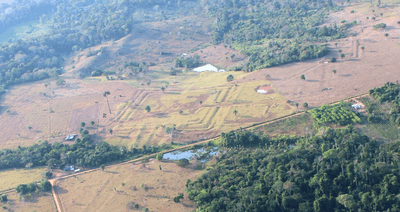


The human history of the Amazon just keeps expanding. Using aircraft armed with jungle-piercing lasers, researchers have uncovered yet another treasure trove of discoveries by illuminating hidden structures buried beneath the rainforest.
The technology is known as LiDAR, a remote sensing technique that uses pulses of light to gather precise data about the shape of the ground beneath the trees, including all its subtle lumps and bumps.
We arrived at a surprising conclusion: more than 20,000 earthworks may exist within this region alone.
Martti Parssinen
While previous surveys have focused on peripheral areas or great big sweeps of the Amazon, the latest study focused on a specific patch of territory once occupied by the Aquiry civilization.
Very little is known about their way of life, but it is evident this ancient pre-Columbian culture thrived in southwestern Amazonia from around 600 BCE to 850 CE. It also seems like they were curiously fond of building giant geoglyphs and geometric earthworks that still scar the Earth today.
Within a 4,500 square kilometer (1,737 square mile) area of Brazil – puny by Amazonian standards – the researchers found almost 400 previously unknown earthworks created by the Aquiry.
Most of the structures sit alone beneath dense rainforest canopy and consist of ditches and embankments organized into geometric shapes, including squares, rectangles, and circles.
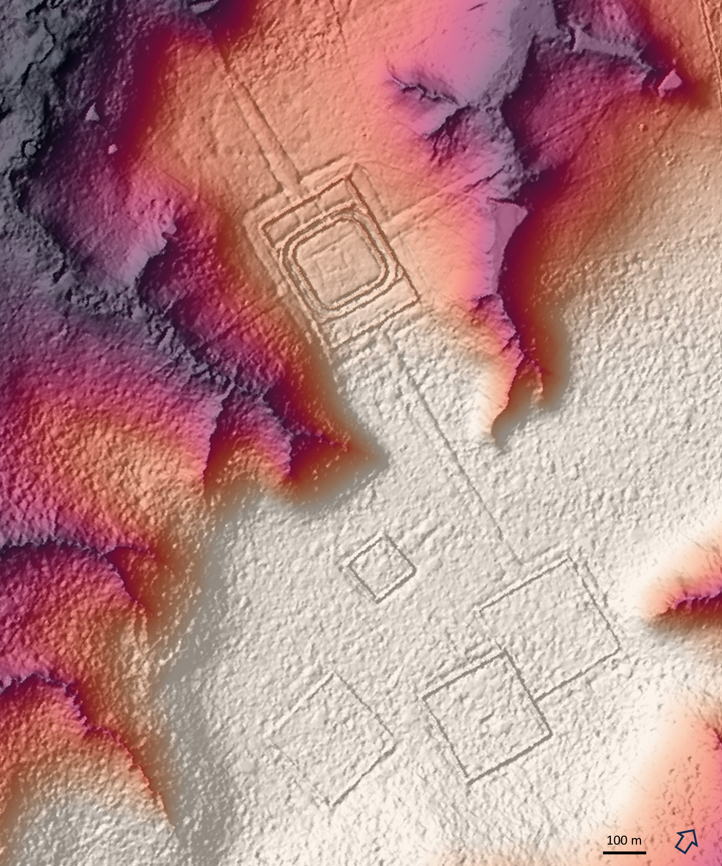
One in particular, named D. Schaan, was especially interesting to the researchers.
“The site known as D. Schaan appears to be an extraordinary combination of a monumental nested rectangular earthwork and several perfectly square enclosures linked by broad roads,” Martti Parssinen, an expert in South American archaeology and Professor Emeritus at the University of Helsinki, told IFLScience.
“For me, it was truly amazing to discover such a complex landscape hidden beneath the dense Amazon forest canopy,” the study author commented.
The role of these structures is unclear, but they're believed to have functioned as ceremonial, political, and public gathering centers. Imagine it as a mix between a cathedral, a town square, and a stadium where people gathered for festivals and jungle jamborees, but also to settle scores or rally together in tough times.
The tip of the iceberg
Many more of these structures are likely to be out there. The researchers believe the 400 constructions they've identified so far are just the tip of the iceberg in the wider region once inhabited by the Aquiry civilization.
“By extrapolating the results in several independent ways across the entire 183,000 square kilometer Aquiry region, we arrived at a surprising conclusion: more than 20,000 earthworks may exist within this region alone,” added Parssinen.
The sheer number of sites indicates that this part of the Amazon was once home to far more people than was historically thought. In another part of the new paper, the team conservatively estimated that, at its peak between 100 and 300 CE, the Aquiry civilization supported approximately 1.25 to 3 million people.
This radically reaffirms the view that the Amazon rainforest was not untouched wilderness devoid of human life, but a bustling basin of large, complex societies with cultures still largely unknown.
“If future research produces similar results in other parts of Amazonia, many long-standing assumptions regarding the scale of past human influence on the Amazon rainforest and its biological and ecological structure may need to be fundamentally reassessed," explained Parssinen.
The new study is published in the journal Nature.