Humans
 PUBLISHED
 2
2




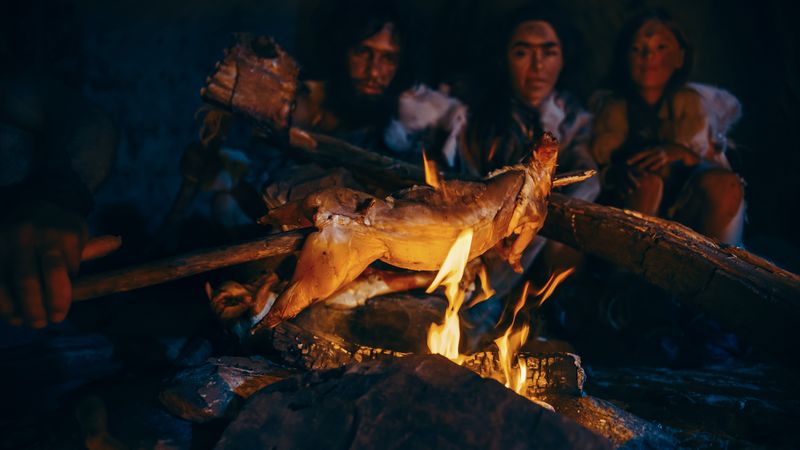
Some groups of European Neanderthals may have lost the ability to make fire during the colder periods of their existence. As counterintuitive as this may sound, researchers say it reflects humanity’s vulnerability to “cultural loss” when we collectively forget how to do certain things.
“Similar dynamics of cultural loss are well documented in the historical, archaeological and ethnographic record of Homo sapiens, including technologies such as concrete, ceramics, and kayaks,” says study author Andreu Arinyo i Prats from Aarhus University. “A recent study even suggests that dance itself was lost,” he tells IFLScience.
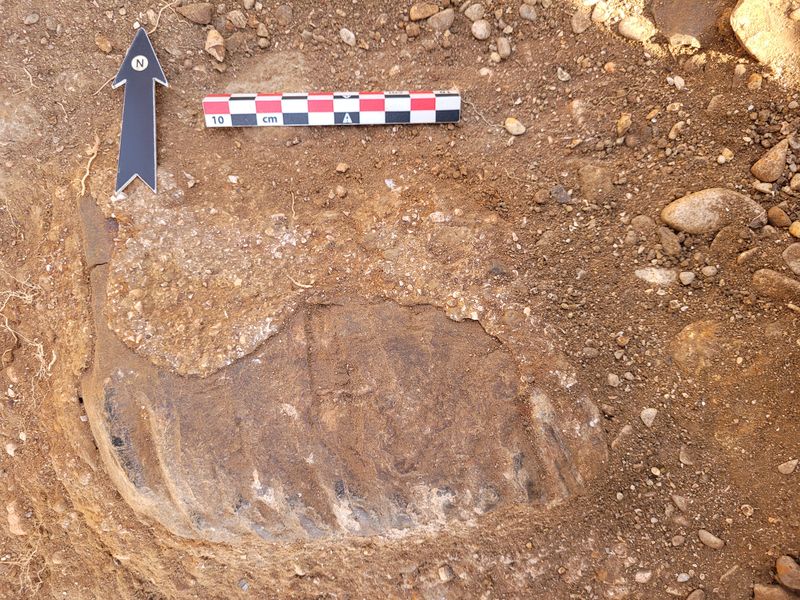
Sticking with Neanderthals, though, and recent discoveries have suggested that prehistoric hominins were making fire using strike-a-light technology as early as 400,000 years ago. Strangely, however, researchers have also noted that evidence of fire use at some Neanderthal sites tends to increase during warmer periods but drop off dramatically during colder snaps.
This surprising pattern was first observed at sites such as Pech de l’Azé IV, Roc de Marsal, and Combe Grenal in southwest France, but has now been recognized at numerous Middle Palaeolithic Neanderthal hotspots across Europe. To explain this seemingly irrational trend, researchers have suggested that certain Neanderthal groups may have lacked the ability to create fire from scratch and relied on natural wildfires in order to obtain embers for their own campfires.
During warmer periods, lightning strikes are more common, triggering more forest fires. Yet these became less frequent when the climate cooled, leading to the hotly debated theory that Neanderthals may have lost the knowledge of how to work with fire as their memories faded over time.
To test this theory, Arinyo i Prats and his colleagues created a computer model to simulate the probability of a group of Neanderthals losing their campfire-making skills over a 1,000-year period. Results indicated that as the interval between wildfires increases, the loss of this ability becomes a more likely outcome than its retention – supporting the idea that some Neanderthals may indeed have forgotten how to use fire due to cultural loss.
“It appears, then, that we can invest reasonable confidence in the finding that it is more likely that the ability to use [fire] would be lost than retained in conditions akin to those experienced by European Neanderthal groups during cold, dry periods of the Pleistocene,” write the study authors.
“We have tried to be careful in our publication to make it clear that the archaeological data and our model only directly apply to Neanderthals in certain areas,” says Arinyo i Prats. “Thus, we do not rule out the possibility that other Neanderthal groups – or other groups of other hominin species – at different times or in different regions were capable of making fire, for example, using strike-a-light techniques,” he adds.
Furthermore, Arinyo i Prats insists that this model is not based on any assumptions regarding cognitive differences between Neanderthals and modern humans. Instead, the simulations merely reflect the ease with which complex learned behaviors can be forgotten when their cultural transmission is halted.
“Given how likely it is for sophisticated technologies to be lost under the simulated conditions, the surprising result is not that such traits disappear, but rather that they can be preserved for thousands of years,” he says. “Such long-term retention points to complex sociodemographic and behavioural dynamics within populations capable of sustaining them.”
As for those Neanderthals that lost their pyro-proficiency at precisely the worst possible time, it’s unclear exactly what other behaviors they might have developed to compensate for this or how they survived. And while this is something that’s beyond the scope of this particular study, Arinyo i Prats says that “if these populations survived, they must have been well-adapted to their environment, even if those conditions appear harsh by modern standards.”
The study has been published in the journal Open Research Europe.