Space and Physics
 PUBLISHED
 1
1



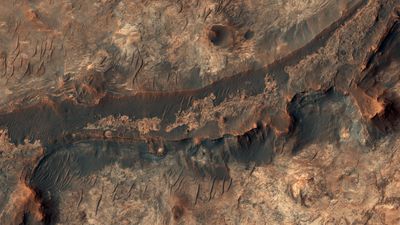


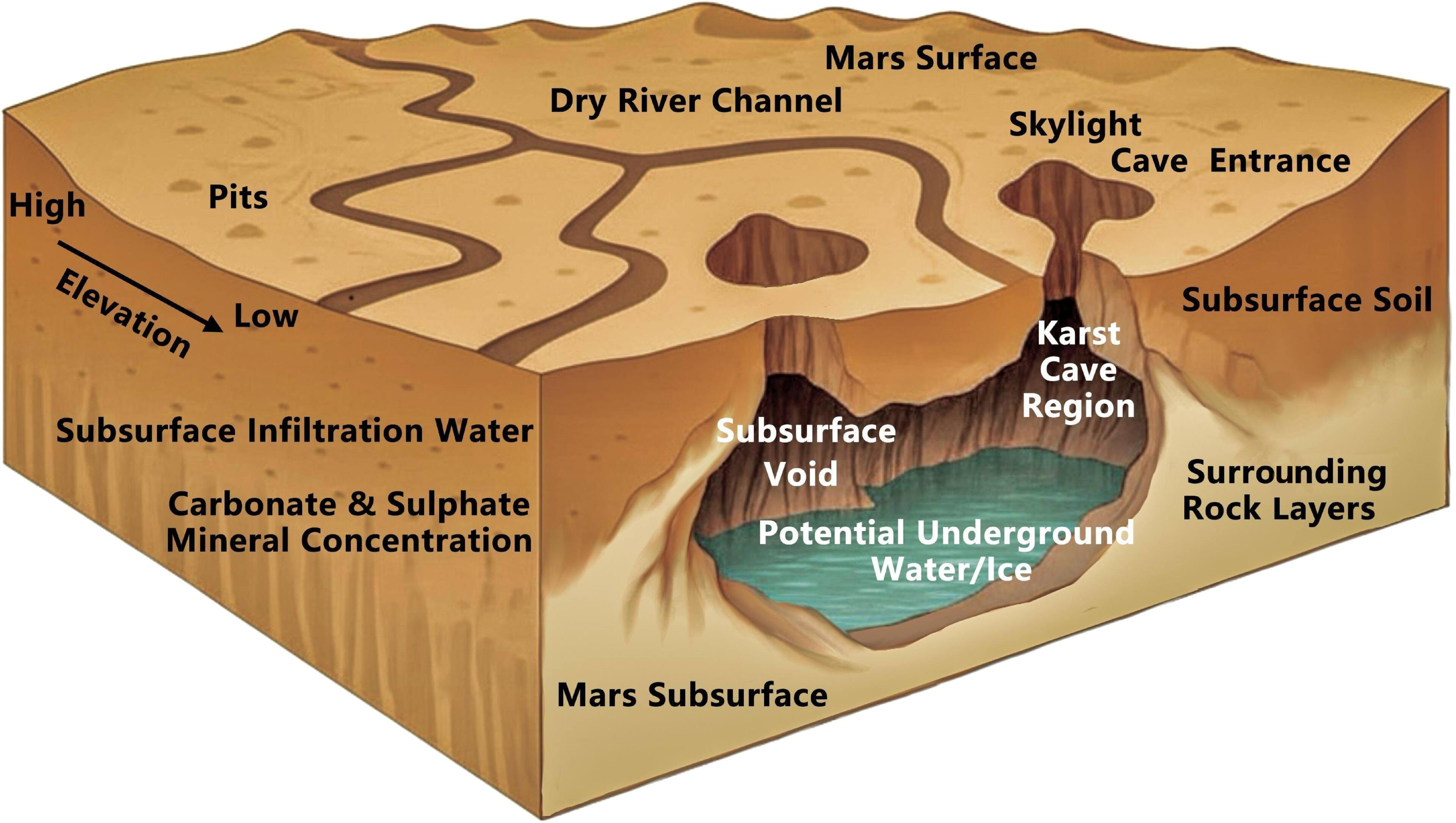
For the first time, planetary scientists have spotted what they think are karst caves on Mars. On Earth, these caves are formed when slightly acidic water dissolves limestone or dolomite, and if they are present on Mars they were probably formed through similar processes.
Martian orbiters have spotted indentations on Mars that lack the raised rims, ejected material, and surrounding rays that are characteristic of asteroid impacts. Known as skylights, they were all thought to be volcanic in origin – lava tubes, for example – or possibly relics of tectonic activity.
However, a team led by Dr Ravi Sharma of Shenzhen University noted that there are channels on the Martian surface that are thought to be the products of ancient rivers and sinkholes. Might the same watery era have produced caves that have survived in the face of near geological stasis since the planet dried out?
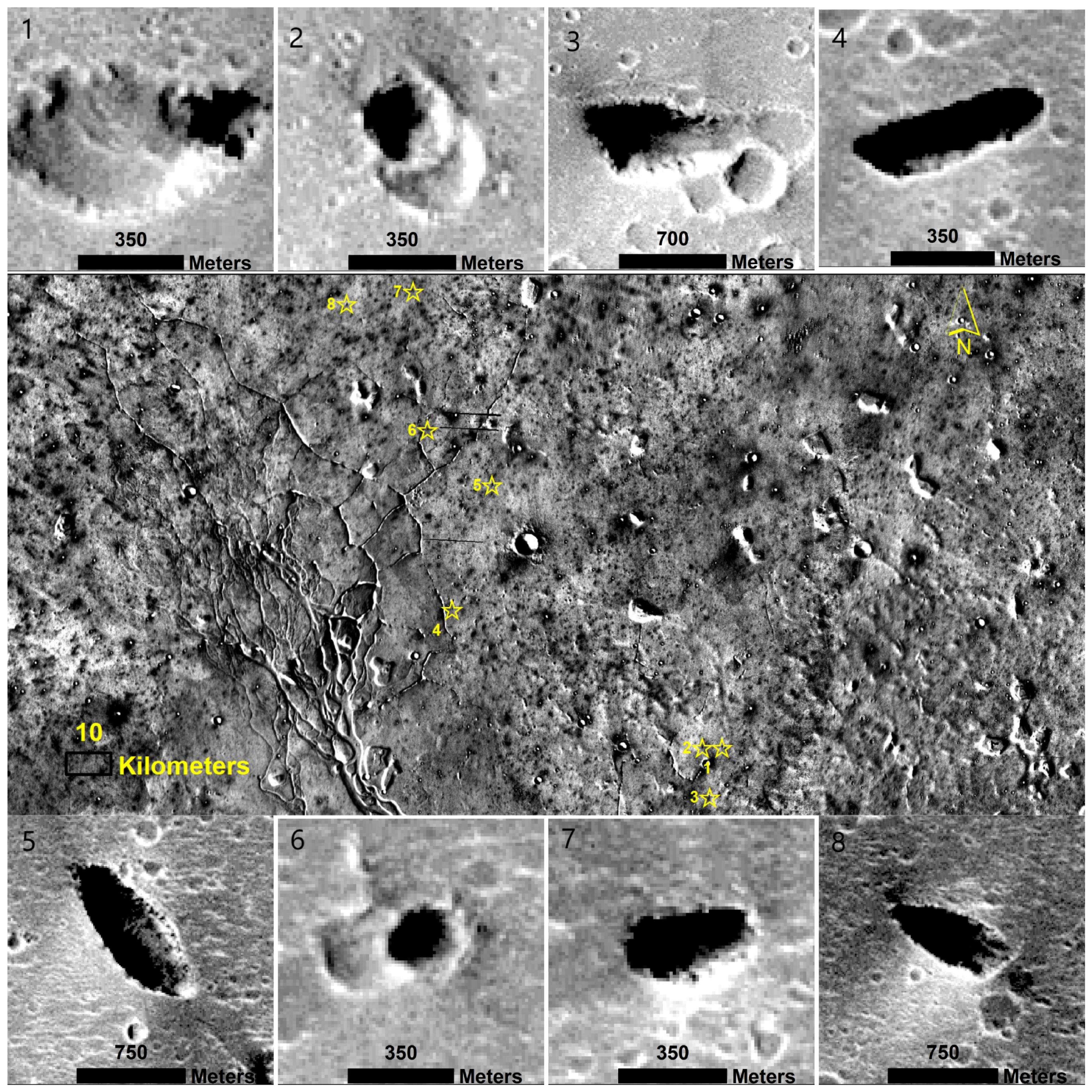
The team identified eight skylights in an area known as the Hebrus Valles, which they considered a promising location because it shows no signs of past volcanism, unlike other skylight-rich terrain. The region is also noted for other signs of past flowing water.
The authors report that 3D models show the skylights’ shapes are consistent with places on Earth where water dissolved rocks to create caves, whose roofs subsequently collapsed. The skylights were also found near old river beds and sinkholes, indicating the presence of ancient water.
The best-known karstic caves on Earth are in limestone and are often filled with magnificent stalagmites and stalactites. Caves like these have given us evidence of the ancient hominin species that preceded us, as well as examples of the stunning works of art created by early modern humans.
Limestone is often formed from old shells and corals. But even if Mars once had life, it was probably never so abundant that this could have happened there. However, non-biological processes can also precipitate limestone out of calcium-rich waters, so the rock's presence on Mars wouldn't be a shock.
Thermal and gamma-ray measurements indicate the Hebrus skylights have carbonate substrates enriched with sulfates, just like the sites of karstic caves on Earth. Moreover, the areas are rich in hydrogen, which is another potential sign of ancient water.
Although the authors think the signs these skylights formed from karstic caves are promising, they say further evidence is needed, and ground-penetrating radar from a Mars rover offers the best chance.
This week, the US government decided it is too expensive to retrieve some rock samples from Mars that have already been collected by the Perseverance rover, so a future attempt at settlement looks a long way off.
Nevertheless, for those who keep the dream, a major obstacle is that the Martian surface is far more exposed to radiation and small asteroids than Earth. If people are to survive for long on the Red Planet, they’ll need thick shielding against both.
The staggering cost of transporting material from Earth means the domes often pictured in visions of a Martian future are an unlikely solution, at least at first. It would be much better to use the planet itself as a shield by living deep underground. So pre-existing caves solve one of the many obstacles to Martian habitation, although sealing oxygen inside would bring its own challenges.
Whether Karstic caves would make better homes than lava tubes remains uncertain, but early settlers will probably prefer to have as many accommodation options to choose from as possible.
Places where water was once abundant enough to carve caves are also among the most likely places to have once hosted life on Mars, and they might even preserve some fossil evidence.
Moreover, if life survives on Mars to this day, it will probably be underground for the same reasons. While volcanic caves, which may still provide an energy source, might have better prospects than karstic ones, they are worth checking too.
The study is published open access in The Astrophysical Journal Letters.