Space and Physics
 PUBLISHED



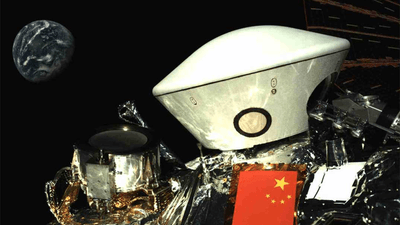


China's Tianwen-2 probe has likely caught up with one of Earth's quasi-moons, Kamo‘oalewa, after a year-long journey towards this unusual object.
First up, what in space is a quasi-moon? Earth famously has one natural satellite, known simply as "the Moon." Every now and then, however, we also pick up a few chunks of space rock that appear to be orbiting our planet but are really on their own similar orbit around the Sun. We call these chunks of rock quasi-moons, just to let them know they aren't quite in the same league as our Moon.
The most famous quasi-moon in our Solar System is probably Zoozve, which hangs around near Venus and was named thanks to an error on a children's poster. We have now discovered at least eight of these objects sharing Earth's journey around the Solar System.
We aren't exactly sure where quasi-moons came from, but recent spectroscopic analysis has suggested some may be made of Moon material that was flung into space following asteroid impacts on the lunar surface.
This is likely true of 469219 Kamo‘oalewa (aka 2016HO3), which is the largest and perhaps most interesting of the bunch. This quasi-moon is 45-60 meters (150-190 feet) long and in a more stable orbit than its compatriots, tracing out a path that is 11 times our distance from the actual Moon at its closest point. It is difficult to see given how far away it is, however, and because it sometimes lies in the direction of the Sun from our perspective.
Though the evidence suggests rocks like Kamo‘oalewa do come from the Moon, we still need to establish that as fact. Getting our hands on material from the near-Earth object (NEO) would help, and China hopes to do just that with its Tianwen-2 spacecraft.
"The Earth quasi-satellite (469219) Kamo‘oalewa has been suggested to be ejecta from an impact on the surface of the Moon based on spectroscopic evidence, later supported by dynamical and cratering simulations," a paper on the topic explains.
"If a population of NEOs from the Moon does exist in number, this would provide a way to link lunar and NEO science both by studying the specifics of crater formation (what kind of materials are ejected in what states from what depths) and through refining NEO source region models to the benefit of both those working on planetary defense and those attempting to age-date the lunar surface."
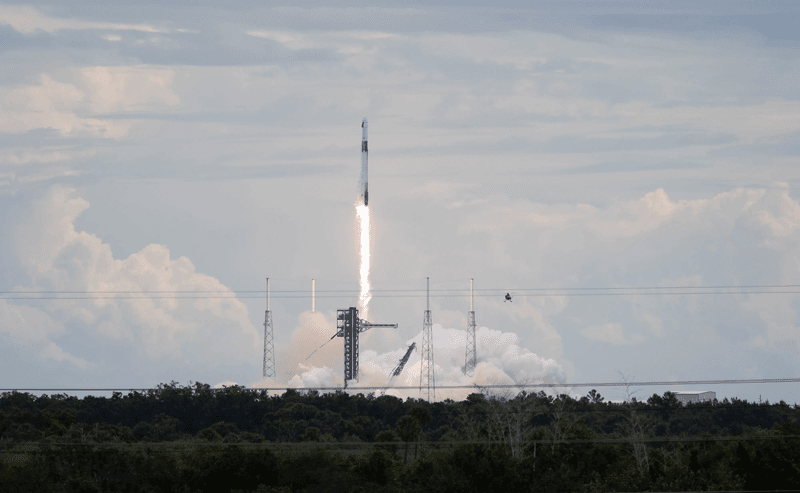
Tianwen-2 was launched on May 29, 2025, and has spent the last year journeying towards its first target.
"The Tianwen-2 mission will conduct multiple tasks in a single launch, including a flyby of asteroid 2016HO3, sample collection, return, and a flyby of main-belt comet 311P," the Chinese National Space Administration (CNSA) explained in a translated statement ahead of launch.
"Its orbital period is close to that of Earth, preserving original information from the early days of the solar system. It is a 'living fossil' for studying the early material composition, formation process, and evolutionary history of the solar system, and has extremely high scientific research value."
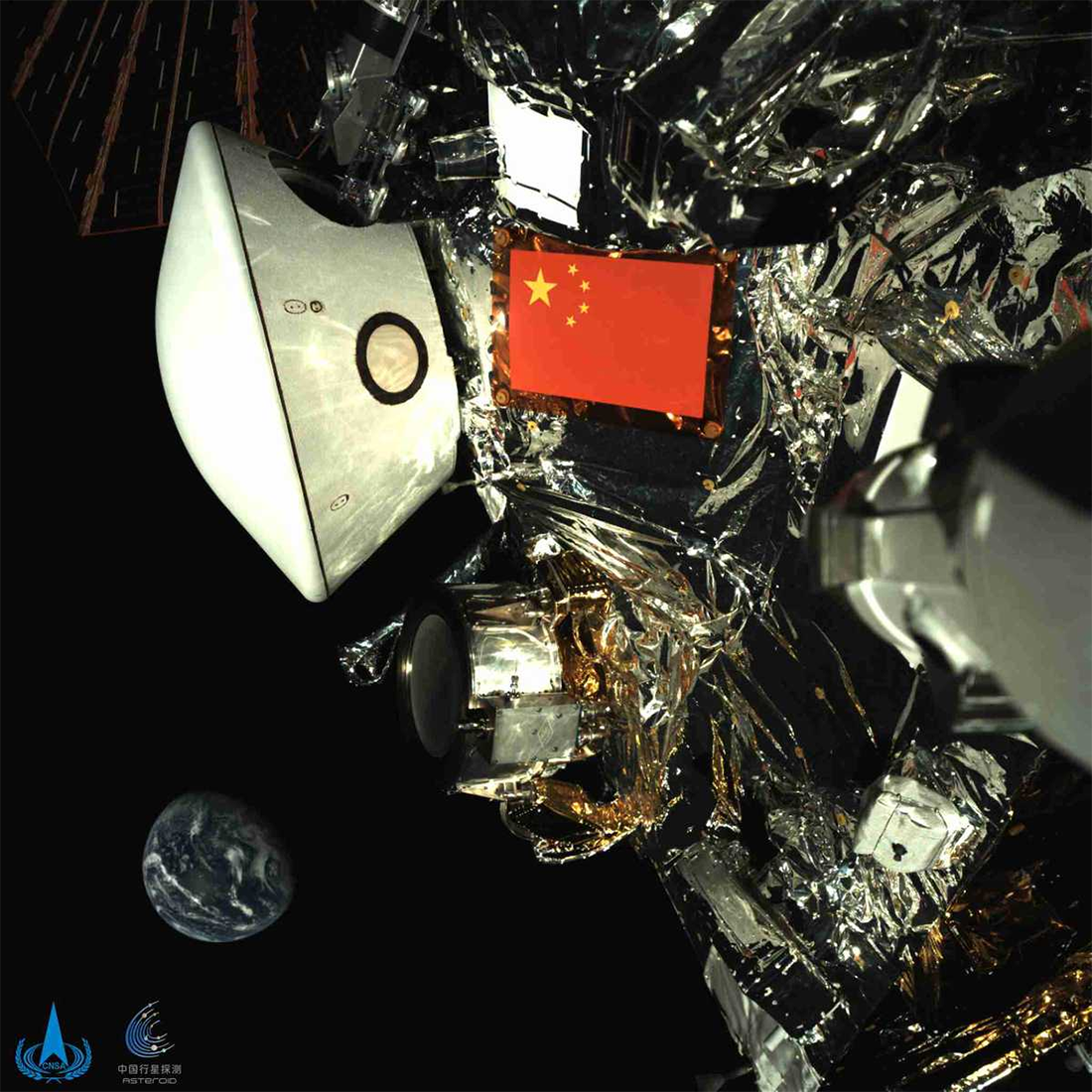
While the CNSA hasn't officially confirmed the mission's success, it is likely that Tianwen-2 has now caught up with Kamo‘oalewa and has begun maneuvers ahead of an attempted landing to collect a sample.
That said, the probe still has a tough time ahead of it. The main problem is that Kamo‘oalewa is likely rotating quite fast, at around once every 28.3 minutes.
That may not sound like much, but it means it is more likely than not a solid, rocky monolith, since looser "rubble pile" asteroids are expected to rip themselves apart if they rotate faster than once every 2.2 hours. So the probe will have to sample a very fast-spinning and likely solid chunk of space rock, which is no easy task.
"In the close-range exploration phase, following the principle of 'flying and exploring simultaneously, gradually approaching,' the probe conducts hovering and active fly-around exploration of the asteroid to determine the sampling area before entering the sampling phase," the CNSA explained.
Tianwen-2 will then attempt to match its rotation to the asteroid's before lowering an arm towards the object and sampling it.
"After completing its sampling mission, the probe will undergo a return waiting phase and a return transfer phase," the CNSA continued. "During the return transfer phase, as it approaches Earth, the return capsule will separate from the main probe and then enter the reentry and recovery phase independently. It is expected to land on Earth and be recovered by the end of 2027."
Following that, the probe will continue on its way to main-belt comet 311P, though it isn't expected to make it there until 2035. Space, as they say, is big.