Nature
 PUBLISHED
 2
2


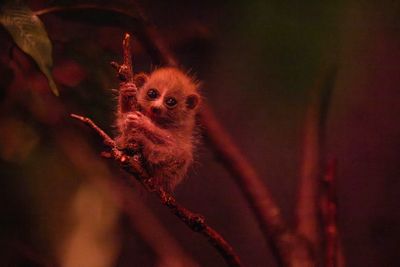


The birth of a baby animal is always an exciting time, but for the team at the Bronx Zoo, the recent pitter-patter of tiny pygmy slow loris paws is an extra special sound – and it’s made for a video that’s got the whole IFLScience team weeping from the sheer levels of cuteness.
The new arrival was born on December 13, 2025, fully furry and with its eyes open. It's also super small; these teeny babies weigh only around 30 to 60 grams (1 to 2 ounces). They're carried around by their mothers and are sometimes even “parked” on branches while the parents forage for food, though they eventually become more independent the bigger they get – as the insanely cute video of the Bronx Zoo baby learning how to climb shows. Even as adults, however, they're only 15 to 25 centimeters (6 to 10 inches) long, weighing around 300 to 450 grams (0.7 to 1 pound).
What makes these adorable creatures extra interesting is that they are one of only a few known venomous mammals. By licking a gland in their upper arm, they fill specially adapted grooves in their teeth with a venom that, when mixed with enzymes in their saliva, can lead to a painful bite. This usually isn't dangerous to humans, except in rare cases where it can induce anaphylactic shock.
There are two species of pygmy slow loris recognized by the IUCN: the northern pygmy loris (Xanthonycticebus intermedius) and the southern pygmy loris (Xanthonycticebus pygmaeus). The two pygmy slow loris species were only split apart in 2023, with Xanthonycticebus pygmaeus living in Vietnam, Laos, and Cambodia, and the northern species living in Vietnam, Laos, and parts of China. This had long been suspected through both scientific and anecdotal reports, but differences in DNA as well as their skulls and jaws confirmed that the species are distinct.
Both species are under some pretty major threats and are listed as endangered as a consequence. The southern pygmy loris, for example, is heavily exploited for both the pet trade and for use in traditional medicine, as well as for food. A further problem is that some pet trade dealers try to breed the northern and southern species together to meet demand, resulting in non-fertile hybrids.
This latest arrival at the Bronx Zoo marks the first primate to be born in the zoo’s World of Darkness exhibit, as part of a breeding program that aims to maintain the genetic diversity of pygmy slow lorises. Visitors will be able to see the adorable baby thanks to the zoo’s reverse day-night programmable LED lights, helping raise awareness for these creatures and the threats they face.