Nature
 PUBLISHED
 5
5


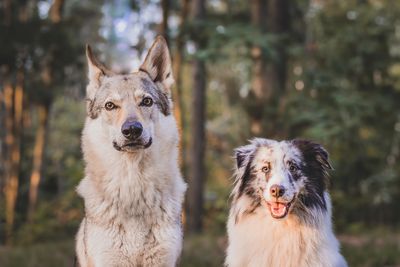


The pet dog lounging on your sofa and the feral wolf roaming the harsh wilderness share some clear differences – as well as some very significant similarities. Given their proximity in the family tree, it is possible for domestic dogs to breed with a number of wolf species, including gray wolves, eastern wolves, red wolves, and Ethiopian wolves. That's not to mention other wolf-like canids like dingoes, coyotes, and golden jackals, which can also intermingle with dogs.
It’s often said that two different species cannot interbreed and create fertile offspring, but that's not always the case.
Some closely related animals, i.e. horses and donkeys, can interbreed to create infertile hybrids, i.e. mules. In the instance of mules, they are typically infertile because horses have 64 chromosomes and donkeys have 62, resulting in some incompatibility. On the other hand, dogs and the many wolf-like canids all possess 78 chromosomes arranged in 39 pairs, allowing them to successfully interbreed with fewer hitches.
Estimates vary, but studies have indicated that dogs and gray wolves share 99.96 percent of their DNA. For context, that’s scarcely more than the genetic variation between individual humans today, which is approximately 0.1 percent on average (although that comparison should be taken with a pinch of salt).
Genetically speaking, it would be theoretically possible for a small dog like a chihuahua to breed with a gray wolf, although there would undoubtedly be some behavioral and anatomical challenges, which we're sure you can imagine.
Despite the strong genetic similarities that still linger, the global population of domestic dogs is now relatively distinct from wild wolves. However, there are still crossovers and countless instances of intermingling.
There are thought to be more than 300,000 wolf-dog hybrids living in the US, according to the UC Davis School of Veterinary Medicine. As they explain, wolf-dog hybrids typically occur when a female dog strays away from home while “in heat” and breeds a wild male wolf. However, it’s evidently relatively unusual for this to happen naturally.

Throughout history, there have been a number of documented attempts to actively make wolf-dog hybrids. For instance, the 1950s saw a military experiment that involved interbreeding working line German Shepherds with Carpathian gray wolves to create the ideal border patrol dogs. The result was the Czechoslovakian wolfdog, which has been used for a variety of purposes like search and rescue missions.
Don’t be naïve about the idea of keeping a dog-wolf hybrid as a pet, though. The legality of keeping wolf-dog hybrids as pets is complex. In some jurisdictions of the USA, hybrids are regulated as dogs, but in others they are illegal.
Regardless, most experts agree that wolf-dog hybrids do not make good pets. They are known to be unpredictable, hard to control, and tough to satisfy. It’s also a myth that wolf-dog hybrids serve as reliable guard dogs, since wild wolves are shy by nature and generally avoid conflict with humans.
“A few people are successful in keeping hybrids, but most people for a variety of reasons are not prepared to understand or provide for the physical or psychological needs of the animal. The higher the [wolf content] the less likely they can be kept as a house pet and will require special housing, socialization, and care. There are legal issues to consider, as well as knowing that some vets are not willing to provide care, and that the rabies vaccine in not approved for use in these animals,” the International Wolf Centre writes on its website.