Humans
 PUBLISHED
 2
2


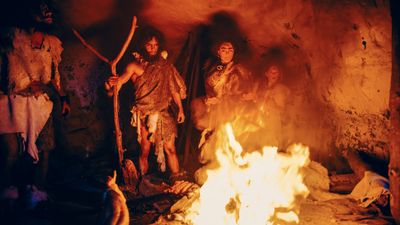


As The Jungle Book’s King Louie knows all too well, the ability to control fire is what sets humans apart from apes, fueling our cultural and biological evolution and rocketing us into the space age. Yet when you play with fire, you’re going to get burned, and researchers now believe our ancestors’ pyrotechnical failures and injuries may have helped to shape our immune function.
“The control of fire is deeply embedded in human life - from a preference for hot food and boiled liquids to the technologies that shape the modern world,” said study author Dr Joshua Cuddihy in a statement. “As a result, unlike any other species, most humans will burn themselves repeatedly over their lifetime, a pattern that likely extends back over a million years to our earliest use of fire.”
To highlight this point, the researchers note that even while writing their paper, one of the authors “burnt his lower lip - painfully, ludicrously, but not fatally - while biting into a Chicken Kiev filled with molten butter.” Intriguingly, they go on to explain that the human immune system responds to burns in a way that differs significantly from its reaction to other injuries such as cuts.
For instance, they point out that burns trigger an “intensified inflammatory phase,” mediated by the release of pro-inflammatory markers called cytokines. This response is necessary, as fire causes more widespread skin damage than cuts, leading to an increased risk of infection. Without such a dramatic immune reaction, even small burns could potentially become life-threatening.
The researchers therefore hypothesize that fire-related injuries may have driven the evolution of these immune responses, as our survival as a species depended on our ability to heal our continual burns. To investigate, they began by comparing the transcriptomes of burnt and unburnt skin, identifying 94 different genes that are activated as part of the response to heat-related injuries.
By then comparing these genes to those found in chimps, gorillas, orangutans, and macaques, the study authors found that at least nine – and possibly as many as 19 – of these genes show signs of accelerated evolution in humans. Among these are genes that enhance our skin’s tendency to scar, as well as others that cause increased pain sensitivity in recently burned skin, thus encouraging us to protect our injuries and avoid making them worse.
“Our research suggests that natural selection favoured traits that improved survival after smaller, more frequent burn injuries,” says Cuddihy. “However, those same adaptations may have come with evolutionary trade-offs, helping to explain why humans remain particularly vulnerable to the complications of severe burns.”
For instance, our increased susceptibility to inflammation and scarring following burns can lead to systemic inflammatory response syndrome or organ failure in extreme cases.
Commenting on the significance of these findings, study author Professor Armand Leroi explained that the so-called burn selection theory “presents a new form of natural selection – one, moreover, that depends on culture. It is part of the story of what makes us human, and a part that we really did not have any inkling of before.”
Moreover, given that these burn-healing genes weren’t found in orangutans, King Louie might want to consider staying away from fire after all.
The study is published in the journal BioEssays.