Space and Physics
 PUBLISHED





The solar maximum might be behind us, but the Sun continues to show off its power. Multiple coronal mass ejections (CMEs) have occurred in the last few days, and they are all aimed at Earth. They are unlikely to combine themselves into a single cannibal one, but they are still expected to produce a moderate geomagnetic storm today and continue it into tomorrow.
The Space Weather Prediction Center, from the National Oceanic and Atmospheric Administration (NOAA), is still operating despite the current government shutdown. That’s because geomagnetic storms pose a serious threat to Earth, especially to essential technology like power lines and global positioning satellites (GPS) that we require for our day-to-day life.
Luckily, this one is not going to be catastrophic. An accompanying solar flare caused a minor blackout, but the geomagnetic storm will be manageable – the people in charge of that tech know what to do as we experience a lot of space weather on Earth.
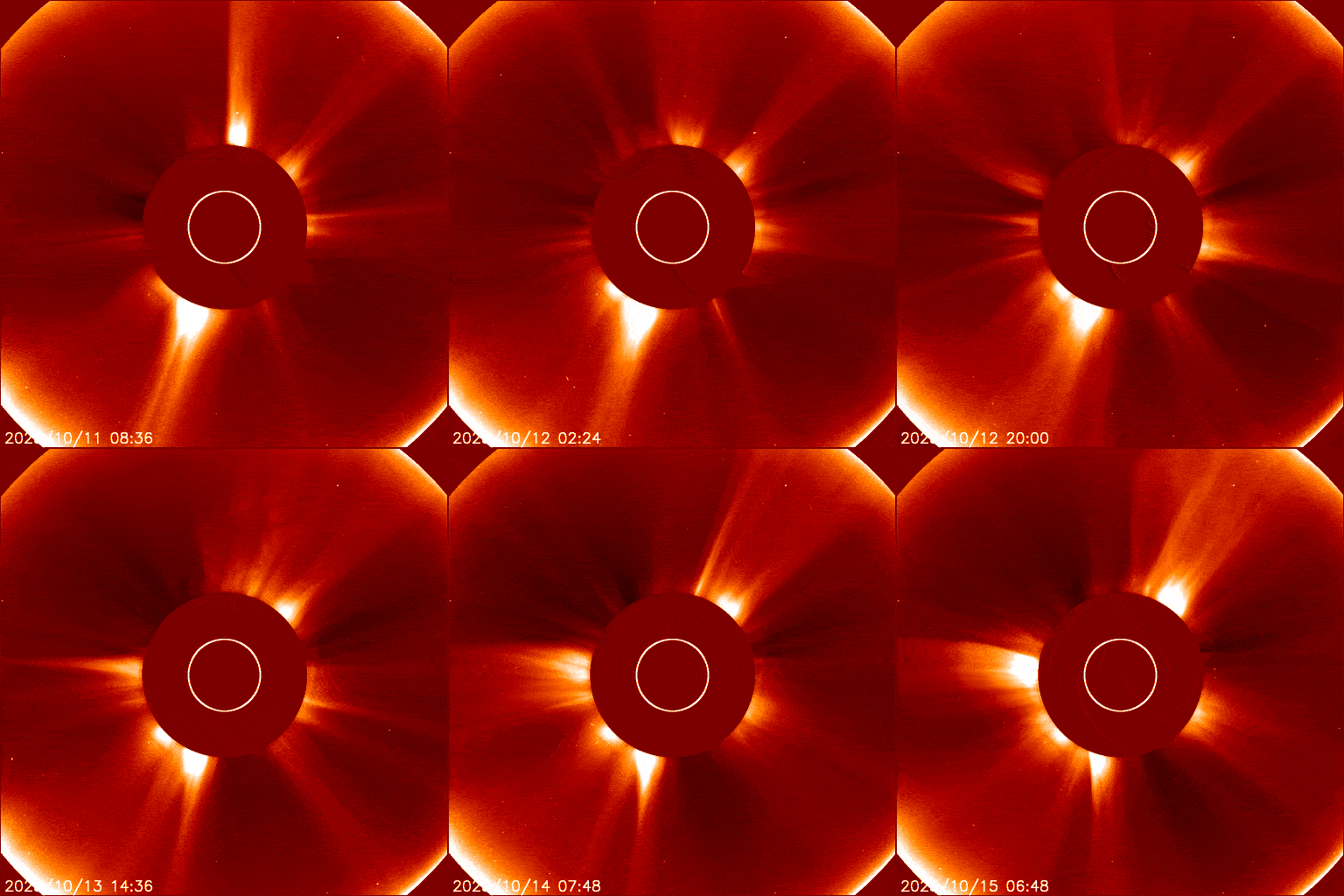
“Isolated G2 (Moderate) geomagnetic storm activity is likely by late on 16 Oct with the arrival of CMEs that left the Sun over the course of 11-13 Oct. G1 (Minor) geomagnetic storm activity is likely to carry on into 17 Oct with possible additional CME effects on the near-Earth environment,” a note from the Space Weather Prediction Center reads.
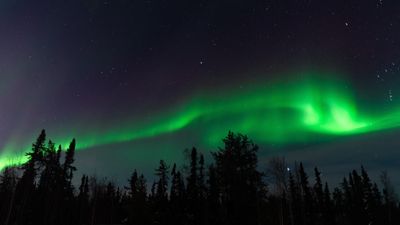
For some of us, this means we can hopefully expect a nice light show courtesy of the aurora borealis, or the Northern Lights, so for the next couple of nights, find a dark spot facing north or south, depending on your hemisphere.
Across higher latitudes, you should get quite the show from October 15-17, with strong aurorae expected across northern Europe, basically all of Canada, and a lot of northern and central United States. Tasmania and Aotearoa New Zealand’s South Island will also get some.
Coronal mass ejections are powerful releases of plasma, electrically charged particles from the Sun. The Sun is constantly sending particles into the Solar System – that’s the solar wind – but CMEs tend to be faster, denser, and with a stronger magnetic field than the standard flow of plasma from our star.
Once a CME is thrown into the Solar System, the several billion tons of plasma will fan out, spreading and eventually reaching the planets on their path. The intensity of the geomagnetic storm will depend on several properties of the CME, speed, spread, density, and even the properties of the magnetic field.